Income Tax Department Introduces New ITR Form for Undisclosed Income Found During Search:
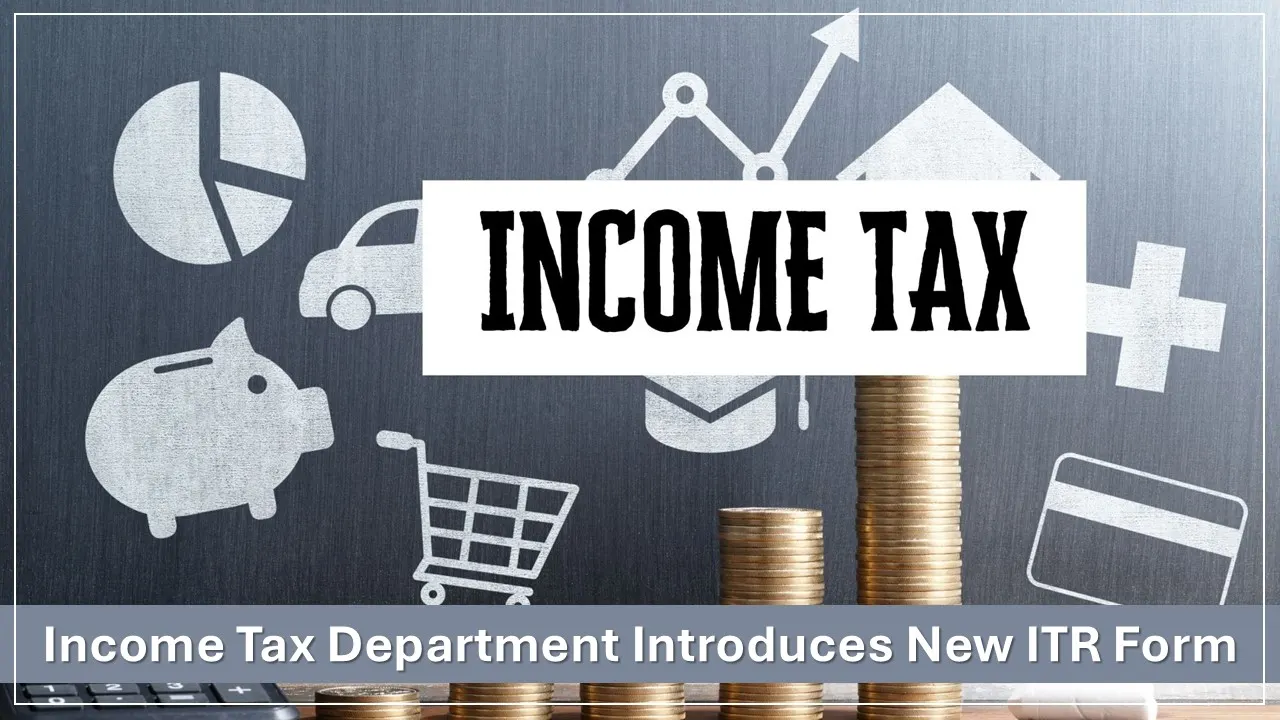
The income tax department has introduced a new form called ITR-B for people to report income they previously didn't disclose, which was discovered during tax searches.
Income Tax Department Introduces New ITR Form
 Janvi Koli
 Apr 10, 2025
Table of Contents

Income Tax Department Introduces New ITR Form for Undisclosed Income Found During Search
The income tax department has introduced a new form called ITR-B for people to report income they previously didn't disclose, which was discovered during tax searches. This form covers a six-year period and aims to fix confusion around reporting such income.
What to disclose in ITR-U?
With ITR-B, taxpayers must provide detailed information about their hidden income, including what type it was, which tax years it belongs to, and what specific assets weren't reported (like cash, gold, jewelry, or digital currencies). This level of detail is required for each year within the six-year block period. The goal of this new form is to increase transparency and ensure tax authorities can properly assess all previously undisclosed income. By requiring such specific information, the tax department hopes to make the reporting process clearer and more thorough. The Income Tax Department has initiated a new form named ITR-B for reporting concealed income found in tax searches. This is the first time since 2003 that a special form for this purpose has existed. The new form updates the old practice with modern digital features. However, the form has a confusing requirement. While it must be filed electronically, it also asks for physical elements like official stamps, seal numbers, and handwritten signatures. This could cause confusion and it should be fixed quickly. The new ITR-B form also includes strict rules about tax credits. Any tax credits claimed against the hidden income will be carefully checked by tax authorities to make sure they're legitimate.About Author


Janvi Koli
Digital Marketing Executive
Janvi is an expert content writer focused on taxation and compliance. She writes insightful articles on income tax, GST, company law, and government policies. Known for her practical approach, she simplifies complex regulations to help readers stay informed and compliant. She can be reached at [email protected]
Janvi is an expert content writer focused on taxation and compliance. She writes insightful articles on income tax, GST, company law, and government policies. Known for her practical approach, she simplifies complex regulations to help readers stay informed and compliant. She can be reached at [email protected]
 Studycafe
 Delhi, Delhi, India
 325
325My Recent Articles
- Ethereum Fundamentals for Finance Students through Understanding Blockchain Beyond Bitcoin
- Major Financial Changes Effective from November 1, Every Indian Should Aware Of
- Top 20 CA Firms in Mumbai for Articleship
- Know How to Setup EV Charging Stations: Step by Step Guide
- Unlock business growth this Independence Day with Bajaj Finserv Business Loan
Up Next
Loading suggestions…


Recent Posts

All Posts


Tags
No tags yet.
Recent Posts
All Posts
Tags
No tags yet.