New Measures by Income Tax Department to Investigate Cash Transactions:
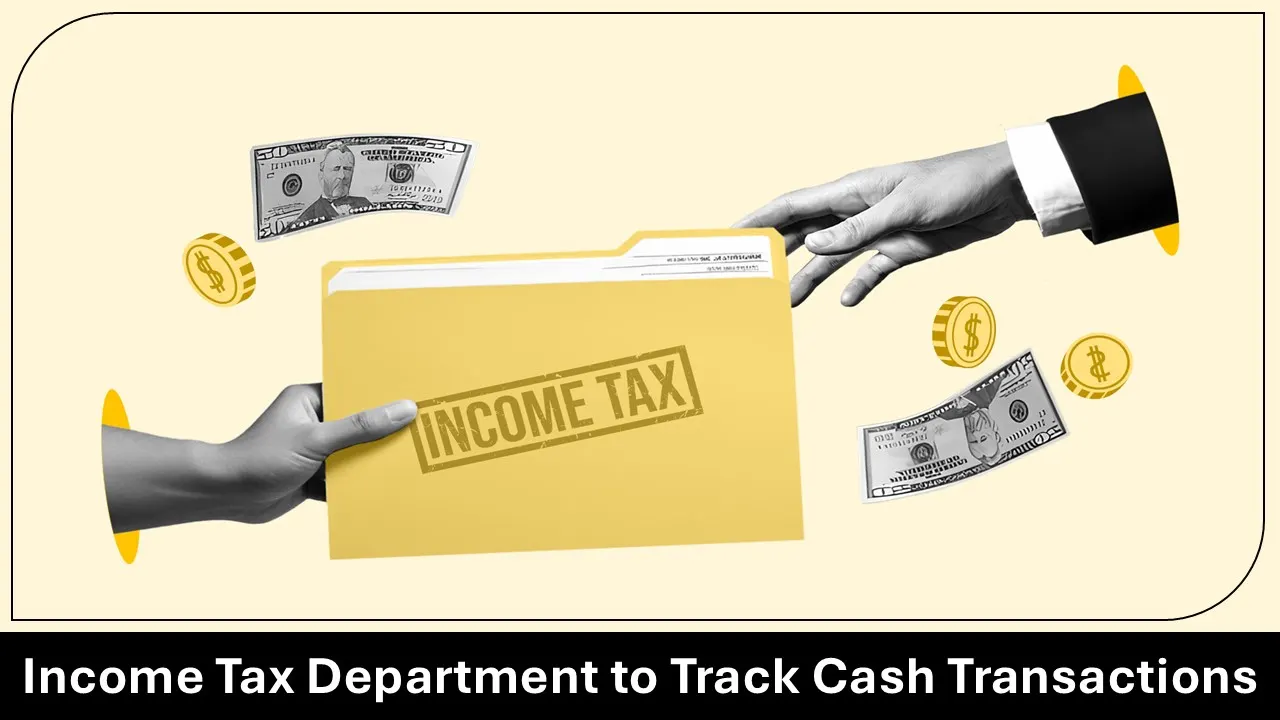
The Income Tax Department uses various data analysis techniques to identify individuals who haven't filed tax returns or have reported less income than they actually earned.
Income Tax Department to Track Cash Transactions
 Janvi Koli
 Apr 16, 2025
New Measures by Income Tax Department to Investigate Cash Transactions
The Income Tax Department uses various data analysis techniques to identify individuals who haven't filed tax returns or have reported less income than they actually earned. They work with different government agencies to gather information about people who spend large amounts of money but don't file Income Tax Returns (ITR) or underreport their income.
Latest Update
The Central Board of Direct Taxes (CBDT) has directed organizations like banks, post offices, cooperatives, financial technology companies, and mutual fund companies to share detailed information about high-value transactions made during the financial year. This information must be submitted by May 31 of the following financial year.
What Are High-Value Transactions?
High-value transactions are large money movements that banks and other institutions must report to the Income Tax Department when they exceed certain amounts.
The Income Tax Department monitors these transactions through statements called Statement of Financial Transaction (SFT) in Form 61A or reportable accounts in Form 61B. Specific organizations must provide information about certain large transactions they've recorded during the financial year by May 31 of the next financial year. This helps the Income Tax Department track people's financial activities and make sure they're paying the correct taxes.
Below is a list of transactions that might cause the Income Tax Department to send you a notice, as this data is collected from the relevant reporting authorities:
| Sr. No. | Transaction | Threshold (Rs) | Which authority should report? |
| 1 | Cash payment for purchasing bank draft, pay order, banker’s cheque or prepaid RBI instruments | 1,000,000 | Banks or co-operative society need to disclose a transaction if the amount deposited exceeds the threshold to the Director of Income Tax by filing Form 61A |
| 2 | Cash deposits in a savings bank account | 1,000,000 | Banks, Co-operative society, postmaster general |
| 3 | Cash deposit or withdrawal from a current account | 5,000,000 | Banks or co-operative society |
| 4 | Sale or purchase of an immovable property | 3,000,000 | The Property Registrar/Sub-registrar must report a transaction exceeding the threshold via Form 61A |
| 5 | Investments in shares, mutual funds, debentures and bonds in cash (If amount is transferred from one scheme to another, then reporting is not required) | 1,000,000 | Company issuing Shares, Debentures, Bonds, Mutual Fund Trustee |
| 6 | Payment of credit card bill in cash | 100,000 | Banks or co-operative society |
| 7 | Payment of credit card bill other than through cash | 1,000,000 | Banks or co-operative society |
| 8 | Sale of foreign currency Crediting FOREX card Spending in foreign currency through a debit or a credit card or through traveler’s cheque or any other instrument | 1,000,000 | Authorised Person under Foreign Exchange Management Act, 1999 |
| 9 | Cash deposits in the fixed deposit or recurring deposit account | 1,000,000 | Bank, Co-operative society, Nidhi Company, NBFC |
About Author


Janvi Koli
Digital Marketing Executive
Janvi is an expert content writer focused on taxation and compliance. She writes insightful articles on income tax, GST, company law, and government policies. Known for her practical approach, she simplifies complex regulations to help readers stay informed and compliant. She can be reached at [email protected]
Janvi is an expert content writer focused on taxation and compliance. She writes insightful articles on income tax, GST, company law, and government policies. Known for her practical approach, she simplifies complex regulations to help readers stay informed and compliant. She can be reached at [email protected]
 Studycafe
 Delhi, Delhi, India
 325
325My Recent Articles
- Ethereum Fundamentals for Finance Students through Understanding Blockchain Beyond Bitcoin
- Major Financial Changes Effective from November 1, Every Indian Should Aware Of
- Top 20 CA Firms in Mumbai for Articleship
- Know How to Setup EV Charging Stations: Step by Step Guide
- Unlock business growth this Independence Day with Bajaj Finserv Business Loan
Up Next
Loading suggestions…


Recent Posts
All Posts

Tags
No tags yet.
Recent Posts
All Posts
Tags
No tags yet.