Income Tax Dept May Send You Notices for These Common Mistakes:
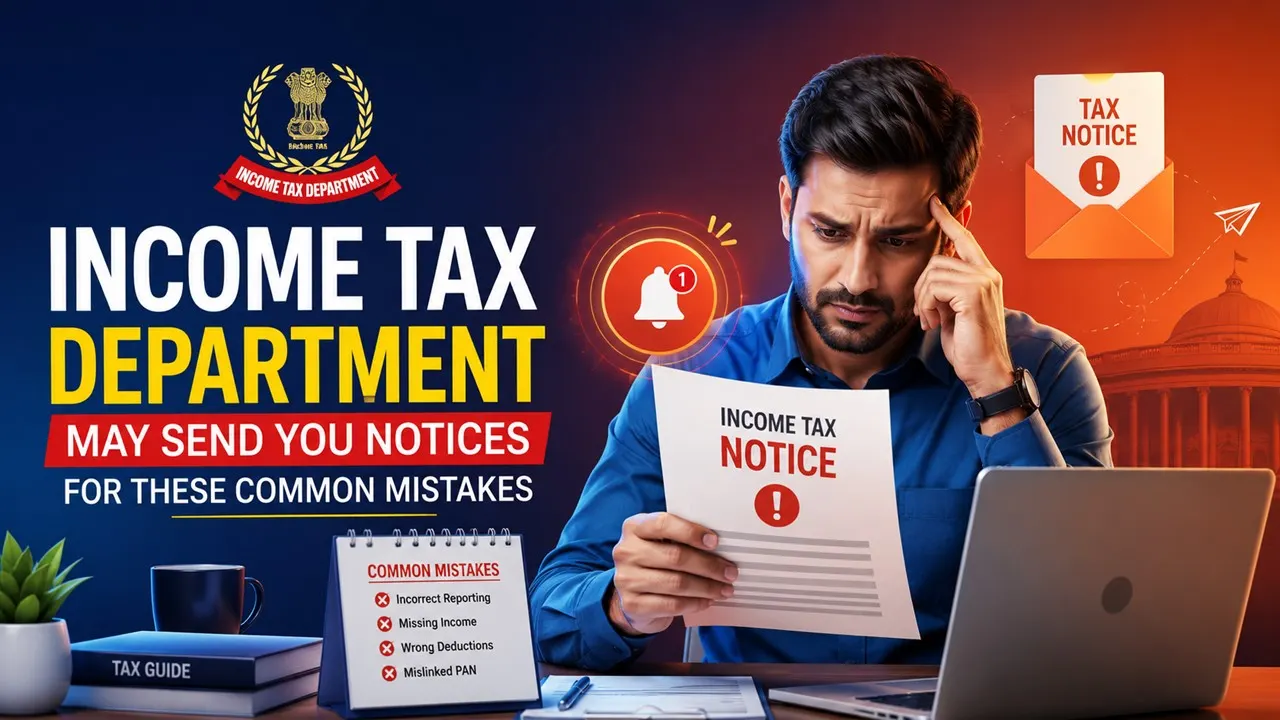
This financial year, taxpayers need to be more cautious while filing their ITRs, as the Tax Department is sending bulk automated intimations and emails to taxpayers making these mistakes.
Keep These Things in Mind While Filing ITR for AY 2026-27
 Saloni Kumari
 Jun 13, 2026
Income Tax Dept May Send You Notices for These Common Mistakes
Taxpayers need to be more cautioned while filing their income tax returns (ITRs) this year, as the Income Tax Department is sending bulk automated intimations, alerts, scrutiny notices, and emails to taxpayers where discrepancies have been found in their Annual Information Statement (AIS), Taxpayer Information Summary (TIS), and Form 26AS.
One common reason for receiving a notice is failing to disclose investments in foreign stocks, foreign dividend income, or other foreign assets. These compliance nudges are triggered by global data-sharing agreements (like FATCA) and advanced AI matching. To avoid severe penalties or scrutiny, review and carefully verify key areas before filing your ITR.
The following are categories of taxpayers who are being sent the notices and emails from the income tax department:
Falsely Availed Section 80G and 80GGC Deduction Benefits
- Some taxpayers allegedly avail themselves of false deductions under Section 80G and 80GGC for donations that were never actually made, inflate donation amounts, or claim deductions based on invalid receipts. Detection of the same has now become easier for the tax department as it now uses technology-driven verification processes to match deduction claims with donor and recipient data. When these claims are not supported with relevant documents, it results in notice, penalties, or legal actions.
- Taxpayers who have made any investment in shares of foreign companies through overseas brokers or international investment platforms are required to disclose such investments in their Income Tax Return (ITR). Those who fail to disclose the same often face income tax scrutiny notices, penalties or litigation, especially as the tax department receives information through global data-sharing arrangements and financial reporting mechanisms.
- Section 80G of the Income Tax Act pertains to donations made to eligible charitable institutions; on the other hand, Section 80GGC of the said act belongs to contributions made to registered political parties or electoral trusts. Claiming a political donation under Section 80G or claiming a charitable donation under Section 80GGC may result in incorrect tax benefits. Such errors are often identified through automated verification of donation records submitted by recipient organisations.
- As per India's taxation system, taxpayers are required to pay tax on dividends received from foreign companies and must report the same in their income tax returns (ITRs) under the appropriate head of income. Numerous taxpayers assume these dividend incomes received abroad are not taxable in India or overlook small amounts credited to foreign broking accounts. Accordingly, do not reflect the same in their tax returns, which is considered a serious non-compliance by the tax authorities.
- Indian residents who hold foreign bank accounts, foreign stocks, overseas properties, retirement accounts, or any other specified foreign assets are required to report about the same in their ITRs. Non-disclosure of these foreign assets is treated as serious non-compliance by the tax department in India. Such detections have now become easier as tax authorities now receive information about the same from multiple jurisdictions under international information exchange agreements.
- Taxpayers having high turnover, large bank deposits, high-value purchases, securities transactions, or other reportable financial activities may attract attention if they fail to file an income tax return. The tax department receives information from banks, registrars, mutual funds, stock exchanges, and other reporting entities, making it easier to identify non-filers whose financial activity suggests a filing obligation.
- Taxpayers are obliged to report their income under an appropriate category, such as Salary, House Property, Business or Profession, Capital Gains, or Other Sources. Failing to do the same may trigger income tax notices, penalties or litigation. For instance, reporting business income as capital gains or vice versa may invite examination if the classification does not align with the nature of the transactions.
- Different categories of taxpayers are required to use different ITR forms depending on their income sources, residential status, business activities, and asset holdings. Filing an incorrect form can result in defective return notices, delayed processing, or even invalidation of the return. Taxpayers should carefully review eligibility conditions before selecting the applicable ITR form.
- The Income Tax Department primarily depends on data analytics to compare information disclosed in the ITR with data available in AIS, TIS, and Form 26AS. Differences in interest income, dividends, TDS credits, capital gains, salary income, or other reported figures can lead to automated compliance alerts. Before filing the return, taxpayers should reconcile all available statements and ensure that any discrepancies are properly explained or corrected.
- The Income Tax Department keeps a close eye on contributions made to a Registered Unrecognised Political Party (RUPP), especially when donation patterns appear unusual or when the recipient entity's activities are questioned. Taxpayers claiming deductions on these donations are usually asked to furnish complete documents, banking records, and evidence in support of these deduction claims. Improper claims may be disallowed during assessment proceedings.
About Author


Saloni Kumari
Content Writer
Saloni is a Content Writer with 2+ years of experience at studycafe.in. She writes legal, taxation, and finance related content including GST, Income Tax etc. Skilled in translating complex judicial pronouncements and regulatory developments into clear, and reader-friendly articles. Experienced in covering judgements of ITAT, High Court, GSTAT, and news related to Income Tax, GST, and corporate law. She can be reached at [email protected].
Saloni is a Content Writer with 2+ years of experience at studycafe.in. She writes legal, taxation, and finance related content including GST, Income Tax etc. Skilled in translating complex judicial pronouncements and regulatory developments into clear, and reader-friendly articles. Experienced in covering judgements of ITAT, High Court, GSTAT, and news related to Income Tax, GST, and corporate law. She can be reached at [email protected].
 StudyCafe
 Delhi, Delhi, India
 2931
2931My Recent Articles
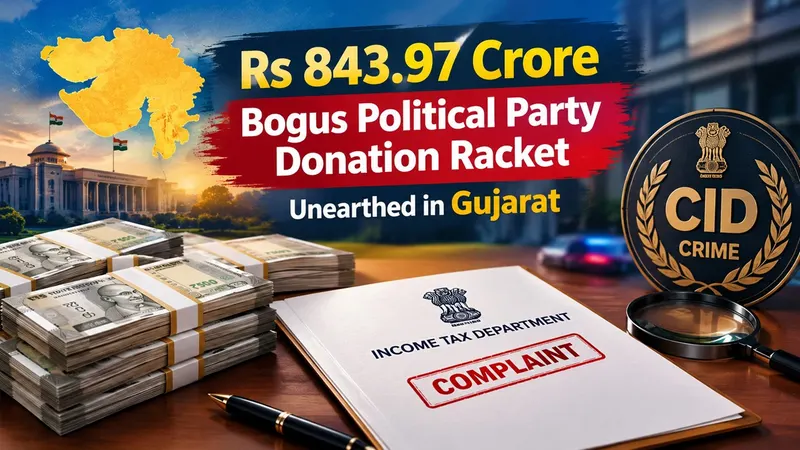
- Rs 843.97 Crore Bogus Political Party Donation Racket Unearthed in Gujarat, Income Tax Dept Files Complaint With CID (Crime)
- Retired Central GST Commissioner Kidnapped by Unknown Persons, Assailants Nabbed Within Hours
- Madhya Pradesh HC Quashes Section 74 GST Show Cause Notice Passed Against G R Infraprojects
- GSTAT Introduces SOP for Branch Officer-to-Branch Officer (BO-to-BO) Case Transfer Ensuring Seamless Reassignment of Cases
- GSTAT: E-Way Bills Cannot Be Invalidated Merely Because They Were Not Generated by Original Supplier
Up Next
Loading suggestions…


Recent Posts

All Posts

Recent Posts
All Posts