India-EU Free Trade Agreement: Building a Future-Ready Trade Partnership:
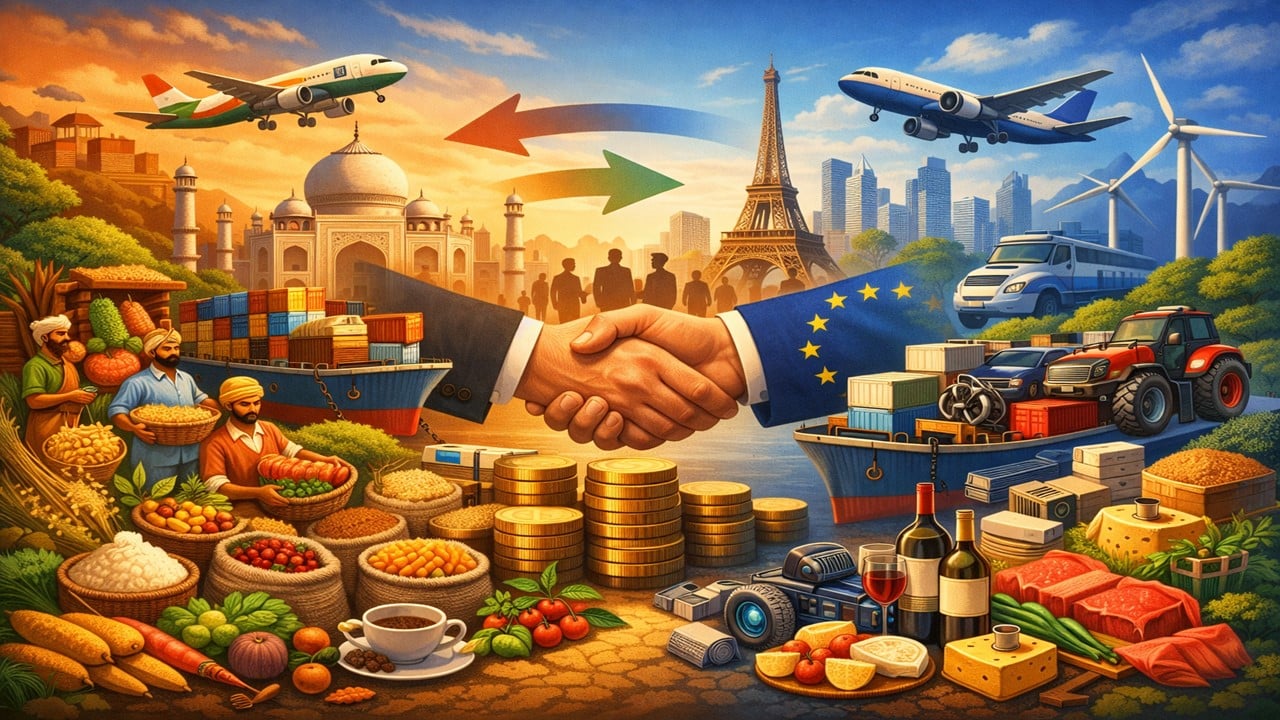
The India-EU Free Trade Agreement marks a major step toward a future-ready, rules-based partnership.
Transforming India-EU Trade Relations Through Free Trade Agreement
 Vanshika verma
 Jan 28, 2026
Table of Contents

India-EU Free Trade Agreement: Building a Future-Ready Trade Partnership
The Ministry of Commerce and Industry recently shared a press release regarding "India and European Union trade agreement".
India and the European Union (EU) have have finished negotiating a Free Trade Agreement (FTA). The agreement aims to create a modern, rule-based trade relationship that addresses current global challenges and allows closer economic integration between India, the world’s 4th largest economy, and the EU, the 2nd largest.
The Free Trade Agreement (FTA) between India and the EU opens up huge opportunities for both sides, covering a combined market worth over INR 2091.6 Lakh Crore and benefiting around 2 billion people. It gives Indian businesses access to most of the EU market over 99% of India’s exports by trade value, while still allowing India to protect sensitive industries and focus on its development goals.
Trade between India and the European Union (EU) has been growing steadily. In 2024-25, the total trade in goods between them was about Rs 11.5 lakh crore (around USD 137 billion), with India exporting goods worth roughly Rs 6.4 lakh crore (about USD 76 billion) to the EU. On the services side, trade reached about Rs 7.2 lakh crore (around USD 83 billion) during the same period.
This strategically important FTA transforms India-EU relations from a traditional partnership into a modern, multi-dimensional one. It gives exporters a stable and predictable environment, helping Indian businesses including MSMEs to plan for long-term investments, join European value chains, and secure steady market access even amid global economic uncertainties.
Empowering Businesses and Securing the Future through Seamless Market Access
India Strengthens Market Presence in Europe India has secured major trade benefits with Europe, gaining preferential access on 97% of products that make up 99.5% of trade value. Most of India’s exports, such as textiles, leather, footwear, tea, coffee, spices, toys, gems, jewellery, and some marine products, will face no tariffs immediately. Some products, including certain seafood, processed foods, and defence items, will get duty-free access over 3-5 years, while others, like poultry, preserved vegetables, bakery goods, cars, steel, and some seafood, will benefit from reduced tariffs or quota-based access. India’s Proposal to the European Union India is opening up most of its trade with the EU. Around 92% of the products India imports from the EU will have lower or no tariffs, covering almost all EU exports to India. Around 49.6% of these products will see tariffs removed immediately, while around 39.5% will have tariffs reduced gradually over 5, 7, or 10 years and 3% of products, such as apples, pears, peaches, and kiwis, will have special limits on how much can be imported at lower tariffs. This deal will allow India to import advanced technology goods more easily, which can lower costs for businesses, give consumers better options, and help Indian companies become part of international supply chains. Promoting Agricultural Development & Enhancing Farmer Well-being, with Strong Safeguards The FTA (Free Trade Agreement) is expected to greatly benefit India’s farming and food processing sectors. By giving easier access to European markets for products like tea, coffee, spices, grapes, cucumbers, gherkins, onions, fresh fruits and vegetables, as well as processed foods, Indian products can become more competitive abroad. This new trade agreement will help farmers earn more money, support life in rural areas, and make Indian agricultural products more competitive in the global market. India has carefully protected important areas like dairy, grains, poultry, soymeal, and some fruits and vegetables. This ensures that while exports grow, domestic needs are still met. The agreement gives Indian farmers a chance to sell their products at better prices in European markets. This can boost income, improve livelihoods, and make farming more stable in the long run. For complete information, refer to the official press release
About Author


Vanshika verma
Content Writer
Vanshika Verma is a Content Writer with 1+ year of experience at Studycafe.in. A B.Com graduate from Delhi University, She writes articles on Finance, Tax, ICAI, GST, and the latest financial news, with a focus on making complex topics easy for readers and professionals.
Vanshika Verma is a Content Writer with 1+ year of experience at Studycafe.in. A B.Com graduate from Delhi University, She writes articles on Finance, Tax, ICAI, GST, and the latest financial news, with a focus on making complex topics easy for readers and professionals.
 Studycafe
 Delhi, Delhi, India
 2033
2033My Recent Articles
- CBI Trap in J&K: Udhampur Fireman Arrested for Allegedly Demanding Bribe for Processing Fire and Emergency Services NOC
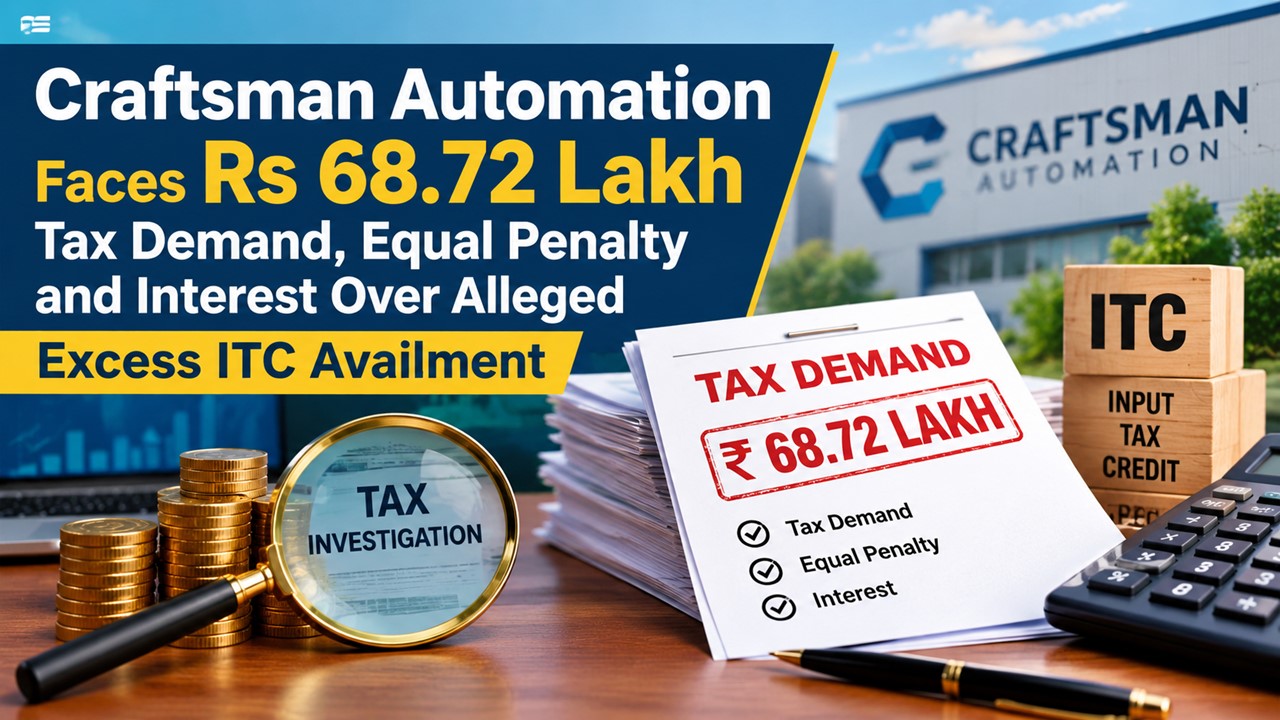
- Craftsman Automation Faces Rs 68.72 Lakh Tax Demand, Equal Penalty and Interest Over Alleged Excess ITC Availment
- ITAT Remands Rs 1.85 Crore Cash Deposit Dispute to CIT(A) for Fresh Adjudication After Assessee Claims Funds Were Converted From Euros Brought From Paris
- ITAT Grants Fresh Hearing to 61-Year-Old Cancer Patient, Sets Aside NFAC Order and Restores Income Tax Case to Assessing Officer
- IIFL Capital Services Receives MCX Penalty Order of Rs 2.05 Lakh Over Abnormal and Non-Genuine Client Trades
Up Next
Loading suggestions…


Recent Posts

All Posts
Recent Posts
All Posts