YES Bank Share Sale Under Scanner: SEBI Alleges Insider Trading by PwC, EY Executives:
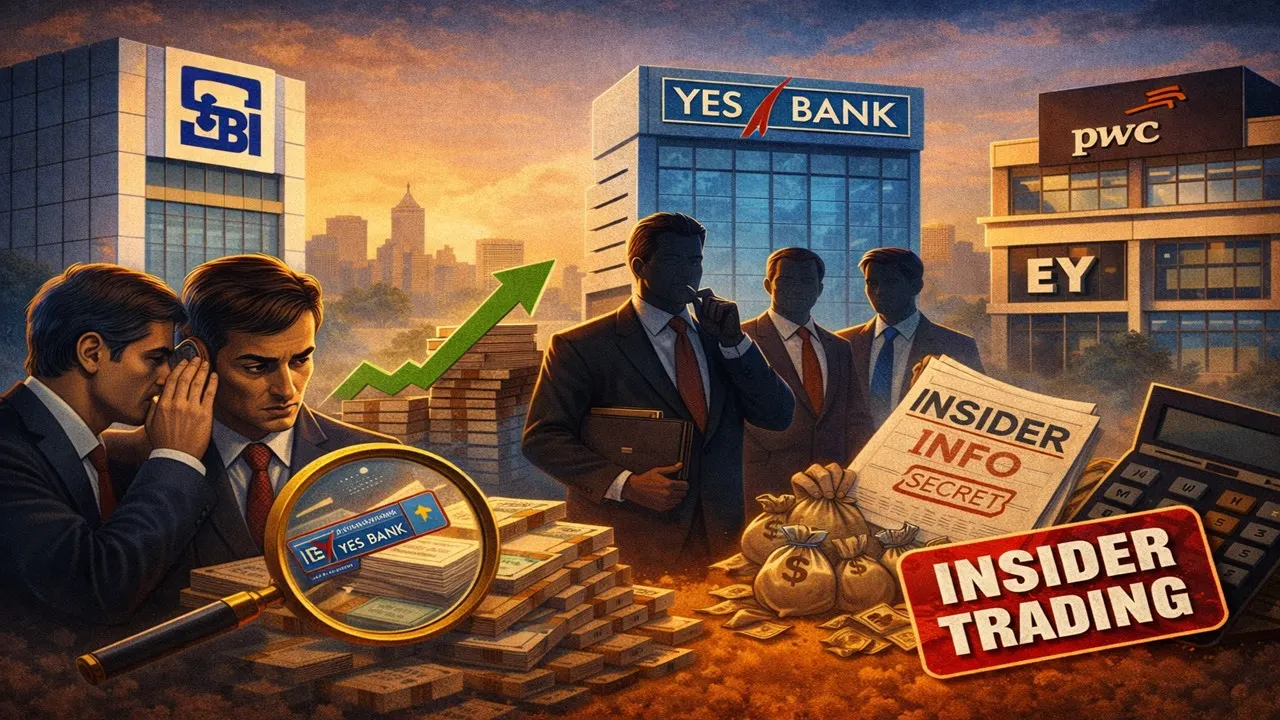
SEBI has accused executives and connected individuals of using unpublished information to profit from YES Bank’s 2022 share sale.
SEBI Flags Insider Trading Lapses in YES Bank Share Sale
 Vanshika verma
 Jan 29, 2026
YES Bank Share Sale Under Scanner: SEBI Alleges Insider Trading by PwC, EY Executives
The Securities and Exchange Board of India (SEBI), India’s market regulator, has accused several people of breaking insider trading rules during YES Bank’s 2022 share sale. The allegations involve top and former executives from the Indian branches of big accounting firms PwC and EY, as well as people connected to private equity firms Carlyle Group and Advent International.
Sebi issued a "show cause" notice in November, which Reuters has seen, naming 19 individuals in total. According to the regulator, seven of them traded in YES Bank shares using secret information (Unpublished), while four others shared this sensitive information with them.
Additionally, five family members and friends of two executives are also part of the case. Sebi claims that these people made illegal profits because they had advance knowledge of the share sale.
Authorities investigated suspicious trading that happened before YES Bank announced a major share sale in July 2022. Where Carlyle Group and Advent International had bought about 10% of the bank for around $1.1 billion. When the deal was announced on July 29, 2022, the share price jumped by nearly 6% the next day. This sudden rise made officials suspect that some people may have traded early using inside information.
SEBI has accused some senior executives from PwC and EY of breaking confidentiality rules. According to SEBI, they did not properly protect sensitive information. Because of this, important details reached traders before they were made public, allowing some people to trade unfairly. Many of the people named are still working at these firms.
SEBI also accused a former board member of YES Bank of sharing secret information. This information was used by others to buy or sell shares before the official announcement about a stake sale.
Apart from individual trades, SEBI pointed out major weaknesses in how PwC and EY handled internal rules and compliance. Eight executives were blamed for poor internal controls and weak enforcement of company policies. In EY’s case, SEBI said its trading rules for employees were not strong enough and did not fully match SEBI’s guidelines.
SEBI also stated, "No restriction was ever imposed on trading or investing in listed companies with which EY was engaged for advisory, consulting, valuation, investment banking or corporate finance service (Other than audit)."
SEBI pointed out that both firms lacked proper systems to stop the misuse of confidential information. SEBI further asked EY India’s chairman and CEO, Rajiv Memani, and the company’s chief operating officer to explain why penalties should not be imposed.
In PwC’s case, SEBI said the firm did not keep a proper list of restricted stocks for clients it advised. It also criticised PwC’s rule that employees only had to report their first purchase and last sale of shares. Because of this, many trades in between were not monitored and went unnoticed.
SEBI has also asked PwC’s Chief Industries Officer, Arnab Basu, and two former executives to respond. They are accused of failing to create a strong and effective compliance system.
About Author


Vanshika verma
Content Writer
Vanshika Verma is a Content Writer with 1+ year of experience at Studycafe.in. A B.Com graduate from Delhi University, She writes articles on Finance, Tax, ICAI, GST, and the latest financial news, with a focus on making complex topics easy for readers and professionals.
Vanshika Verma is a Content Writer with 1+ year of experience at Studycafe.in. A B.Com graduate from Delhi University, She writes articles on Finance, Tax, ICAI, GST, and the latest financial news, with a focus on making complex topics easy for readers and professionals.
 Studycafe
 Delhi, Delhi, India
 2103
2103My Recent Articles
- Income Tax Department Suspects Rs 5,121 Crore Tax Evasion in Uttar Pradesh After Examining Over 26,000 Property Registration Documents
- Kalpataru Properties Gets Rs 73.85 Crore GST Notice, Says No Material Impact Expected
- Amara Raja Energy And Mobility Faces Rs 1.89 Crore GST Demand as Meerut Appellate Authority Upholds Earlier Tax Order
- Taj Hotels Operator IHCL Fined Rs 10 Lakh by BMC for Alleged Failure to Obtain NOC for Building Plan Approval
- Centre Hikes Windfall Tax on Petrol Exports to Rs 2.5 per Litre, Cuts Diesel Export Duty to Rs 8.5
Up Next
Loading suggestions…


Recent Posts

All Posts
Recent Posts
All Posts