Indian company cannot invoke DTAA to apply lower tax rates than Dividend Distribution Tax: High Court:

Bombay High Court holds Dividend Distribution Tax is company’s tax liability; treaty benefits for shareholders not applicable.
DDT not shareholder tax; DTAA rates cannot reduce company liability.
 Meetu Kumari
 Apr 30, 2026
Indian company cannot invoke DTAA to apply lower tax rates than Dividend Distribution Tax: High Court
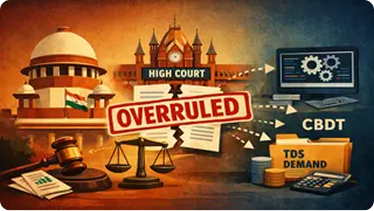
In a batch of appeals filed by Foseco India Ltd., the issue revolved around whether the company could apply lower tax rates under Double Taxation Avoidance Agreements (DTAAs) while paying Dividend Distribution Tax (DDT) under Section 115-O of the Income Tax Act. The company had distributed dividends to non-resident shareholders and paid DDT at the statutory rate. Subsequently, it sought refunds by claiming that the tax on such dividends should be restricted to the concessional rates provided under applicable tax treaties. The claims were earlier rejected by both the Commissioner (Appeals) and the Income Tax Appellate Tribunal, which relied on the Special Bench ruling in DCIT vs. Total Oil India Pvt. Ltd. The matter was then carried before the High Court.
Central Issue: Whether an Indian company can invoke DTAA provisions to apply lower tax rates on Dividend Distribution Tax paid under Section 115-O ?
HC Held: The High Court dismissed the appeals and ruled against the assessee, holding that Dividend Distribution Tax (DDT) is levied on the company’s distributable profits and not on the income of the shareholder. It clarified that DDT is a direct tax liability of the company itself and cannot be regarded as a tax paid on behalf of shareholders. On this basis, the Court concluded that the provisions of Double Taxation Avoidance Agreements (DTAAs), which are intended to protect shareholders from being taxed twice on the same income, have no application in the context of DDT.
The Court further reaffirmed that DDT is in the nature of an additional tax on the company and not a withholding tax. In support of this position, reliance was placed on the Supreme Court’s ruling in Godrej & Boyce Manufacturing Co. Ltd. v. DCIT, which had authoritatively clarified the character of DDT. Thus, the High Court held that treaty benefits could not be invoked to reduce the applicable DDT rates for the period prior to its abolition in April 2020.

To Read Full Judgment, Download PDF Given Below.
About Author


Meetu Kumari
Content Manager
Meetu Kumari is an Experienced Advocate and Content Writer with 4+ years of demonstrated history of working in the law practice industry. Skilled in Developing Content, Researching, and Drafting. Strong professional with a Bachelor of Science (B.Sc.) focused on Law from Gujarat National Law University.
Meetu Kumari is an Experienced Advocate and Content Writer with 4+ years of demonstrated history of working in the law practice industry. Skilled in Developing Content, Researching, and Drafting. Strong professional with a Bachelor of Science (B.Sc.) focused on Law from Gujarat National Law University.
 Studycafe
 Jodhpur, Rajasthan, India
 2264
2264My Recent Articles
- ITAT Condones 302-Day Delay, Restores Salary Assessment for Fresh VerificationPremium
- ITAT Condones Delay After Tax Consultant's Death, Restores Appeals for Fresh HearingPremium
- ITAT Remands Salary Addition, Says Taxability Depends on Salary Becoming Due, Not Mere ReceiptPremium
- ITAT Deletes TP Royalty Adjustment, Orders Fresh Review of Commission BenchmarkingPremium
- ITAT Quashes Reassessment Over Unsigned Section 148 Notice Issued to AssesseePremium
Up Next
Loading suggestions…


Recent Posts

All Posts


Recent Posts
All Posts