IPO Update: Bikaji Foods Looking to Raise ₹1,000 Cr via IPO at $1 Billion Valuation
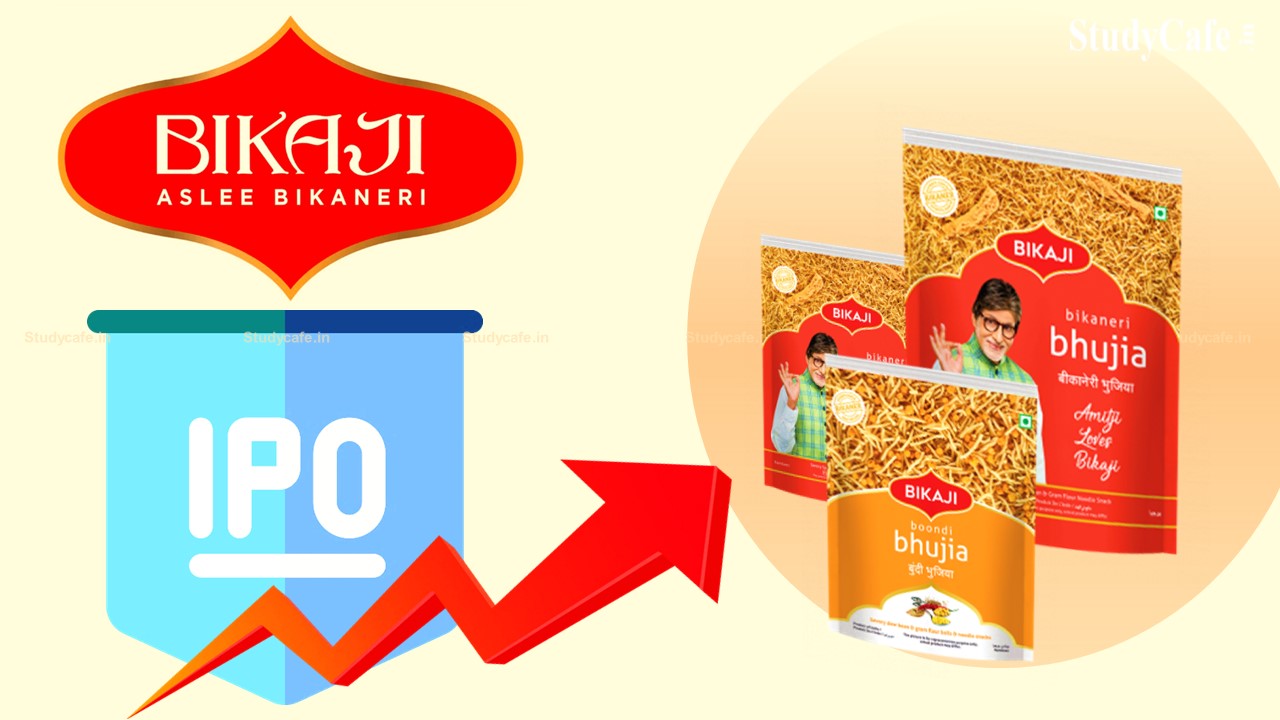
IPO Update: Bikaji Foods Looking to Raise ₹1,000 Cr via IPO at $1 Billion Valuation Bikaji Foods International is expected to publish its draught red…
 SANDEEP KUMAR
 Feb 22, 2022
IPO Update: Bikaji Foods Looking to Raise ₹1,000 Cr via IPO at $1 Billion Valuation
Bikaji Foods International is expected to publish its draught red herring prospectus (DHRP) this week in order to raise Rs 1,000 crore in an IPO at a valuation of roughly $1 billion. In India, the company is already a well-known brand for ready-to-eat (RTE) snacks and ethnic savories. It is one of the major producers of ethnic savory and sweet foods, and it is now implementing an Omni channel strategy that combines physical presence in important places with a web presence.
The overall Bikaji Foods International IPO will include a fresh issue of Rs.1,000 crore and an offer for sale on top of that, the size of which will be determined later. Bikaji Foods International is valued at roughly $1 billion in the IPO, making it one of India's most valuable snacking companies. The company is based in Rajasthan and specializes on ready-to-eat items that are suitable for the Indian palate.
Shiv Ratan Agarwal founded the food company, which was previously known as Shivdeep Industries Ltd. It began as a partnership in 1986 before converting to a limited liability company in 1995.
Until 1993, when it broke ties with Nagpur-based Haldiram Foods International Pvt. Ltd and adopted the Bikaji brand name, the company sold its products under the Haldiram's name. Bikaji's factory in Bikaner produces Indian snacks like bhujia, papad, namkeens, and sweets like rasgulla.
According to a June 2017 study by credit rating firm ICRA, the company operates in a fragmented and unorganized food industry, where it competes with both local manufacturers and organized competitors.
Aside from Rajasthan, the corporation has a substantial presence in a few other states, including Bihar and Assam.
According to the ICRA report, in the financial year 2013-14, the company initiated an expansion program that required Rs 280 crore in capital expenditure. According to the ICRA report, the expansion plan will be finished by the end of March, bringing the company's total installed capacity to 277 tonnes per day.
Bikaji will join the ranks of Prataap Snacks and DFM Foods if it goes public. Yellow Diamond chips manufacturer Prataap Snacks made a great debut on the stock exchanges last year. Sequoia Capital, a venture capital firm, is a shareholder in Prataap Snacks. Private equity firm WestBridge Capital is a major shareholder in DFM Foods, which operates under the trademark Crax.
Several private equity funds have previously invested in the company. Lighthouse Funds, IIFL, Avendus, and Axis PE Fund, for example, are among the prominent PE firms that have already invested in Bikaji Foods International. Lighthouse owns around 12% of Bikaji Foods International, which it purchased in 2012. IIFL, which was also an early investor in Bikaji Foods International, received a portion of the stock over time.
In 2019, Avendus and Axis PE each purchased a 1% stake in the company. Bikaji Foods International was able to become debt-free thanks to a succession of private equity investments. As a result, they can expand without increasing their financial risk. Shiv Ratan Agarwal and Deepak Agarwal, the two major promoters of Bikaji Foods International, currently own 78.8 percent of the company.
Bikaji operates six manufacturing facilities in Rajasthan, Assam, and Karnataka. Every day, the company creates approximately 400 tonnes of snacks from a menu of more than 300 options. Bhujia, namkeen, sweets, papad, and frozen snacks are some of Bikaji Foods International's most popular snack items.
Between FY16 and FY20, Bikaji's sales volume increased 13.85 percent yearly to 74.7 million kg, while revenue increased 14.2 percent to 1,073 crore.
Namkeen accounts for 37% of Bikaji Foods International's revenues, Bhujia for 32%, sweets for 14%, papads for 10%, and all other items together account for the remaining 7%. Between 2021 and 2025, the Indian ready-to-eat (RTE) snacks market is predicted to develop at a compounded annual growth rate of 8.9%.
Easy availability, extended shelf life, greater urbanisation, and rising disposable incomes all contribute to the expansion of RTE snacks. Due to ease availability, longer shelf life, and rising disposable incomes, RTE snacks have a strong market in India.
According to information on the company's website, the company wants to construct more facilities in strategic areas in the next years and introduce new brands across all categories.
At the end of FY20, promoters Shiv Ratan Agarwal and Deepak Agarwal controlled 78.8% of the company.
About Author


SANDEEP KUMAR
Content Writer
 Studycafe
 RANCHI, Jharkhand, India
 91
91My Recent Articles
- "LIC IPO Not Good for Country”: Kerala Assembly Passes resolution against LIC IPO
- Ruchi Soya's Follow-on Public Issue of Rs.4,300 Crore to Open on March 24th
- IPO Update: Byju’s raises $800 million in Pre-IPO Fundraise
- IPO Update: SEBI tightens IPO Valuation Scrutiny for Startups eyeing Listings
- IPO Update: Mumbai based Suraj Estate Developers files papers to raise Rs 500 cr
Up Next
Loading suggestions…


Recent Posts

All Posts

Recent Posts
All Posts