ITAT Restores Fortis Hospitals' Appeal And Holds Bona Fide Clerical Error Cannot Defeat Right to Appeal:
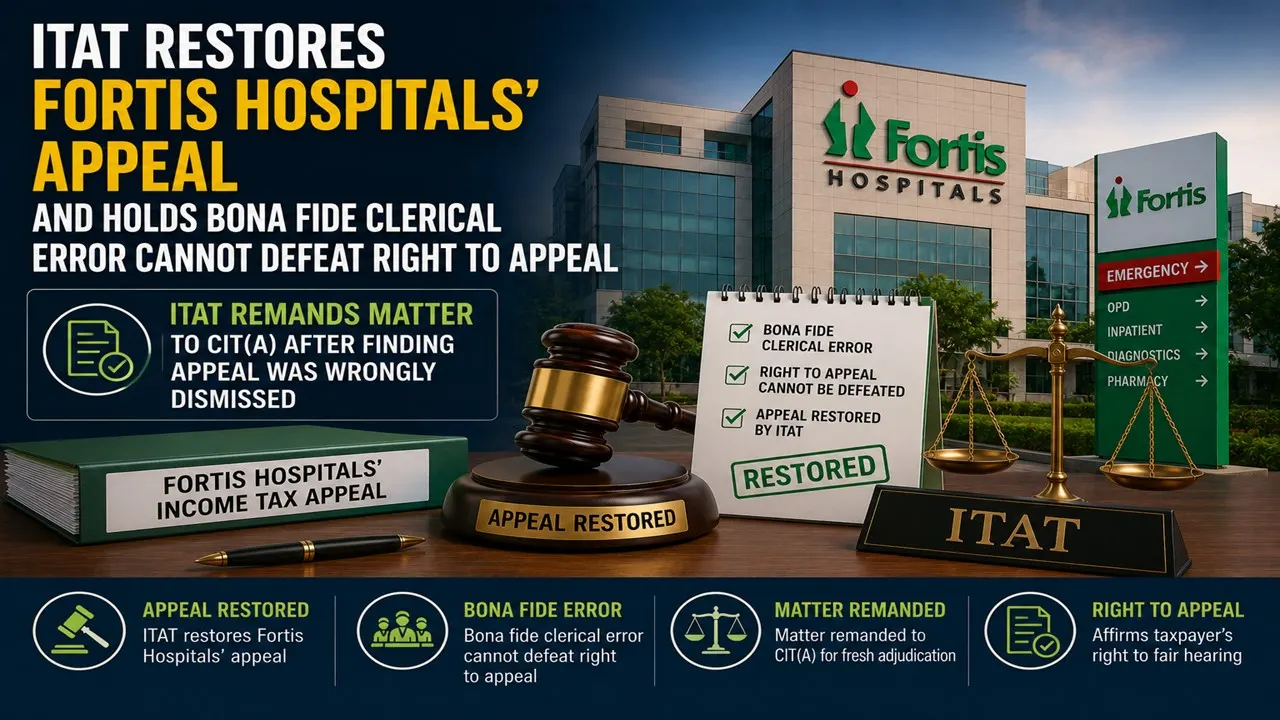
ITAT Delhi has restored the appeal after observing that the first appellate authority dismissed the appeal as time-barred solely due to a bona fide clerical error in Form 35.
ITAT Remands Matter to CIT(A) After Finding Appeal Was Wrongly Dismissed
 Saima
Saima Jun 11, 2026
ITAT Restores Fortis Hospitals' Appeal And Holds Bona Fide Clerical Error Cannot Defeat Right to Appeal
The Income Tax Appellate Tribunal (ITAT) Delhi held that the mistake in mentioning the relevant order under Section 143(1) instead of the rectification order under Section 154 should not deprive the assessee of an opportunity to contest the additions on merits. Fortis Hospitals Ltd. has filed an appeal before the CIT(A) and challenged the adjustments made by CPC, Bengaluru. The dispute was related to additions amounting to Rs 12.49 crore that included disallowances under Sections 43B and 36(1)(va), adjustment of ICDS-related income, etc. While filing Form 35, the assessee has mistakenly mentioned that the appeal was against an intimation issued under Section 143(1) of the Income Tax Act instead of the rectification order passed under Section 154 dated 25 August 2022. On that basis, the CIT(A) calculated a delay of 556 days and dismissed the appeal as time-barred without examining the merits of the case. The assessee contended before the Tribunal that the error was purely clerical and bona fide. The Delhi ITAT observed the evidence on record and noted that the assessee had challenged the rectification order passed under Section 154. The Tribunal noted that the incorrect reference to the Section 143(1) intimation in the appeal form was a bona fide mistake. A bona fide clerical or inadvertent error in mentioning the impugned order in Form 35 cannot be used to deny a taxpayer the statutory right of appeal, particularly when the correct order is otherwise evident from the record. The Bench further found that the CIT(A) disposed of the appeal ex parte by treating it as barred by limitation without appreciating the factual position and without granting an effective opportunity to the assessee. Accepting the explanation furnished by the assessee, the Tribunal held that the appeal should be treated as having been filed against the order passed under Section 154 of the Act. Accordingly, it set aside the appellate order and remanded the matter to the CIT(A) for fresh adjudication on merits. The Tribunal directed the CIT(A) to grant three effective opportunities of hearing to the assessee and decide the appeal in accordance with law after considering the relevant documents and submissions.
About Author


Saima
Content Writer
Saima is a Law graduate with a passion for research and content writing. She writes for Finance, Taxation and Legal Updates at Studycafe.in, simplifying complex legal decisions by the ITAT, High Court, AAR and GSTAT into uncomplicated and clear explanations.
Saima is a Law graduate with a passion for research and content writing. She writes for Finance, Taxation and Legal Updates at Studycafe.in, simplifying complex legal decisions by the ITAT, High Court, AAR and GSTAT into uncomplicated and clear explanations.
 StudyCafe
 Delhi, Delhi, India
 555
555My Recent Articles
- High Court Quashes GST Demand Against Amul Over Non-Cross-Charging of Common Expenses
- High Court Quashes Income Tax Demand Against Contractual Worker Over Misuse of PAN
- ITAT Deletes Rs 2.06 Crore Addition Under Section 68 for Unsecured Loans
- ITAT Holds Section 263 Revision Invalid on Taxability of Interest Under Section 28 of Land Acquisition Act
- ITAT Upholds Section 68 Addition for Bogus Loans But Restricts Estimated Profit to 2% of Sales
Up Next
Loading suggestions…


Recent Posts


All Posts


Recent Posts
All Posts