ITAT Restricts Unexplained Cash Addition of Rs 80.82 Lakh to Only Rs 5 Lakh:
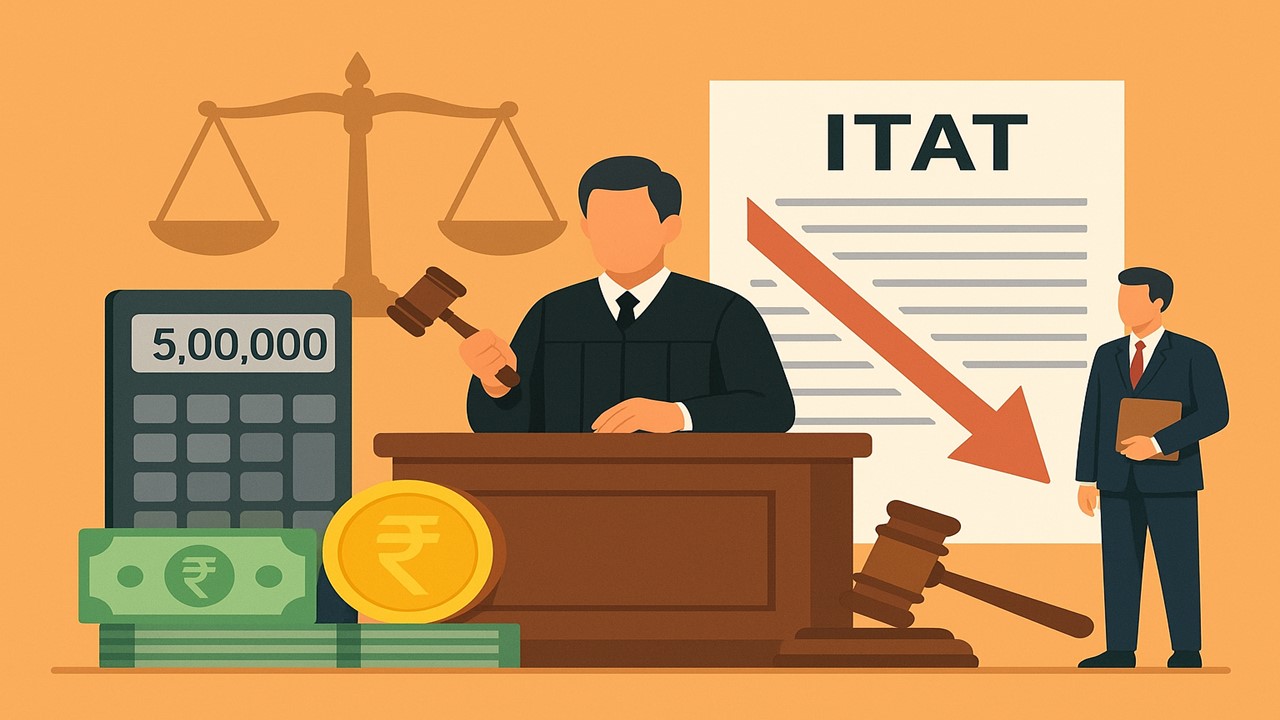
The ITAT partly agreed with Mehta as he provided the explanation, but it also noted that the assessee failed to explain some of the cash deposits.
ITAT Limits Unexplained Cash Disallwance at Rs. 5 Lakh
 Nidhi
Nidhi Dec 11, 2025
ITAT Restricts Unexplained Cash Addition of Rs 80.82 Lakh to Only Rs 5 Lakh
The Income Tax Appellate Tribunal (ITAT) Delhi partially upheld an appeal filed by an assessee, challenging two additions related to cash deposits and Sundry Creditors.
The assessee, Shri Shashi Kumar Mehta's case was selected for Scrutiny and during the assessment proceedings, the assessing Officer observed that the assessee had declared business income of Rs 4,545 and agricultural income of Rs 2,00,000 with a huge turnover of Rs 6 crore, including Rs 81 lakhs deposited in cash during the demonetisation period. Additionally, the AO noted that the assessee did not get his books of accounts audited and has shown himself as a sundry creditor for Rs. 17,71,879 in his books of account. The assessee allegedly held cash in hand for Rs 80,82,763. The AO also noted that the assessee did not show interest expense paid on a cash credit loan and also violated section 40A(3) of the Income Tax Act.
The AO added Rs. 80,82,763 to the income of the assessee as an unexplained cash deposit and Rs 17,71,879 on account of sundry creditors appearing in the balance sheet in the assessee's own name, arguing that the assessee cannot be a sundry creditor of his own proprietorship.
The CIT(A) also upheld these additions and rejected the appeal filed by the assessee. Therefore, the company approached the Income Tax Appellate Tribunal (ITAT), Delhi.
The assessee submitted that his agricultural income was shown in the computation of income filed earlier, and the balance in the assessee's name relates to the sales to the firm Mange Ram Kewal Kishan, which was a partnership dissolved and the copy of the dissolution deed was furnished on record. After dissolution, Shashi Kumar Mehta, the assessee, continued as a sole proprietor. The assessee submitted that the sundry creditor entry in his own name was an inadvertent mistake during the conversion of the partnership to proprietorship.
The ITAT accepted the assessee's explanation about the sundry creditor mistake and deleted the relevant addition. Regarding the cash deposit disallowance, the ITAT partly agreed with Mehta as he provided the explanation, but it also noted that the assessee failed to explain some of the cash deposits. Therefore, it restricted the addition to Rs 5 lakh.
About Author


Nidhi
Content Writer
Nidhi is a skilled content writer specializing in personal finance. She creates clear, engaging articles on mutual funds, investments, insurance, and wealth-building strategies. With a passion for simplifying complex financial topics, Nidhi helps readers make informed money decisions with confidence. She can be reached at [email protected]
Nidhi is a skilled content writer specializing in personal finance. She creates clear, engaging articles on mutual funds, investments, insurance, and wealth-building strategies. With a passion for simplifying complex financial topics, Nidhi helps readers make informed money decisions with confidence. She can be reached at [email protected]
 Studycafe
 New Delhi, Delhi, India
 1832
1832My Recent Articles
- Karnataka High Court Gives Another Chance in GST Matter Due to Lack of Hearing
- Delay Should Be Condoned if Explanation is Unrefuted: ITAT
- Non-Service of Income Tax Notice, Ill health of taxpayer, ITAT condones Appeal filing delay
- Books of Accounts Cannot be Rejected Without Any Specific Defect: ITAT Kolkata
- Karnataka High Court Sends ITC Matter Back to GST Authorities for Reconsideration
Up Next
Loading suggestions…


Recent Posts
All Posts


Tags
Recent Posts
All Posts