ITR-4 New Rule Requires Small Taxpayers to Disclose Investments for Better Income Tracking:
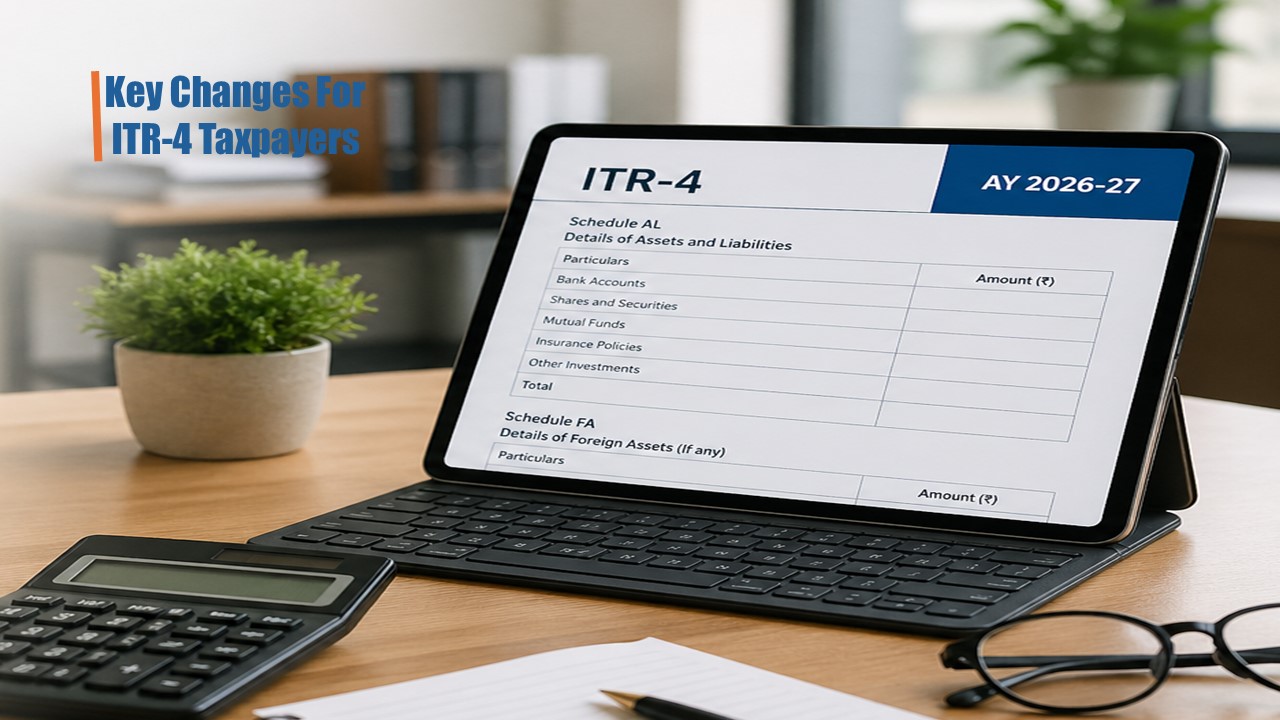
The government required ITR-4 taxpayers to disclose investments, improved income tracking, increased transparency, reduced hidden assets, and made tax filing more detailed from AY 2026-27.
CBDT Makes Investment Reporting Mandatory in ITR
 Kashish Bhardwaj
 Apr 30, 2026
ITR-4 New Rule Requires Small Taxpayers to Disclose Investments for Better Income Tracking
The Central Board of Direct Taxes has made a major change in ITR-4 (Sugam). From Assessment Year 2026-27, it will be mandatory for small businesses and freelancers to submit their investment information. Earlier, this was not necessary.
ITR-4 is for people:
- Individuals, Hindu Undivided Families, and firms, excluding LLPs
- Taxpayers earning up to Rs 50 lakh
- Those choosing presumptive taxation under Sections 44AD, 44ADA, and 44AE
- mutual fund
- fixed deposit
- share
- property

- Investigation under section 143(2)
- Penalty under section 270A
- 50% tax penalty for showing less income
- Penalty up to 200% for giving wrong information
About Author


Kashish Bhardwaj
Content Writer
 StudyCafe
 Delhi, Delhi, India
 176
176My Recent Articles
- Supreme Court Judge Strength to Increase from 33 to 37 for Faster Justice
- Builder Cleared of Profiteering Charges After Passing Excess ITC Benefit to Homebuyers: GSTAT
- Jubilant Ingrevia to Challenge Rs 2.03 Crore GST Demand Before GSTAT
- Rs 70 Crore Claim Row: Ex-CFO Gobind Jain Moves Bombay High Court Against IndusInd Bank Over Alleged Wrongful Dismissal
- Dream Sports Launches Dream Street: AI-Powered Entry into India’s Retail Broking Market
Up Next
Loading suggestions…


Recent Posts



All Posts



Recent Posts
All Posts