ITR Filing Deadline: Filing Your Return Is Not the Final Step:
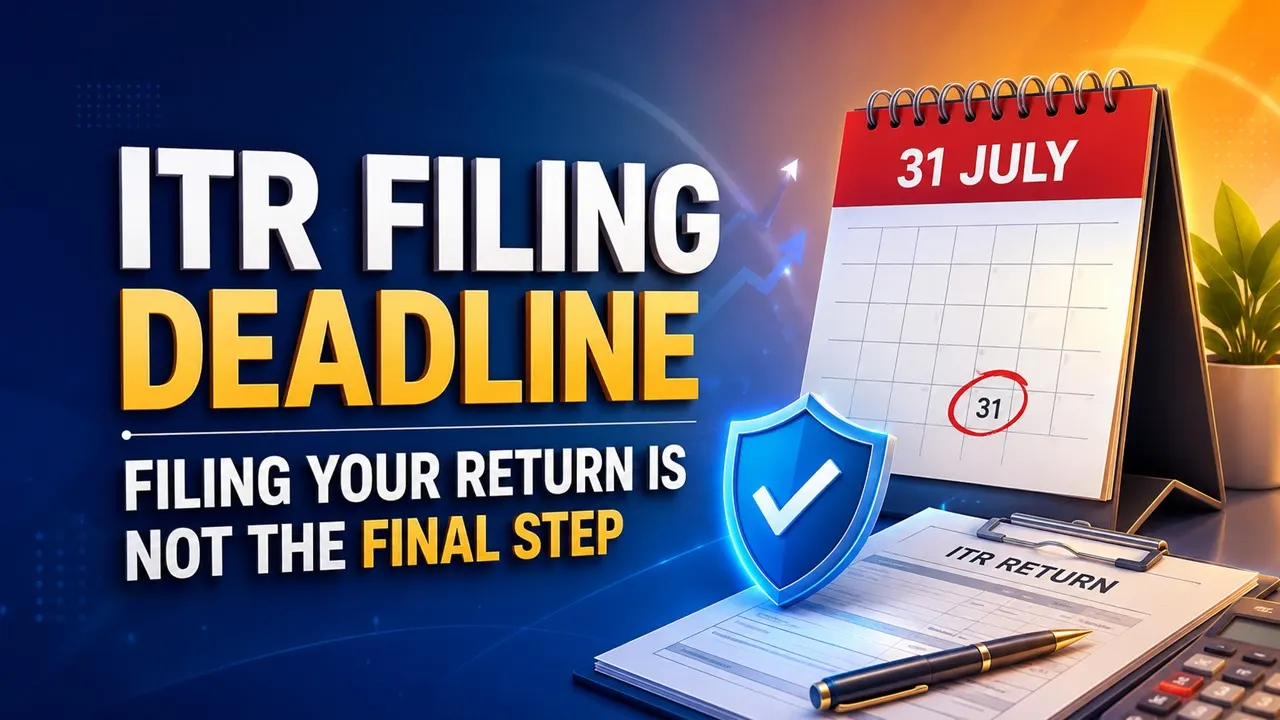
Your ITR becomes valid only after e-verification, followed by processing by the Income Tax Department
Why ITR Verification Matters
 Vanshika verma
 Jul 31, 2026
The 31 July deadline for filing your Income Tax Return (ITR) is almost here. But simply filing your return is not enough. Your ITR becomes valid only after you e-verify it. Once your return is e-verified and Income Tax Department begins the process of return. You may also check its status on the income tax e-filing portal.
Most simple ITRs are processed in 45 days. However, prior to processing being completed, all returns go through a number of checks to ensure that the information is correct. These checks may result in the return being accepted, corrected or selected for further review.

Basic Checks
CPC, Bengaluru First, checks the following:
You have selected the correct ITR form.

Details and schedules all set.
There is no error in the calculation.
If something is seriously wrong, you will receive a notice of defective return telling you to fix the problem.
Data verification
Next, the Income Tax Department compares the details you reported with the information available in:
26AS Form
Annual Information Statement (AIS)
Summary of Taxpayer Information (TIS)
It checks your income, TDS and deductions. If there is any mismatch, your return may need further review.
Processing and Intimation
After all the checks are completed, your return is processed. You will then receive an Intimation under Section 143(1).
This document tells you:
The tax calculated by the department.
Whether it matches the tax in your return.
Whether you will receive a refund, need to pay more tax, or have no refund and no tax due.
Refund Credit
If you are eligible for a refund, it is usually started a few days after your return is marked as processed.
The refund amount is then credited to your pre-validated bank account, usually within a few working days.
Does Filing Early Help?
Filing early is not compulsory, but it has some benefits.
Experts say returns filed earlier are often processed sooner because the CPC generally handles returns in the order they are received.
Early filing also helps you:
Avoid last-minute website slowdowns.
Get your refund faster.
Reduce the stress of filing close to the deadline.
However, if you file your return correctly and before the due date, there is usually no difference in tax benefits whether you file early or on the last day.
Do Small Mismatches Matter?
Many people believe:
Only people with high incomes are checked.
A pre-filled return is always correct.
Small mismatches do not matter.
Returns are checked only when the refund amount is large.
These are common myths. In reality, the Income Tax Department does cross-match data for all kinds of returns. Even small differences between the income, TDS, or tax credits you report and the information available with the department can lead to your return being flagged for further review.
About Author


Vanshika verma
Content Writer
 Studycafe
 Delhi, Delhi, India
 2114
2114My Recent Articles
- Rajasthan Police Warns of WhatsApp Account Hacking Scams, Urges People to Beware of Fake QR Codes and OTP Fraud
- Man Carrying Rs 25,000 Reward Arrested in Rs 1.22 Crore GST Evasion Case Involving Fake Firms in Bulandshahr
- Star Paper Mills to Challenge Rs 1.55 Crore GST Demand Order Over Disallowance of Input Tax Credit on Raw Materials Destroyed in Fire
- Delhi CBI Arrests Hospital Doctor and Contractual Nursing Orderly Supervisor for Alleged Rs 1 Lakh Bribery in Tender-Related Case
- ITAT Condones 2,107-Day Delay, Directs CIT(A) to Reconsider Rs 16.54 Lakh Section 80PA Deduction Claim
Loading suggestions…


Recent Posts


All Posts



Tags
Recent Posts
All Posts