Judicial Restraint Reaffirmed: High Court Refuses to Intervene in Legislative Corrections:
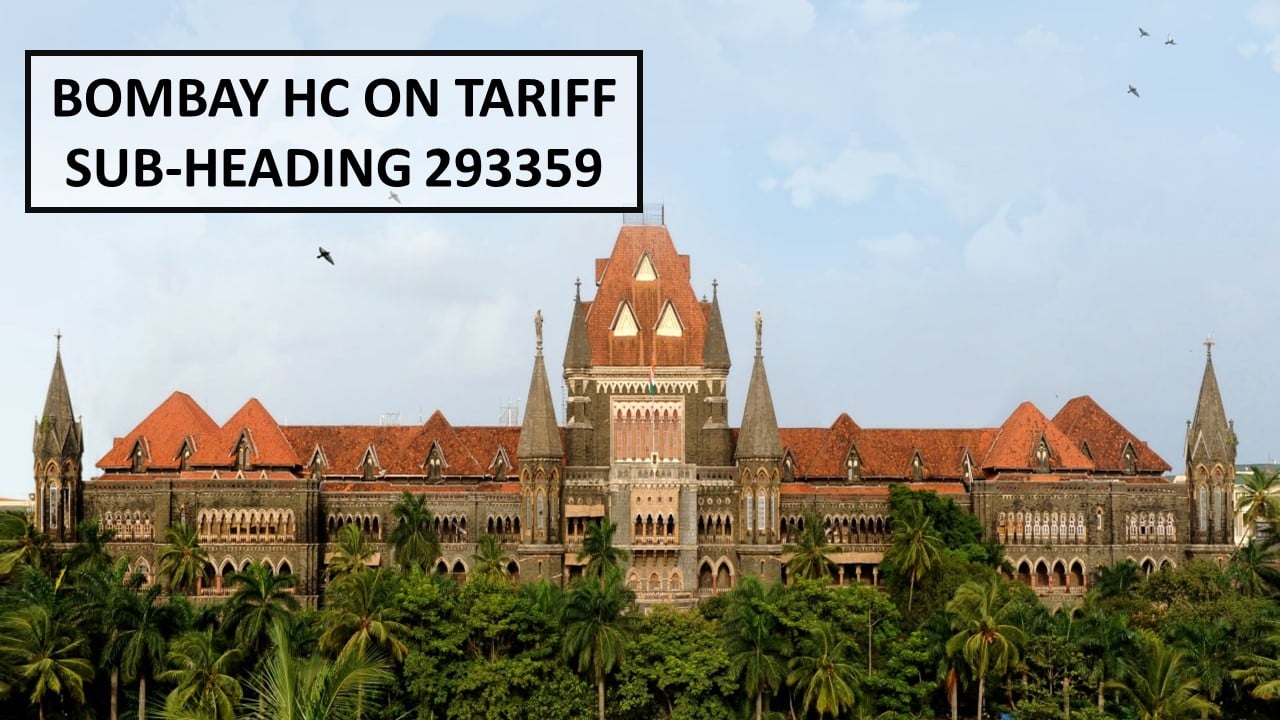
The court could have interfered if a law was made without legislative competence or if it goes against the Constitution.
Court Cannot Direct legislature to Give Retrospective Effect to Law: Bombay HC
 Nidhi
Nidhi Jul 18, 2025
Table of Contents

Judicial Restraint Reaffirmed: High Court Refuses to Intervene in Legislative Corrections
The petitioner, Aarti Drugs Limited, imports chemicals under tariff sub-heading 293359 of Chapter 29 of the Customs Tariff. The petitioner filed an appeal with the High Court of Bombay as it believed that the applicable Basic Customs Duty (BCD) of 10% was a clerical error and therefore, it requested the court for the following things:
(a) To issue a writ of certiorari mandamus directing the correction of subheading 293359 of Chapter 29.
(b) To issue directions to reduce the tariff rate of basic customs duty (BCD) for tariff items under sub-heading 293359 from 10% to 7.5%, effective from 01.05.2022
(c) to issue a writ of mandamus to direct Respondents No. 1 and 2 to decide upon the Representation dated 23.03.2024.
Submissions Made by Petitioner
The learned Counsel of the petitioner argued that a clerical error had occurred in the customs tariff under sub-heading 293359 of Chapter 29 of the Finance Act, 2022. He submitted that the error had been corrected, but the revised changes are applicable from February 1, 2025 or May 1, 2025. He said that the correction must have been retrospective, i.e., effective from 1 May 2022, so that the petitioner could have benefited from such a correction.Bombay High Court Decision
The court stated that the court cannot issue directions for correction of the clerical errors and therefore, it cannot give direction to the legislature to give retrospective effect to a law. The court could have interfered if a law was made without legislative competence or if it goes against the Constitution. Therefore, the court did not grant relief to the petitioner in prayers (a) and (b). For prayer (c), the Petitioner cannot demand a writ of mandamus as a matter of right. However, since a grievance is raised, the Court sees no harm if the government looks into the representation. Therefore, the Court requests that Respondents 1 and 2 dispose of the representation within a reasonable time. The learned counsel stated that the Petitioner will file a supplementary representation within two weeks. The court requested that both the original and supplementary representations be disposed of in a reasonable time.About Author


Nidhi
Content Writer
Nidhi is a skilled content writer specializing in personal finance. She creates clear, engaging articles on mutual funds, investments, insurance, and wealth-building strategies. With a passion for simplifying complex financial topics, Nidhi helps readers make informed money decisions with confidence. She can be reached at [email protected]
Nidhi is a skilled content writer specializing in personal finance. She creates clear, engaging articles on mutual funds, investments, insurance, and wealth-building strategies. With a passion for simplifying complex financial topics, Nidhi helps readers make informed money decisions with confidence. She can be reached at [email protected]
 Studycafe
 New Delhi, Delhi, India
 1832
1832My Recent Articles
- Karnataka High Court Gives Another Chance in GST Matter Due to Lack of Hearing
- Delay Should Be Condoned if Explanation is Unrefuted: ITAT
- Non-Service of Income Tax Notice, Ill health of taxpayer, ITAT condones Appeal filing delay
- Books of Accounts Cannot be Rejected Without Any Specific Defect: ITAT Kolkata
- Karnataka High Court Sends ITC Matter Back to GST Authorities for Reconsideration
Up Next
Loading suggestions…


Recent Posts



All Posts


Recent Posts
All Posts