Karnataka HC Reviews GST Classification of Bakery Items in Mad Over Donuts Case:
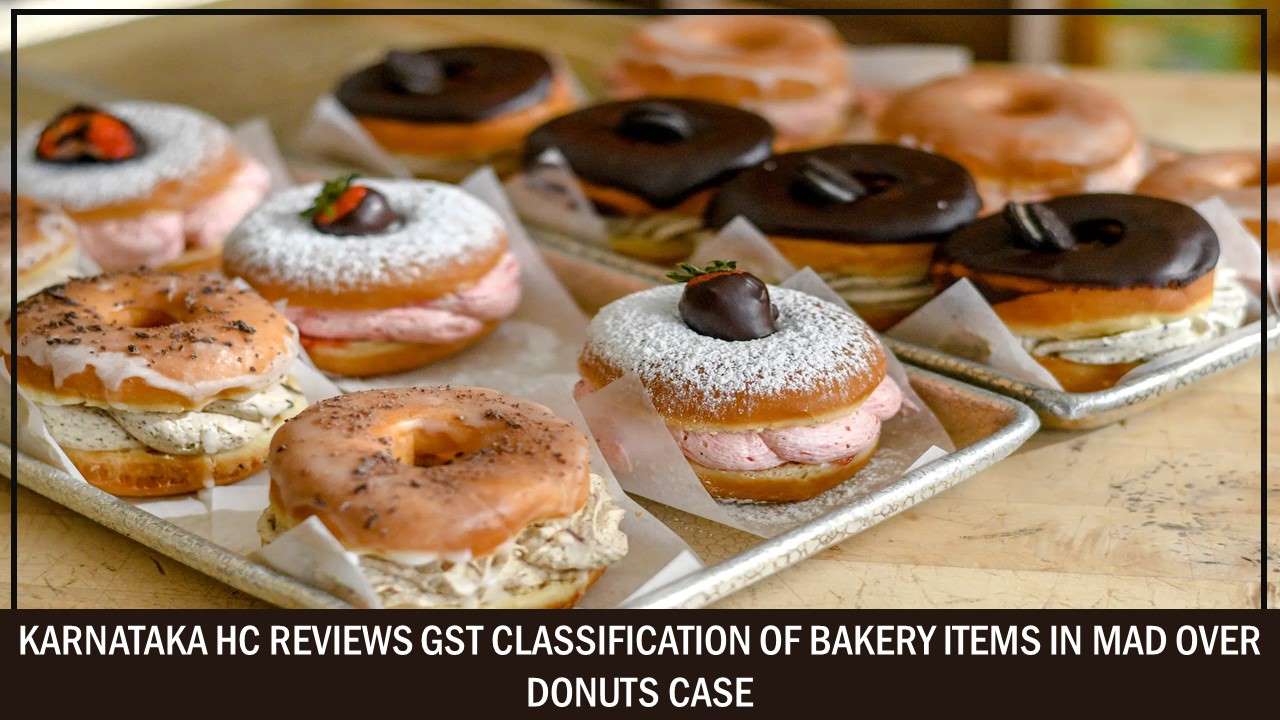
The Karnataka HC on April 25 heard the arguments in a significant GST classification dispute involving the tax treatment of donuts, cakes, and other bakery items.
Mad Over Donuts Case: Karnataka HC Steps in on GST Classification of Bakery Items
 Nidhi
Nidhi Apr 26, 2025
Karnataka HC Reviews GST Classification of Bakery Items in Mad Over Donuts Case
The Karnataka High Court on April 25 heard the arguments in a significant GST classification dispute involving the tax treatment of donuts, cakes, and other bakery items.
The Mad over Donuts case was heard by Justice SR Krishna Kumar, centered on whether these products should be classified as restaurant services, which would be taxed at a 5% GST rate, or as bakery products, which might be subject to another tax treatment.
The advocate for the petitioner, Himesh Foods (Mad Over Donuts), argued that the supply of food items like donuts and cakes should be considered as a composite supply of services as per the rules under the CGST Act. The petitioner said that the provision of food at restaurants, eateries, canteens, and messes, whether the food is consumed in the restaurant or is taken away, both are categorised under restaurant services and are subject to taxation at the GST rate of 5%.
The applicant mentioned a recent interim order of the Bombay High Court, which supported the petitioner's argument and said that these supplies could be considered services under GST law.
During the proceedings, the petitioner raised the issue of multiple show-cause notices by different state authorities, even though the Directorate General of GST Intelligence (DGGI) in Mumbai had already issued a consolidated notice. The petitioner argued that this was a case of duplication and harassment, as the central authority had already considered jurisdiction for the matter.
The Karnataka High Court responded by highlighting a previous pledge given by the respondents to the Bombay High Court, stating that no forceful action would be taken while the classification issue was being examined. The court pointed out the need for judicial consistency and agreed that Karnataka’s GST authorities could not take any hasty or coercive actions while the case was still pending.
The Karnataka HC's order could give clarity on how GST should be levied to businesss running across different states, which could affect how companies follow tax rules across the industry.
The next hearing, which is scheduled for June 6, 2025, could have a major impact on the tax implications of GST on food businesses. The court's final decision is likely to influence GST compliance, as it could serve as an example for resolving similar disputes in the future.
About Author


Nidhi
Content Writer
Nidhi is a skilled content writer specializing in personal finance. She creates clear, engaging articles on mutual funds, investments, insurance, and wealth-building strategies. With a passion for simplifying complex financial topics, Nidhi helps readers make informed money decisions with confidence. She can be reached at [email protected]
Nidhi is a skilled content writer specializing in personal finance. She creates clear, engaging articles on mutual funds, investments, insurance, and wealth-building strategies. With a passion for simplifying complex financial topics, Nidhi helps readers make informed money decisions with confidence. She can be reached at [email protected]
 Studycafe
 New Delhi, Delhi, India
 1832
1832My Recent Articles
- Karnataka High Court Gives Another Chance in GST Matter Due to Lack of Hearing
- Delay Should Be Condoned if Explanation is Unrefuted: ITAT
- Non-Service of Income Tax Notice, Ill health of taxpayer, ITAT condones Appeal filing delay
- Books of Accounts Cannot be Rejected Without Any Specific Defect: ITAT Kolkata
- Karnataka High Court Sends ITC Matter Back to GST Authorities for Reconsideration
Up Next
Loading suggestions…


Recent Posts


All Posts

Tags
No tags yet.
Recent Posts
All Posts
Tags
No tags yet.