Mahakumbh raises UP's GST collections, contributing to above Rs.1000 crore:
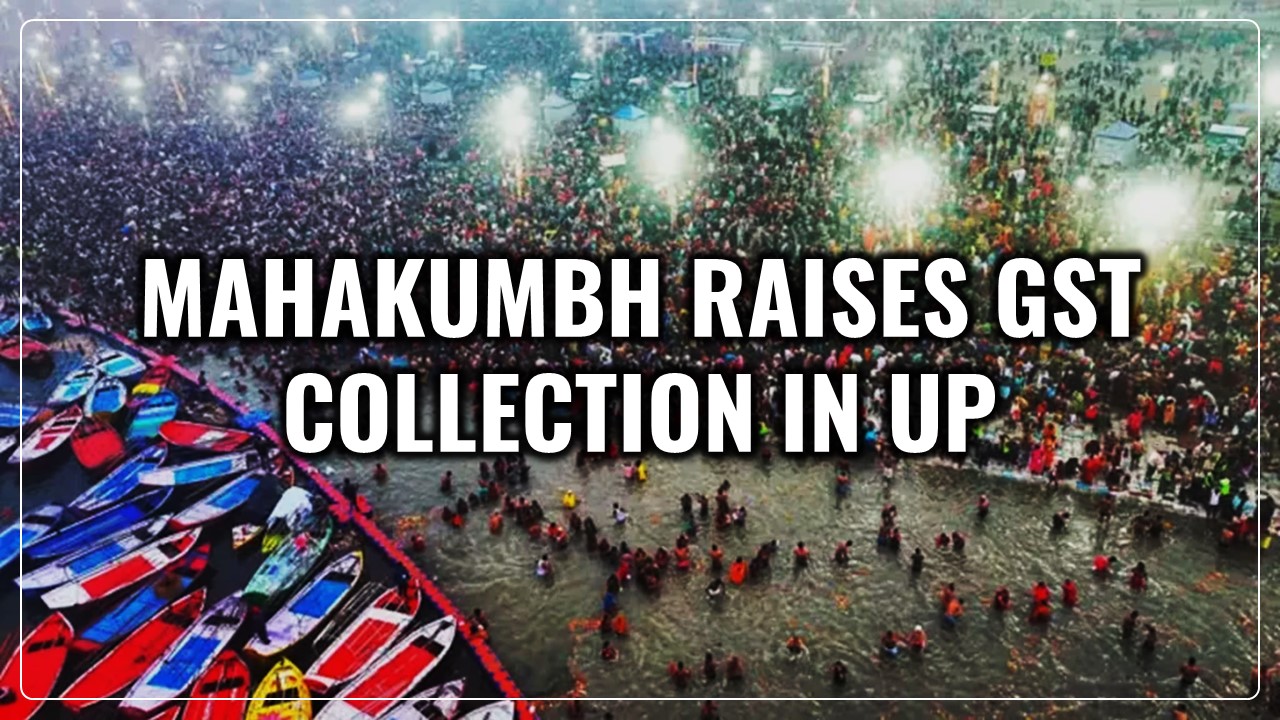
Uttar Pradesh's GST collections have increased significantly, by more than Rs 1,000 crore in January and February 2025 compared to the same time last year.
Mahakumbh raises GST Collection in UP
 Reetu
Reetu Mar 6, 2025
Mahakumbh raises UP's GST collections, contributing to above Rs.1000 crore
Uttar Pradesh's GST collections have increased significantly, by more than Rs 1,000 crore in January and February 2025 compared to the same time last year. The increase in tax revenue is mostly due to the inflow of visitors during the Mahakumbh, which increased consumer spending across a variety of sectors.
During this time, UP had an 11% and 14% increase in GST receipts in January and February, respectively. This surpassed the national average of 9% in February, bringing the state closer to the performance levels of Maharashtra, Gujarat, Tamil Nadu, Haryana, and Karnataka, where GST growth ranged from 7% to 20%.
Compared to the previous year, UP's growth has accelerated dramatically, with 10.8% and 8.4% growth in January and February 2024. This improvement demonstrates the economic impact of the Mahakumbh, which attracted over 60 crore visitors and greatly increased business activity.
Impact of Mahakumbh on Business and Economy
The economic impact of Mahakumbh goes beyond GST collections. Chief Economic Advisor (CEA) V. Anantha Nageswaran recently acknowledged the event's role in fuelling India's economic growth, citing the "huge spending" linked with the religious gathering.
Sectors such as travel, hospitality, food services, and retail witnessed tremendous demand. Due to enormous demand, prices for goods and services, including accommodation and meals, skyrocketed, greatly increasing tax collections. Furthermore, the increased use of digital payments has boosted GST collections.
Experts speak in on the Financial Impact
The Chair Professor at NITI Aayog Chair, University of Allahabad, found that digital transactions were crucial for revenue generation in Prayagraj, Varanasi, and Ayodhya. However, cash transactions remained high, potentially limiting GST collections. A Lucknow University professor estimated that Mahakumbh generated business turnover worth Rs.3-4 lakh crore with minimal public investment, highlighting the event's potential.
Professor of DAV PG College, BHU, Varanasi, claimed that 45 crore devotees spending an average of Rs.3,000 each resulted in a Rs.13.5 lakh crore economic influx. With a 2.5% ripple effect, the total impact is estimated to be Rs.13.84 lakh crore, with major benefits for hospitality, transportation, and retail industries.
Generation of Employment and Economic Gains
Beyond the immediate economic benefits, Mahakumbh-related infrastructure investments offer long-term growth. The government predicts a Rs 3 lakh crore boost to the state's GDP.
Furthermore, the event is thought to have created 30-40 lakh temporary jobs, with at least 25% of them projected to become permanent positions. However, experts are concerned about how much of the extra capacity will be used in the following years, once the visitor influx has subsided.
About Author


Reetu
Content Manager
Reetu is a Content Writer with 4+ years of experience in GST, Income Tax, Finance, Company Law, Education and Career Related Content. She is a B.COM (Honrs.) Graduate.
Reetu is a Content Writer with 4+ years of experience in GST, Income Tax, Finance, Company Law, Education and Career Related Content. She is a B.COM (Honrs.) Graduate.
 Studycafe
 Delhi, Delhi, India
 8071
8071My Recent Articles
- Income Tax Guide for Indian Defence Personnel for Tax Filing, Taxable Allowances and Other Benefits
- Income Tax Return Breaking: ITR Forms released for AY 25-26
- Ex-DRT Officials Sentenced to 5 Years Rigorous Imprisonment by Madras High Court along with Rs.27 Lakh Fine
- GSTN issued Advisory on Case Sensitivity in IRN Generation
- RBI to issue Notes of Rs.10 and Rs.500 bearing Signature of Guv Malhotra
Up Next
Loading suggestions…


Recent Posts



All Posts


Tags
No tags yet.
Recent Posts
All Posts
Tags
No tags yet.