Major Rule Changes in July 2026: What Every Indian Needs to Know:
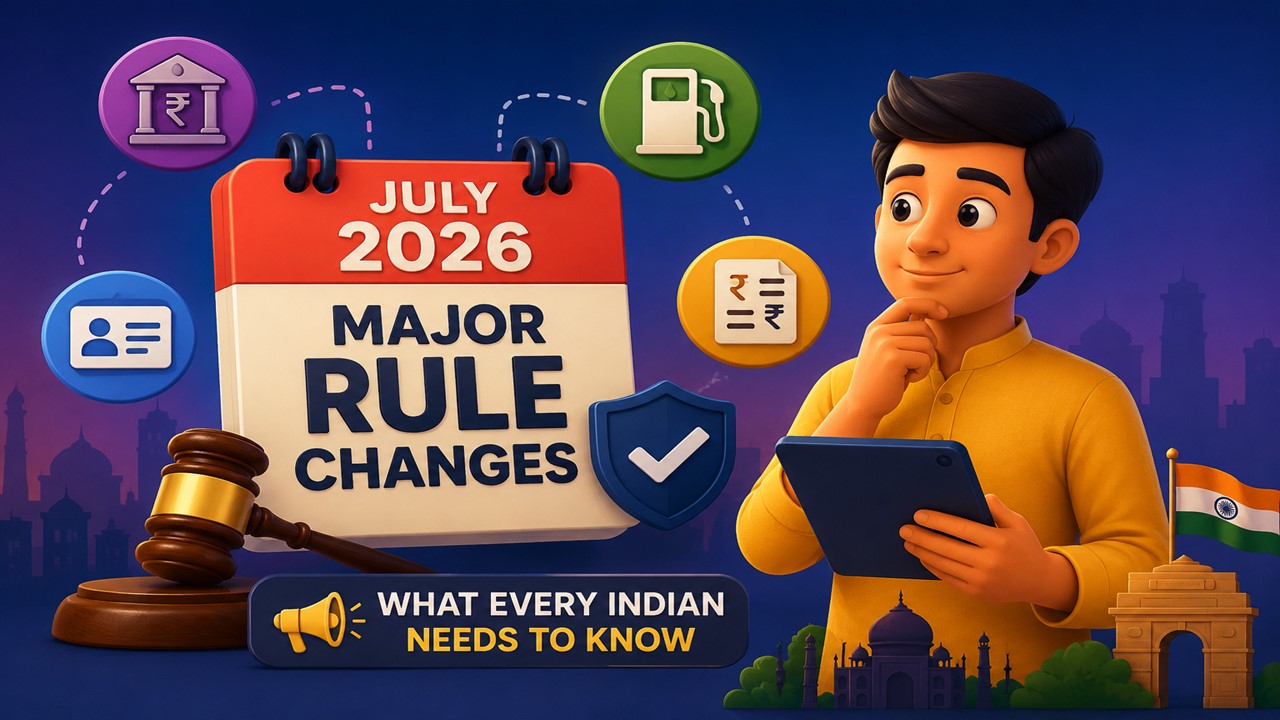
From EPFO services and free Aadhaar email updates to higher passport fees, new RBI rules, and the ITR filing deadline, several important changes have come into effect from July 1, 2026.
Key Changes From July 2026
 Jasmine
 Jul 4, 2026
A number of significant changes would be implemented from July 1, 2026, in India. Some of the changes are those in the EPFO regulations, the process of correcting the details on Aadhaar cards, and many more.
July will also be the last month for submitting your income tax return without any fine. Apart from this, there are many other changes that will be implemented in the coming months.
EPFO Online Services to Resume

The online facilities provided by the Employee Provident Fund Organisation (EPFO) will be resumed from midnight of July 1, 2026, once the organisation completes its five-day process of upgrading the system.
The upgrading of the system took place between June 26 and June 30, 2026.

Free Aadhaar Email Updates
According to UIDAI, the charge of Rs 75 for modifying email linked with the Aadhaar card is waived off for the next six months, starting from July 1, 2026.
The Aadhaar mobile app will enable the users to change the email address linked with the Aadhaar card without charging them anything from July 1 to December 31, 2026.
Increase in Passport Fees
Passport application charges will be increased from July 1, 2026. A 36-page non-tatkaal passport booklet will now cost an applicant Rs 2,500 instead of Rs 1,500, while a tatkaal version passport booklet will cost Rs 5,000 against Rs 3,500. Moreover, a 60-page non-tatkaal passport booklet will cost an applicant Rs 3,500 instead of Rs 2,000 while a tatkaal version passport booklet will be Rs 6,000 against Rs 4,000. In addition to the above, the fee for minors for a 36-page non-tatkaal passport booklet will be increased from Rs 1,000 to Rs 1,750. Also, the charge of a Police Clearance Certificate (PCC) will be increased from Rs 500 to Rs 750.
New RBI Rules on Mis-selling of Financial Products
Beginning from July 1, 2026, clients who have been wrongly offered financial services, including mutual fund and insurance policies, by banks would be eligible for a full refund. The RBI has also stated that the clients in such cases will get compensation for financial loss incurred due to such wrong selling.
ITR-1 and ITR-2 Filing Deadline
Individual taxpayers are expected to submit their Income Tax Returns (ITR) in either ITR-1 or ITR-2 format by July 31, 2026. Early filing can help avoid late submission penalties.
The Income Tax Return form named ITR-1 is meant for the salary earners who have their second income source restricted to bank interest only. Individuals earning more than Rs 50 lakhs per year, holding another property, and having income through investments such as shares and mutual funds should opt for ITR-2.
About Author


Jasmine
Digital Marketing Excutive
 Studycafe
 dwarka, Delhi, India
 108
108My Recent Articles
- ITAT Rules BSNL VRS Compensation Exempt from Tax Under Section 10(10B), Grants Leave Encashment ReliefPremium
- Kerala Headload Workers Welfare Board Granted Income Tax Exemption for Three Tax YearsPremium
- ITR Filing: Why You Shouldn't Rely on a July 31 Deadline Extension
- Meerut Accountant Accused in Rs 65.5 Crore Income Tax Refund Scam
- Professional’s Viral Post on Rs 1 Crore Tax Sparks Debate on India’s Social Security
Loading suggestions…


Recent Posts
All Posts

Tags
Recent Posts
All Posts