NCERT Introduces Income Tax Lessons in Class 9, Students to Learn New Tax Regime, Tax Slabs and How to Calculate Tax Liability:
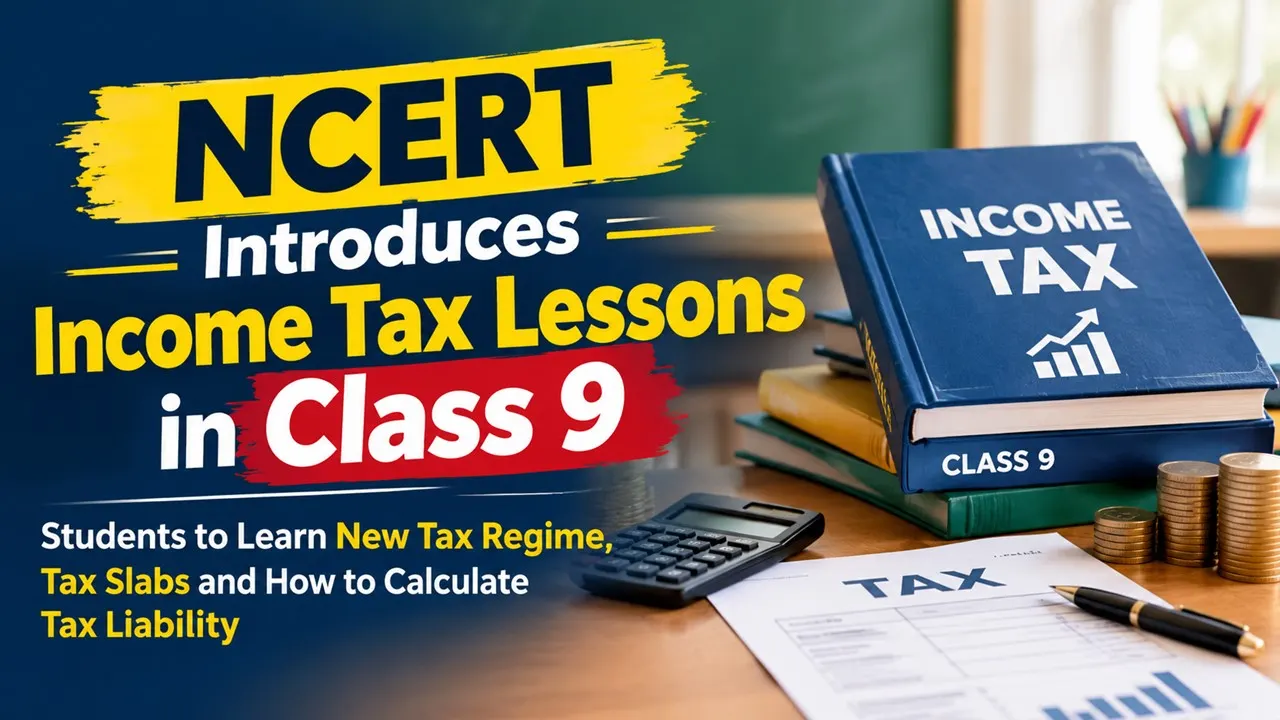
NCERT’s new Class 9 textbook introduces income tax, personal finance, investing, saving and budgeting under the new tax regime.
NCERT Adds Income Tax to Class 9
 Vanshika verma
 Oct 2, 2026
Income tax is no longer a lesson only for working adults. The NCERT has introduced personal income tax in the Class 9 curriculum, teaching students how to calculate their tax liability under the new tax regime.
The new textbook, “Understanding Society India and Beyond – Part 2,” says paying taxes honestly and on time is an important responsibility of every citizen. It also explains how taxes help fund the country’s development.

The textbook was released on Tuesday, six months after the new academic session began. The first part of the book was released in June.
NCERT Chief Dinesh Prasad Saklani said students can now learn how to calculate income tax using the actual tax slabs under the new regime. This is the first time such a detailed tax calculation has been introduced for students of this age group.
The chapter, “Managing Your Personal Finances,” explains that learning how to manage money should begin from childhood.

It covers important financial habits such as spending carefully, saving money, investing, taking care of financial risks, borrowing responsibly and paying taxes.
The chapter includes a table explaining the income tax slabs under the new regime. It also gives students step-by-step instructions on how to calculate their tax liability. The textbook does not discuss the old tax regime.
The new tax regime was introduced in the Union Budget in February 2020 and became effective from the financial year 2020-21. It reduces tax rates but does away with most of the exemptions and deductions under the old regime.
From April 1, 2023, the new tax regime will be the default option for taxpayers. However, if they fulfilll the applicable conditions, taxpayers can continue to opt for the old regime.
The chapter also covers the five pillars of personal finance – income, budgeting, saving, investing, protection and risk management.
The chapter also mentions Fixed Deposits, Bonds, Stocks (Equity or shares) and Mutual funds as investment options under "power of early investments".
About Author


Vanshika verma
Content Writer
 Studycafe
 Delhi, Delhi, India
 2121
2121My Recent Articles
- GST Council to Use Technology to Curb Fake Invoices and Fraudulent ITC Claims, Shifting Focus from Investigations to Prevention
- SEBI Warns Investors Against Fake WhatsApp Groups Offering Stock Tips, Trading Advice and False Profit Claims
- Indo Amines Limited Under GST Department Scrutiny as Maharashtra Tax Officials Initiate Search and Inspection at Registered Office
- Park Medi World Says Income Tax Department’s Verification at Company-Linked Premises Had No Impact on Operations or Expansion Plans
- Rajasthan Launches Statewide GST Crackdown, Uncovers Suspected Tax Irregularities Worth Rs 2.85 Crore
Loading suggestions…


Recent Posts


All Posts


Tags
Recent Posts
All Posts