NRI: Don't file ITR before knowing Foreign Tax Credit and DTAA Relief!:
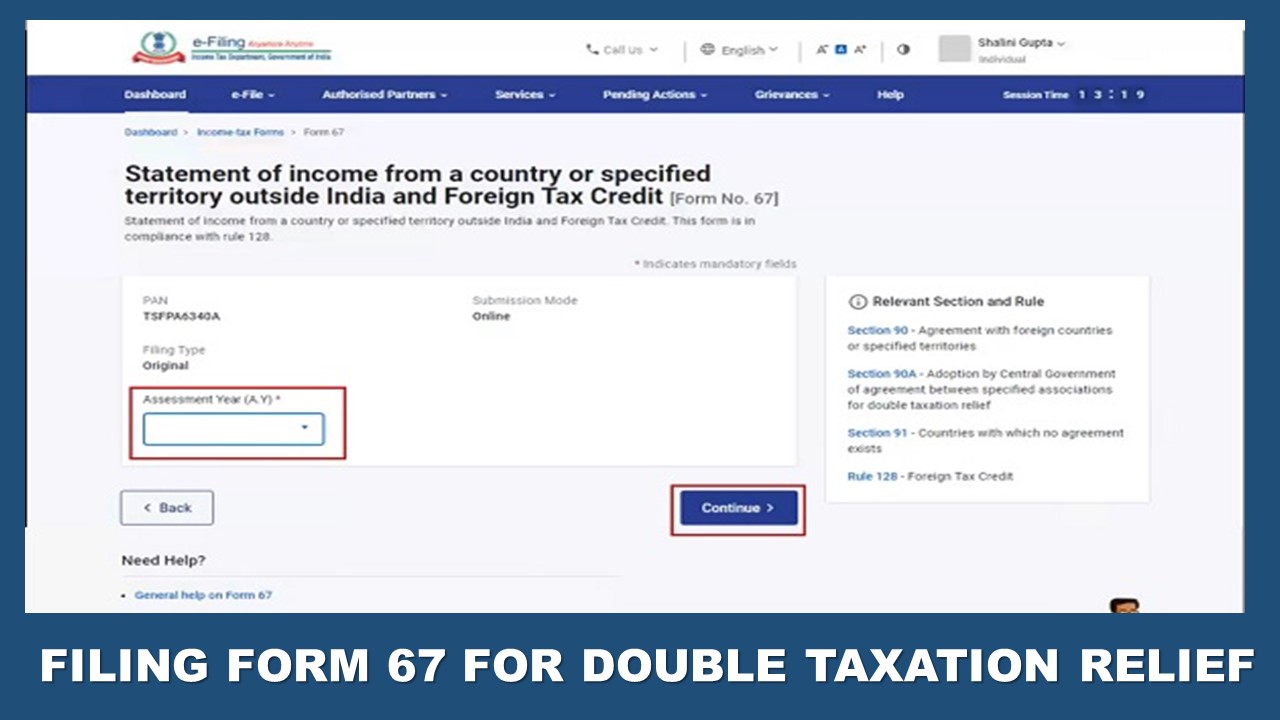
The Double Taxation Relief is provided when the assessee has paid taxes in a country that has a Double Taxation Avoidance Agreement (DTAA) with India.
What is Double Taxation Relief?
 Nidhi
Nidhi Jun 18, 2025
Table of Contents

NRI: Don't file ITR before knowing Foreign Tax Credit and DTAA Relief!
Since the Income Tax Return filing season is here, here is all about the double taxation and foreign tax credit relief available to non-residents filing income tax returns (ITR) in India or residents who are having Income Outside India.
Double Taxation is when an Indian resident earns income, on which the person is liable to pay tax in India as well as in a foreign Country. This way, the income earned by the resident is taxed twice, which causes a loss to the income of such a person. Therefore, to avoid such taxation, a taxpayer can claim the Foreign Tax Credit on the income paid in a foreign country.
Double Taxation Relief Under DTAA
The Double Taxation Relief under the bilateral treaty is provided when the assessee has paid taxes in a country that has a Double Taxation Avoidance Agreement (DTAA) with India. When the Indian Government has a Double Taxation Avoidance Agreement (DTAA) with another country, the rules in that agreement apply to taxpayers covered under it. If there is any difference between the DTAA and the Income Tax Act, then the rule that is more beneficial to the taxpayer will be followed.Countries With No DTAA
However, in case the country in which the taxpayer has paid taxes has no DTAA with India, then Unilateral relief is provided on such double-taxed income. If there is a difference between the tax rate in India and the tax rate in the foreign country, the lower of the two will be allowed for deduction. If the rates are the same in both countries, then the Indian rate of tax shall be allowed for deduction from income tax.- Indian rate of Tax: Indian income tax after relief under this provision, but before relief under Section 90 and Section 90A divided by the Total Income
- Foreign Country Rate of Tax: Income tax and super tax paid in that country after deduction of all relief, except relief in respect of double taxation, divided by the Total income assessed in that country
Articles Included in DTAA
DTAA has the following articles:- Article 1: Personal Scope
- Article 2: Taxes Covered
- Article 3: General Definitions
- Article 4: Resident
- Article 5: Permanent Establishment
- Article 6: Income from Immovable Property
- Article 7: Business Profits
- Article 8: Shipping and Air Transport
- Article 9: Associated Enterprises
- Article 10: Dividends
- Article 11: Interest
- Article 12: Royalties and Fees for Technical Services
- Article 13: Capital Gains
- Article 14: Independent Personal Services
- Article 15: Dependent Personal Services
- Article 16: Directors' Fees
- Article 17: Artistes and Sportspersons
- Article 18: Non-Government Pensions
- Article 19: Government Service
- Article 20: Teachers, Students, and Trainees
- Article 21: Other Income
- Article 22: Capital
- Article 23: Relief from Double Taxation
- Article 24: Non-Discrimination
- Article 25: Mutual Agreement Procedure
- Article 26: Exchange of Information
- Article 27: Diplomatic and Consular Privileges
- Article 28: Entry into Force
- Article 29: Termination
Required Documents to Claim DTAA Benefits
- For Non-residents, to claim DTAA benefits, they must get a Tax Residency Certificate (TRC) and must submit other required information in Form No. 10F electronically.
- If you are a resident of India, then you submit an application in Form No. 10FA to the assessing officer to get a TRC. The certificate is provided in Form No. 10FB.
How Much FTC Can be Claimed?
The amount you can claim as a foreign tax credit (FTC) shall be the lower of the Indian tax on the foreign income or the taxes paid in the foreign country on that income. If the foreign tax paid is more than what is allowed under the DTAA, the extra amount will be ignored while calculating the tax credit. The relief is only available against the income tax, surcharge and cess payable under the Act and not against any interest payable, penalty or fee. India does not allow a foreign tax credit for any tax amount that is under dispute by the taxpayer.When Can You Claim FTC
- A resident can claim the credit of foreign tax in the year in which income is earned in the foreign country (on which tax has been paid) is taxed in india.
- If the income is taxed in more than one year, its credit can be claimed in the proportion in which such income is taxed or assessed in India in those years.
Conversion Rate for Foreign Tax Credit
The FTC amount must be calculated by converting the foreign currency to Indian Rupees by using the telegraphic transfer buying rate on the last date of the month before the month in which the foreign tax was paid or deducted. Telegraphic transfer buying rate is the buying rate used by the State Bank of India (SBI) at which it buys foreign currency through telegraphic transfer.Necessary Documents to Claim FTC
The taxpayer must have the following documents to claim the foreign tax credit:- Statement of Form 67, showing the income earned and taxed in the foreign country during the previous year and the amount of foreign tax paid or deducted on that income.

- In case the taxpayer makes the payment, an acknowledgement of online payment or bank counterfoil or challan for payment of tax,
- Proof of deduction if the tax was deducted at source
Time Limit to Furnish Form 67
As mentioned earlier, to claim the foreign tax credit, the taxpayer must furnish the statement in Form 67 electronically. Form 67 and the other required documents must be furnished on or before the end of the assessment year relevant to the previous year in which the income has been taxed or assessed. However, if the updated return has been filed under Section 139(8A), the documents must be submitted on or before the due date of filing such updated return.About Author


Nidhi
Content Writer
Nidhi is a skilled content writer specializing in personal finance. She creates clear, engaging articles on mutual funds, investments, insurance, and wealth-building strategies. With a passion for simplifying complex financial topics, Nidhi helps readers make informed money decisions with confidence. She can be reached at [email protected]
Nidhi is a skilled content writer specializing in personal finance. She creates clear, engaging articles on mutual funds, investments, insurance, and wealth-building strategies. With a passion for simplifying complex financial topics, Nidhi helps readers make informed money decisions with confidence. She can be reached at [email protected]
 Studycafe
 New Delhi, Delhi, India
 1832
1832My Recent Articles
- Karnataka High Court Gives Another Chance in GST Matter Due to Lack of Hearing
- Delay Should Be Condoned if Explanation is Unrefuted: ITAT
- Non-Service of Income Tax Notice, Ill health of taxpayer, ITAT condones Appeal filing delay
- Books of Accounts Cannot be Rejected Without Any Specific Defect: ITAT Kolkata
- Karnataka High Court Sends ITC Matter Back to GST Authorities for Reconsideration
Up Next
Loading suggestions…


Recent Posts



All Posts
Tags
Recent Posts
All Posts