Reassessment Notices Issued Under Unamended Section 148 to Be Governed by Supreme Court Directions:
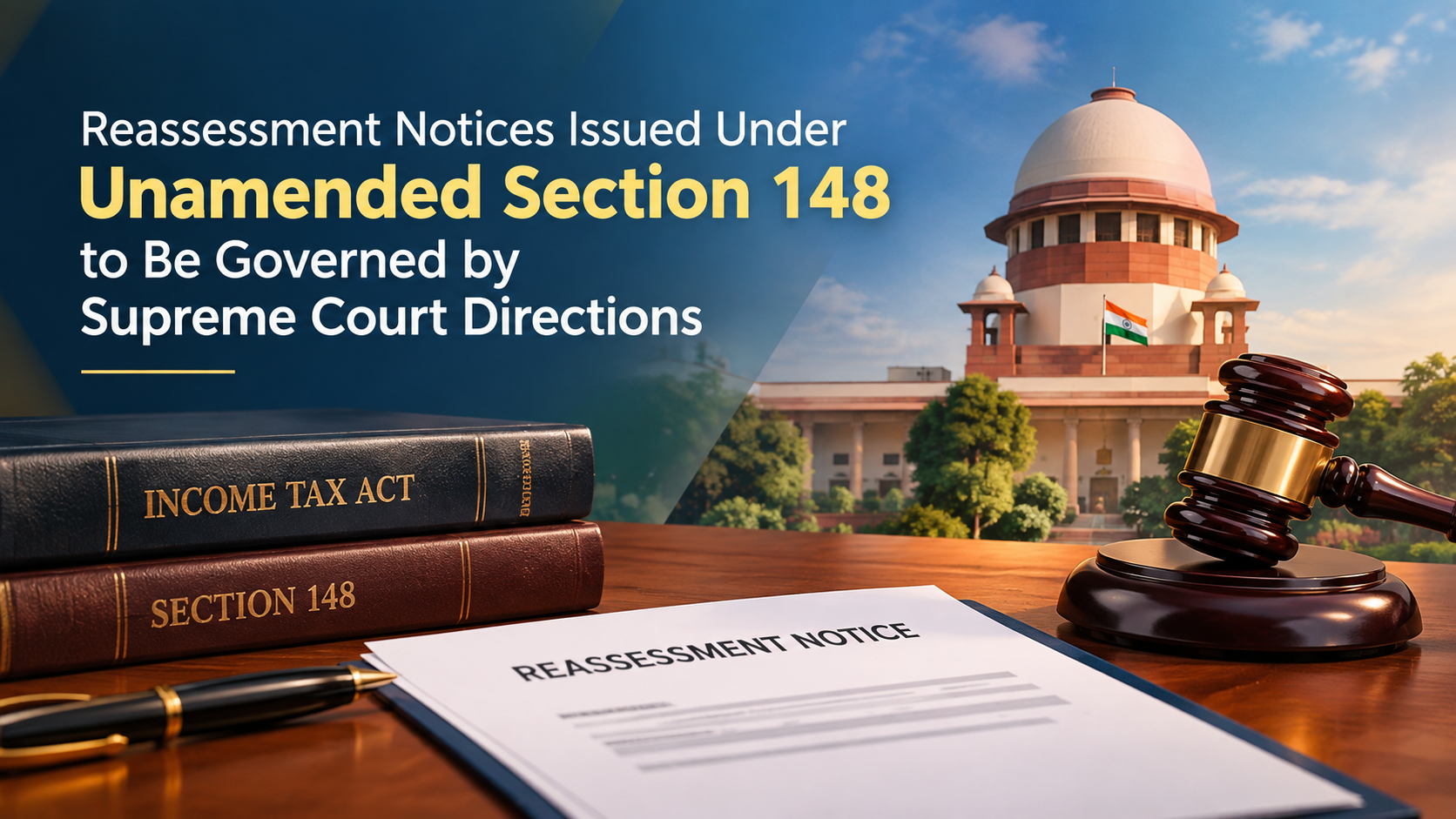
The Gujarat High Court disposes Section 148 reassessment plea following Supreme Court’s Ashish Agarwal ruling.
High Court Disposed Writ Petition
 Saima
Saima Sep 22, 2026
The Gujarat High Court has disposed of a writ petition filed by Shweta Manish Kanodia concerning reassessment proceedings under Section 148 of the Income Tax Act, 1961. The issue raised in the writ petition was squarely covered by the Gujarat High Court’s decision dated 5 May 2022 in Special Civil Application No. 1625 of 2022 and allied matters, as well as the Supreme Court’s decision in Union of India and Others Vs Ashish Agarwal Case reported in 2022.
The Gujarat High Court reproduced the relevant directions issued by the Supreme Court in Union of India Vs Ashish Agarwal Case. Under the Supreme Court’s directions, the notices issued under the unamended Section 148 were to be deemed to have been issued under Section 148A of the Income Tax Act, as substituted by the Finance Act, 2021, and were to be treated as show-cause notices under Section 148A(b).

The Supreme Court further dispensed, as a one-time measure, with the requirement of conducting an enquiry under Section 148A(a) with prior approval of the specified authority in respect of notices issued under the unamended Section 148 between 1 April 2021 and the date of the decision.

The Gujarat High Court held that the present writ petition was also required to be disposed of in terms of the Supreme Court’s decision. The Court clarified that if the petitioner had any other issue apart from the issue concerning Section 148 of the Income Tax Act, 1961, liberty was reserved to file a fresh writ petition in accordance with law.
Accordingly, the Gujarat High Court disposed of the writ petition.
About Author


Saima
Content Writer
 StudyCafe
 Delhi, Delhi, India
 542
542My Recent Articles
- ITAT Deletes Disallowance on Foreign Commission Paid for Services Rendered Outside India
- ITAT Holds Sale of Indian Trademark Rights by Novartis AG Not Taxable as Royalty Under India-Switzerland DTAA
- ITAT Remands Ex-Parte Income Tax Appeal for Fresh Adjudication
- ITAT Deletes R&D Disallowance as AO Exceeded Limited Scrutiny Jurisdiction
- High Court Issues Guidelines for Denial of GST Input Tax Credit Due to Supplier’s Tax Default
Loading suggestions…


Recent Posts

All Posts
Recent Posts
All Posts