Rushing to File ITR? Essential Checklist for Last-Minute Filers:
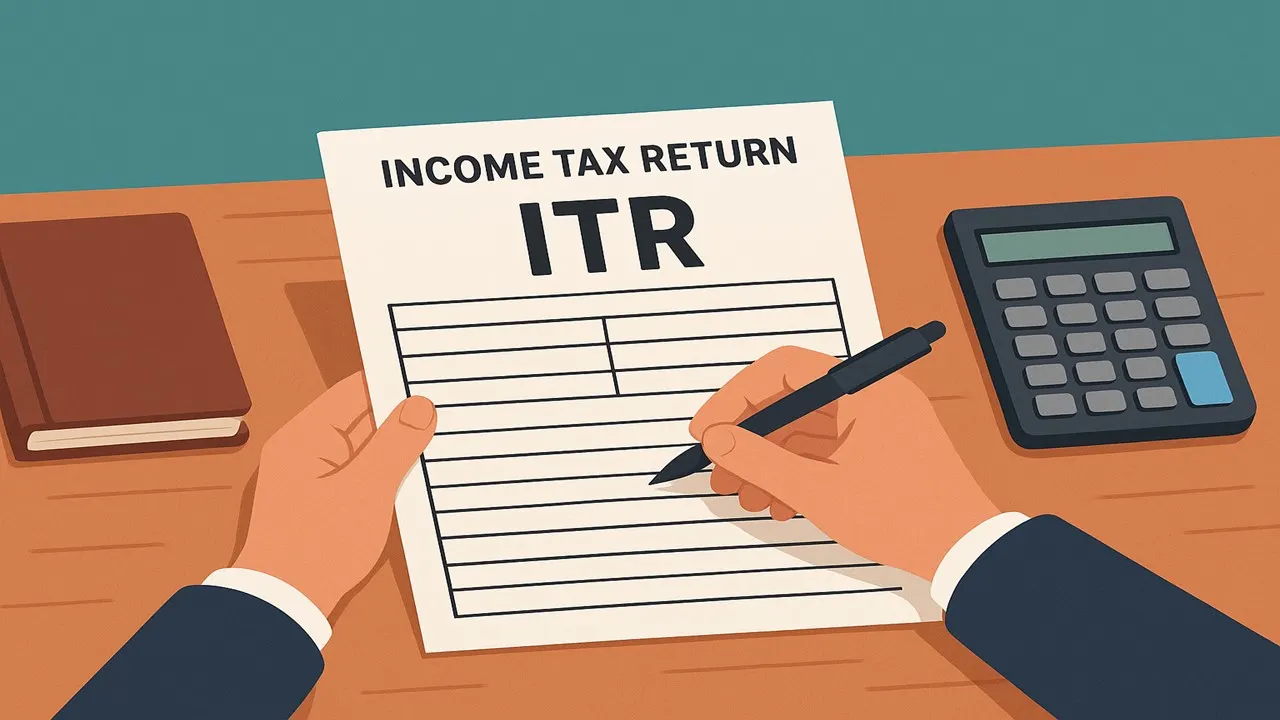
As the income tax return deadline approaches, increasing concerns among taxpayers. Here’s a quick last-minute comprehensive guide to help you file ITR smoothly.
Everything You Should Know Before Filing ITR 2025
 Vanshika verma
 Sep 12, 2025
Table of Contents

Rushing to File ITR? Essential Checklist for Last-Minute Filers
As the income tax return (ITR) deadline approaches, a large number of taxpayers are busy completing their filings. Yet, many individuals still haven’t submitted their returns, often due to packed schedules or confusion around the procedure. For those in this situation, here’s a quick last-minute guide to help you file your ITR smoothly.
ITR Filing Due Date?
The Income Tax Department announced the extension of the due date to September 15, 2025 however earlier it was July 31, 2025. Taxpayers should not wait till the end to file ITR. Experts urges taxpayers to file ITR timely.Documents Required to File ITR
Taxpayers need to get a few major documents ready before filing them, such as:- Permanent Account Number (PAN)
- Aadhaar cards
- Bank statements
- Form 26AS and
- Form 16
- The Annual Information Statement
Choosing Correct ITR Form
Selecting the correct ITR form is important to file returns accurately. ITR-1 (Sahaj): It is the simplest income tax return form and is meant for salaried individuals with income under Rs 50 lakh annually, with income from salary, house property and other sources. ITR-2: Individuals who are not eligible to file ITR-1 can use form ITR-2 if they do not have income from business or profession profits and gains, or profits in the form of interest, salary, bonus, or commission from a partnership firm. ITR-3: All freelancers and self-employed persons can file ITR-3. This is for taxpayers or HUFs with income from business or profession who can't file ITR-1, ITR-2 or ITR-4. ITR-4 (Sugam): It is meant for resident individuals, Hindu Undivided Families (HUFs), and firms (other than LLPs) For small businesses with turnover up to Rs 2 crore and for specified professionals (like doctors, lawyers, architects, etc.) with gross receipts up to ₹50 lakh. ITR-5: Firms, Limited Liability Partnerships (LLPS), Associations of Persons (AOPs), Bodies of Individuals (BOIs), artificial juridical persons referred to in section 2(31)(vii) and local authorities.Check Bank Account Details
Taxpayers must verify their bank details, including bank account numbers, IFSC codes and others, because these are important for claiming and receiving refunds.File Income Tax Return (ITR)
Here's how taxpayers can file their income tax returns. Step 1: Collect all required proofs and details, such as bank statements, income proofs, etc. Step 2: Download Form 26AS and AIS from the e-filing portal. Verify the details with income and TDS. Step 3: Select the correct ITR form according to your earnings. Step 4: Fill in the details of income and deductions, including savings, investments and home loans. Step 5: Submit your return through the e-filing portal. Step 6: Complete the process with e-verificationE-verify After Filing ITR
After filing ITR, it is important for taxpayers to verify it within 30 days because if your return is not verified, then it will be considered as if it hasn't been filed. Taxpayers can verify by using:- Aadhaar OTP
- Electronic Verification Code (EVC)
- Net Banking or
- Posting physical copy (ITR-V)
Penalty for late filing
If a taxpayer missed filing ITR before the deadline, then the taxpayer may have to pay penalties of Interest at a rate of 1% per month or Rs. 5,000 if his/her total income exceeds Rs. 5 lakh or Rs. 1,000 if the taxpayer's total income is within Rs. 5 lakh.About Author


Vanshika verma
Content Writer
Vanshika Verma is a Content Writer with 1+ year of experience at Studycafe.in. A B.Com graduate from Delhi University, She writes articles on Finance, Tax, ICAI, GST, and the latest financial news, with a focus on making complex topics easy for readers and professionals.
Vanshika Verma is a Content Writer with 1+ year of experience at Studycafe.in. A B.Com graduate from Delhi University, She writes articles on Finance, Tax, ICAI, GST, and the latest financial news, with a focus on making complex topics easy for readers and professionals.
 Studycafe
 Delhi, Delhi, India
 2114
2114My Recent Articles
- Rajasthan Police Warns of WhatsApp Account Hacking Scams, Urges People to Beware of Fake QR Codes and OTP Fraud
- Man Carrying Rs 25,000 Reward Arrested in Rs 1.22 Crore GST Evasion Case Involving Fake Firms in Bulandshahr
- Star Paper Mills to Challenge Rs 1.55 Crore GST Demand Order Over Disallowance of Input Tax Credit on Raw Materials Destroyed in Fire
- Delhi CBI Arrests Hospital Doctor and Contractual Nursing Orderly Supervisor for Alleged Rs 1 Lakh Bribery in Tender-Related Case
- ITAT Condones 2,107-Day Delay, Directs CIT(A) to Reconsider Rs 16.54 Lakh Section 80PA Deduction Claim
Up Next
Loading suggestions…


Recent Posts


All Posts
Recent Posts
All Posts