SC Limits Jurisdiction; Quashes Companies Act Charges in Fraud Case:
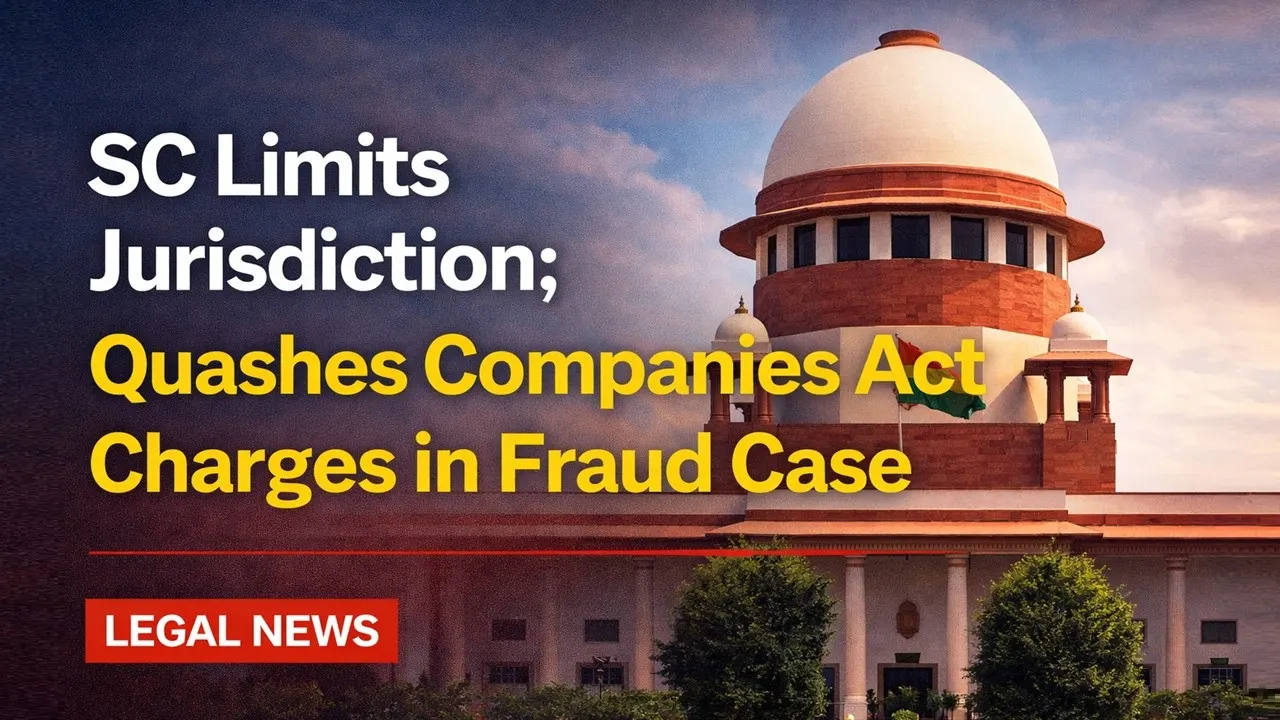
Special Court's jurisdiction limited as Apex Court clarifies that Section 448 and 451 proceedings cannot continue without territorial nexus
Special Court cannot try offences lacking territorial connection
 Meetu Kumari
 Mar 24, 2026
The appellants, Yerram Vijay Kumar and Rajeev Kumar Agarwal, challenged a Telangana High Court order that refused to quash criminal proceedings in a complaint case (C.C. No. 58 of 2022). The dispute originated from a private complaint filed by a shareholder alleging corporate fraud, siphoning of funds, and falsification of records under both the Indian Penal Code (IPC) and Sections 448 and 451 of the Companies Act, 2013.
While the High Court dismissed the petition to quash the trial, the appellants argued that the Special Court in Telangana lacked the territorial jurisdiction to adjudicate the matter, as the alleged offenses and corporate filings occurred elsewhere. The Supreme Court reviewed the procedural validity of maintaining a composite complaint involving both general criminal law and specialized company law provisions.Main Issue: Whether the Special Court in Telangana had the territorial jurisdiction to try offenses under Sections 448 and 451 of the Companies Act, 2013, and whether the criminal proceedings under the IPC should be quashed or transferred.
SC's Ruling: The Courts have firmly held that fraud-related offences under Section 447 of the Companies Act cannot be prosecuted through private complaints. Such prosecution is permissible only after following the statutory route involving investigation by competent authorities like the Registrar of Companies and, where required, the SFIO. Any attempt to bypass this mechanism was found legally unsustainable, and High Courts across jurisdictions quashed such complaints as being barred under Section 212(6).Affirming this position, the Supreme Court ruled that even indirect attempts to invoke fraud provisions such as filing complaints under Section 448 without invoking Section 447 are impermissible, since both provisions are intrinsically linked. Consequently, the Court quashed the complaint and all proceedings relating to Sections 448 and 451 of the Companies Act.

However, the Court clarified that criminal liability under IPC provisions survives independently, and such proceedings may continue before the appropriate jurisdictional court. It was further held that pendency of civil disputes does not dilute or bar criminal prosecution, which must proceed on its own merits.

About Author


Meetu Kumari
Content Manager
 Studycafe
 Jodhpur, Rajasthan, India
 2264
2264My Recent Articles
- ITAT Condones 302-Day Delay, Restores Salary Assessment for Fresh VerificationPremium
- ITAT Condones Delay After Tax Consultant's Death, Restores Appeals for Fresh HearingPremium
- ITAT Remands Salary Addition, Says Taxability Depends on Salary Becoming Due, Not Mere ReceiptPremium
- ITAT Deletes TP Royalty Adjustment, Orders Fresh Review of Commission BenchmarkingPremium
- ITAT Quashes Reassessment Over Unsigned Section 148 Notice Issued to AssesseePremium
Loading suggestions…


Recent Posts


All Posts

Recent Posts
All Posts