SC Upholds Natural Justice: 100% GST Penalty Requires Proof of Fraud, Sends Case Back to High Court:
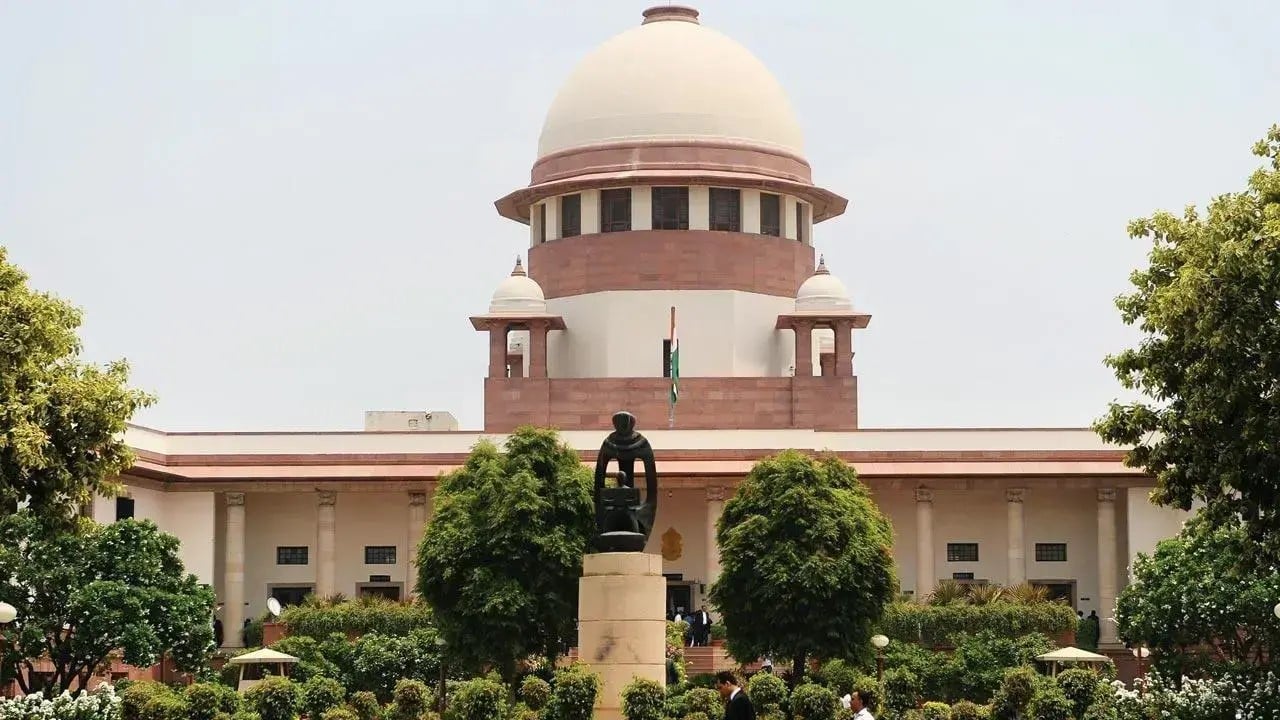
Supreme Court rules 100% GST penalty needs proof of fraud, sends case back to Andhra Pradesh High Court for fresh hearing.
SC Says Penalty Without Proven Fraud Violates Natural Justice
 Saloni Kumari
 Aug 7, 2025
SC Upholds Natural Justice: 100% GST Penalty Requires Proof of Fraud, Sends Case Back to High Court
The Supreme Court of India has ruled that a 100% penalty under the Goods and Services Tax (GST) cannot be imposed unless fraud is proven. Therefore, the apex court sent the case back to the Andhra Pradesh High Court for fresh consideration.
The case revolves around a company named M/s Godway Funicrafts (appellant) that was hit with a 100% penalty under Section 74 of the CGST Act, 2017. The company argued that the imposed penalty is illegal and unfair, as the GST department did not show any proof of fraud or intentional hiding of facts before issuing the final penalty order, which is a compulsory condition under Section 74 of the CGST Act and its related State provisions, and also a violation of natural justice.
Against the penalty order, the company had earlier filed a petition in the Andhra Pradesh High Court, but it was dismissed by the court in November 2020. The petitioner then filed a review application in the court, saying the GST department has not proved any intention of fraud. However, the court again dismissed the review application in May 2022, saying that this issue about fraud not being proven was not clearly raised in the initial petition.
Now, the Supreme Court, through a bench of Justice B.V. Nagarathna and Justice K.V. Viswanathan, has overruled the High Court's decision. It said that the company had the right to raise the issue in the review application and that the High Court should have considered it seriously.
The apex court said in its ruling, "We find that the appellant, in the facts and circumstances of this case, was entitled to raise the contention regarding the imposition of 100% penalty in the review application as it was a ground raised in the memorandum of writ petition. Therefore, we find that the High Court has to consider the same on merits in the review application." Further said, "In the circumstances, the order passed in the Review IA No.1 of 2021 dated 06.05.2022 is set aside and the same is restored on the file of the High Court of Andhra Pradesh at Amaravati."
The Supreme Court has asked the High Court to hear the review application again, this time looking properly at the arguments served by the company, including the claim that no fraud or intentional wrongdoing was committed.
The High Court must now decide whether the penalty and interest imposed were legal and fair. If the company is not satisfied with the High Court’s decision after the rehearing, it is allowed to approach the Supreme Court again, but only regarding the penalty.
About Author


Saloni Kumari
Content Writer
Saloni is a Content Writer with 2+ years of experience at studycafe.in. She writes legal, taxation, and finance related content including GST, Income Tax etc. Skilled in translating complex judicial pronouncements and regulatory developments into clear, and reader-friendly articles. Experienced in covering judgements of ITAT, High Court, GSTAT, and news related to Income Tax, GST, and corporate law. She can be reached at [email protected].
Saloni is a Content Writer with 2+ years of experience at studycafe.in. She writes legal, taxation, and finance related content including GST, Income Tax etc. Skilled in translating complex judicial pronouncements and regulatory developments into clear, and reader-friendly articles. Experienced in covering judgements of ITAT, High Court, GSTAT, and news related to Income Tax, GST, and corporate law. She can be reached at [email protected].
 StudyCafe
 Delhi, Delhi, India
 2922
2922My Recent Articles
- GSTN Introduces New E-Invoicing Facility for Self-Invoices Under Reverse Charge Mechanism
- Flexi Cap vs Multi Cap Funds: What's the Real Difference?
- IBA Recommends Public Sector Banks to Reduce Ambit of Physical Branch Audits to 50% of Total Business
- ITAT Directs AO to Reconsider Rs 16.44 Lakh Capital Gains and Rs 25.87 Lakh Stamp Duty Value Addition
- ITAT Remands Rs 3.33 Crore Demonetisation Cash Deposit Case to AO, Directs Rs 10,000 Relief Fund Payment
Up Next
Loading suggestions…


Recent Posts


All Posts


Recent Posts
All Posts