SEBI Allows AIFs and VCFs to Retain Funds After Tenure Under New Winding-Up Rules:
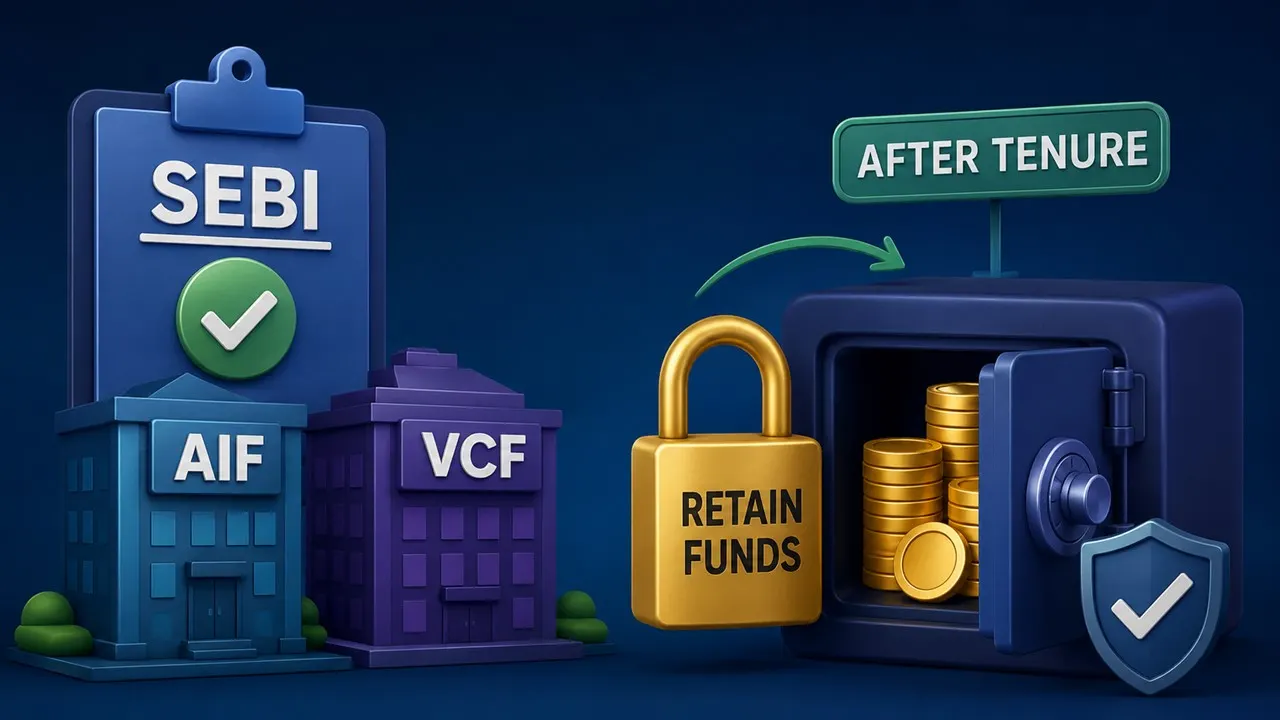
SEBI has allowed AIFs and VCFs to retain residual funds after their tenure for pending liabilities, litigation, tax matters, and winding-up expenses, effective June 16, 2026.
SEBI Eases AIF, VCF Winding-Up Rules
 Jasmine
 Jun 17, 2026
SEBI Allows AIFs and VCFs to Retain Funds After Tenure Under New Winding-Up Rules
New guidelines have been issued by the Securities and Exchange Board of India (SEBI) which permit Alternative Investment Funds (AIFs) and Venture Capital Funds (VCFs) to keep the said amounts with themselves even after the completion of their respective lives under certain circumstances. These guidelines will be effective from June 16, 2026.
According to the new regulations, AIFs will be allowed to keep any leftover funds received after the liquidation process when there are ongoing litigations, tax implications, and other liabilities; the AIFs have at least 75% consent of investors for any liabilities; or the extra money is required for winding-up costs.
The SEBI has further provided for the ‘Inoperative Fund’ category to be granted to an AIF which has already made investments, but has to hold cash since its liabilities remain outstanding or there is legal litigation pending in respect thereof.
Having been categorized as an Inoperative Fund, it means that AIF cannot roll out any more projects or levy any management charges. Nevertheless, it still remains obligated to furnish annual reports to SEBI and the investors until all liabilities have been discharged.
[related id="74086"]
Further, the above-mentioned provision has also been made available to Venture Capital Funds which were operating as per the previous guidelines. This would provide some relief to the fund managers while completing the winding-up of funds.
About Author


Jasmine
Digital Marketing Excutive
 Studycafe
 dwarka, Delhi, India
 108
108My Recent Articles
- ITAT Rules BSNL VRS Compensation Exempt from Tax Under Section 10(10B), Grants Leave Encashment ReliefPremium
- Kerala Headload Workers Welfare Board Granted Income Tax Exemption for Three Tax YearsPremium
- ITR Filing: Why You Shouldn't Rely on a July 31 Deadline Extension
- Meerut Accountant Accused in Rs 65.5 Crore Income Tax Refund Scam
- Professional’s Viral Post on Rs 1 Crore Tax Sparks Debate on India’s Social Security
Up Next
Loading suggestions…


Recent Posts


All Posts


Recent Posts
All Posts