Supreme Court Upholds 28% Retrospective GST on Online Gaming, Calls Real-Money Games ‘Betting and Gambling’:
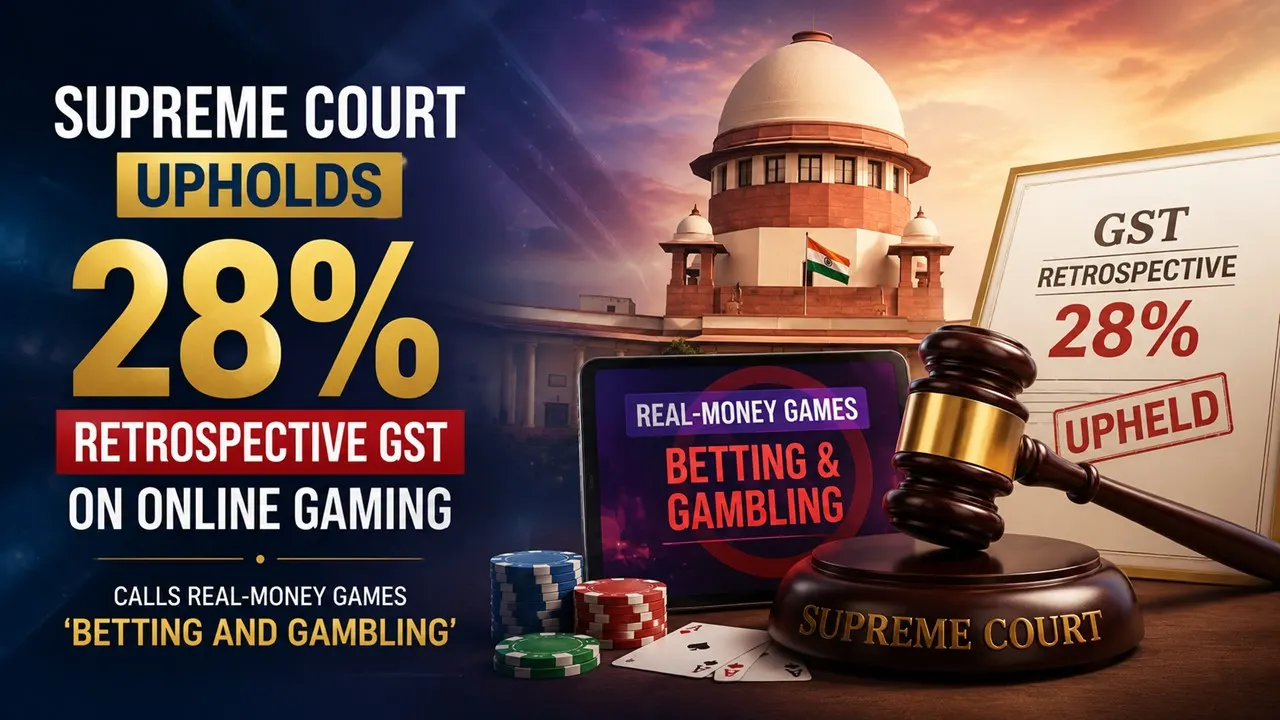
The Supreme Court in a recent significant ruling has upheld the retrospective levy of 28% GST on the full value of bets placed on real-money online gaming platforms.
SC Rules Real-Money Online Gaming Taxable as Gambling
 Saloni Kumari
 May 30, 2026
Premium
Supreme Court Upholds 28% Retrospective GST on Online Gaming, Calls Real-Money Games ‘Betting and Gambling’
The Supreme Court in a recent significant ruling has upheld the retrospective levy of 28% GST on the full value of bets placed on real-money online gaming platforms.
Also Read
Pratapgarh Police Inspector Death Case: Lucknow Special CBI Court Sentences Accused to 10 Years in PrisonCBI Court in Ghaziabad Sentences Former Sub Post Master to Three Years in Jail for Misappropriating Rs 15.27 Lakh in Postal FundsCBI Arrests Proclaimed Offender in Fodder Scam Case Absconding for Over 25 YearsMaharashtra Govt Eases Registration of Jointly Owned Land Sales, ‘KA’ Copy Can Replace Co-Owners’ NOC
About Author


Saloni Kumari
Content Writer
Saloni is a Content Writer with 2+ years of experience at studycafe.in. She writes legal, taxation, and finance related content including GST, Income Tax etc. Skilled in translating complex judicial pronouncements and regulatory developments into clear, and reader-friendly articles. Experienced in covering judgements of ITAT, High Court, GSTAT, and news related to Income Tax, GST, and corporate law. She can be reached at [email protected].
Saloni is a Content Writer with 2+ years of experience at studycafe.in. She writes legal, taxation, and finance related content including GST, Income Tax etc. Skilled in translating complex judicial pronouncements and regulatory developments into clear, and reader-friendly articles. Experienced in covering judgements of ITAT, High Court, GSTAT, and news related to Income Tax, GST, and corporate law. She can be reached at [email protected].
 StudyCafe
 Delhi, Delhi, India
 2959
2959My Recent Articles
- Sakshi Chandak Secures AIR 1 in CA Intermediate September 2026 Exam with 83.67% After Studying Up to 16 Hours a Day
- MCA Releases List of Companies Struck Off Under Section 248(2) for September 2026 at mca.gov.in
- ITAT Deletes Section 43 Penalty for Non-Disclosure of Foreign Assets in Schedule FA
- CBI Arrests Proclaimed Offender in Fodder Scam Case Absconding for Over 25 Years
- ITAT Allows Appeal Over Rs 26.03 Lakh Addition After Assessee Settles Tax Dispute Under Vivad Se Vishwas Scheme 2024
Up Next
Loading suggestions…


Recent Posts

All Posts

Recent Posts
All Posts