TRACES 2.0: New Income Tax Portal Makes TDS Compliance Easier for Taxpayers:
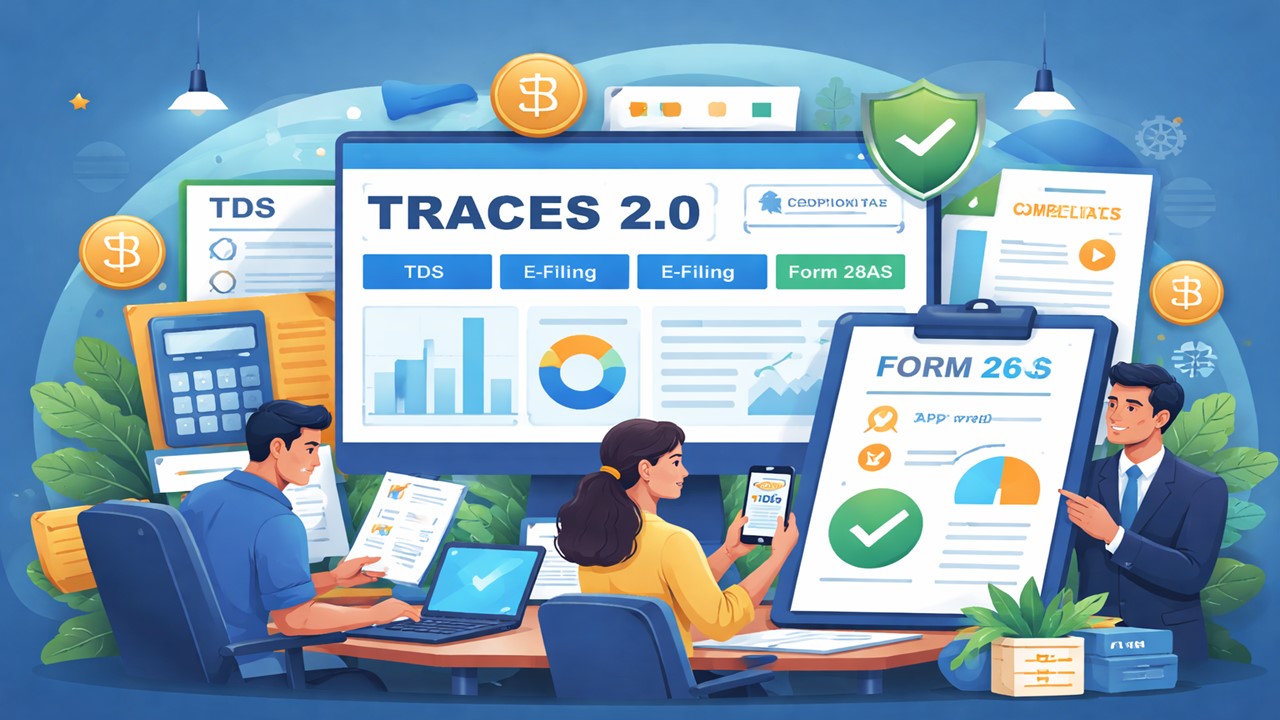
One of the biggest improvements is a single dashboard where users can see all important tax-related details in one place Such as Form 26AS, Annual Information Statement (AIS), and TDS credit information.
I-T Dept Launches TRACES 2.0
 Nidhi
Nidhi Apr 14, 2026
TRACES 2.0: New Income Tax Portal Makes TDS Compliance Easier for Taxpayers
The Income Tax Department has introduced a new platform called 'TRACES 2.0', which is an improved version of its TDS compliance portal. This new platform, effective from April 1, 2026, replaces the old TRACES portal and focuses on making the tax reporting simpler, faster, and more transparent.
TRACES 2.0?
TRACES 2.0 (TDS Reconciliation Analysis and Correction Enabling System) is an upgraded, revamped version of its previous TRACES portal, which works as a single platform to view, verify, download, and correct their Tax Deducted at Source (TDS) records after payment has already been made.
The portal can be accessed at traces.tdscpc.gov.in and has various tax-related services in one place.
Is It a Payment Portal?
Taxpayers must also note that TRACES 2.0 is not meant for making payments. Taxpayers, including property buyers required to deduct TDS, are required to deposit tax through the Income Tax e-filing portal through prescribed forms such as Form 26QB.
Single Dashboard for All Details
One of the biggest improvements is a single dashboard where users can see all important tax-related details in one place, such as Form 26AS, Annual Information Statement (AIS), and TDS credit information. Taxpayers can also download certificates like Form 16, Form 16A, and Form 16B easily from here.
Separate Portal for NRIs
A separate portal (nriservices.tdscpc.gov.in) has also been designed for Non-Resident Indians (NRIs) to manage their specific TDS-related needs more efficiently.
Easily Find Old Records and Corrections
The old historical data is easily available on the portal. Taxpayers can check old TDS entries and make corrections without going to different systems. This improves convenience and saves time.
Single Concept of 'Tax Year'
To reduce confusion, the new system replaces the old terms of Assessment Year (AY) and Previous Year (PY) with a single "Tax Year" concept. This change makes tax filing easier to understand, especially for individuals and small taxpayers.
About Author


Nidhi
Content Writer
Nidhi is a skilled content writer specializing in personal finance. She creates clear, engaging articles on mutual funds, investments, insurance, and wealth-building strategies. With a passion for simplifying complex financial topics, Nidhi helps readers make informed money decisions with confidence. She can be reached at [email protected]
Nidhi is a skilled content writer specializing in personal finance. She creates clear, engaging articles on mutual funds, investments, insurance, and wealth-building strategies. With a passion for simplifying complex financial topics, Nidhi helps readers make informed money decisions with confidence. She can be reached at [email protected]
 Studycafe
 New Delhi, Delhi, India
 1832
1832My Recent Articles
- Karnataka High Court Gives Another Chance in GST Matter Due to Lack of Hearing
- Delay Should Be Condoned if Explanation is Unrefuted: ITAT
- Non-Service of Income Tax Notice, Ill health of taxpayer, ITAT condones Appeal filing delay
- Books of Accounts Cannot be Rejected Without Any Specific Defect: ITAT Kolkata
- Karnataka High Court Sends ITC Matter Back to GST Authorities for Reconsideration
Up Next
Loading suggestions…


Recent Posts


All Posts


Tags
Recent Posts
All Posts