Why Playgroups in Hyderabad Are Becoming an Important First Step in the Play School Journey in India:
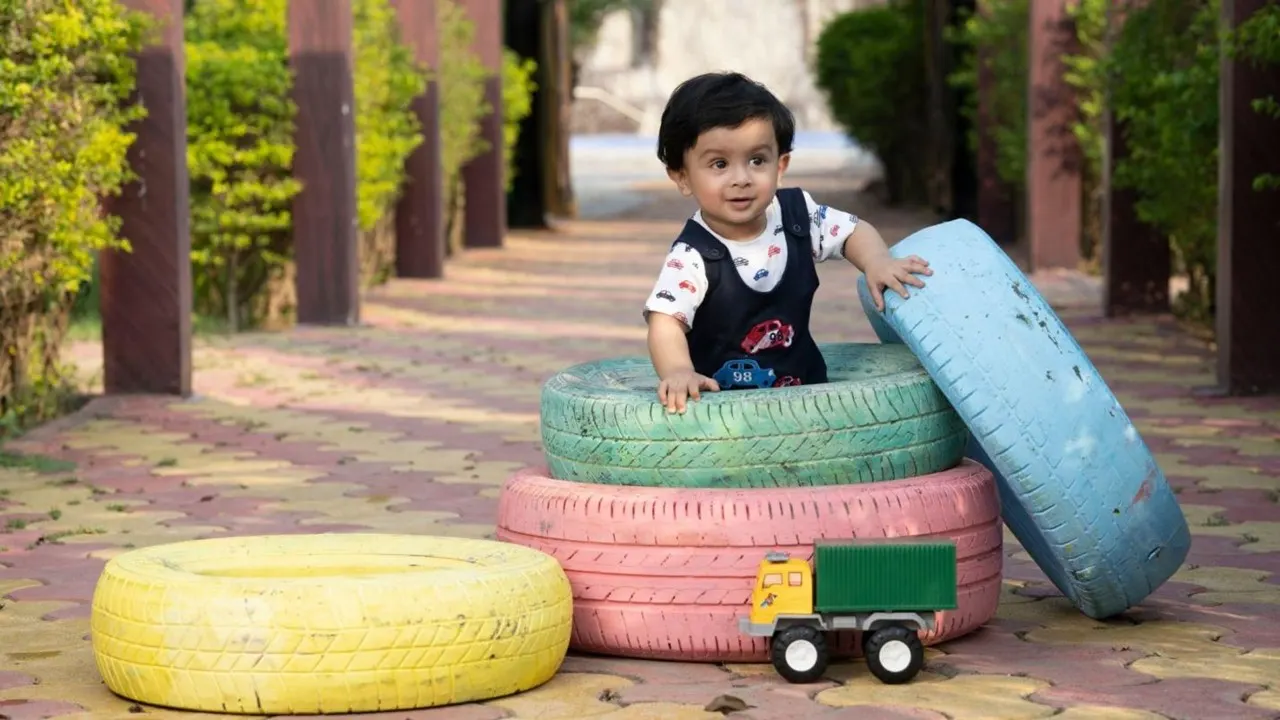
Discover why playgroups in Hyderabad are becoming the preferred first step in early childhood education, helping young children build confidence, social skills, independence, and a smooth transition to play school.
From Home to Classroom: Why Playgroups in Hyderabad Matter
 Saloni Kumari
 Jun 26, 2026
Table of Contents

Why Playgroups in Hyderabad Are Becoming an Important First Step in the Play School Journey in India
Parents often want their children to feel comfortable in a learning environment before entering a more structured play school setting. This has contributed to the growing interest in playgroups, particularly in cities such as Hyderabad, where early childhood programs are becoming more widely available. Below are some of the key reasons why playgroups are increasingly becoming an important first step in the play school journey in India.Help Children Adjust to a Structured Environment Early
Many playgroups in Hyderabad give young children their first experience of a planned daily routine outside the home. The environment is simple and suitable for young children, but it still includes fixed timings, group activities, snack time, play time and basic instructions. This early structure can make children feel more ready for a classroom later. They slowly understand that there is a time to sit, play, listen and move to another activity. These habits can reduce confusion when they enter a learning environment. A gentle routine also supports emotional comfort. Children do not suddenly face a strict school day. Instead, they become familiar with teachers, other children and shared spaces.Encourage Early Social Interaction
Social learning begins when children spend time with other children. At home, a child may mostly interact with parents, grandparents or caregivers. In a group, the child begins to notice how other children speak, play, wait, share and respond. These interactions can support patience, confidence and awareness of others. Children learn that toys, space and attention may need to be shared. They also learn how to join group play and understand simple social cues.Make the Transition to Play School Smoother
The move from home to a play school in India can feel difficult for some children. A new place, new adults and a routine may feel unfamiliar at first. A playgroup can make this change less sudden. Children who have already spent short periods away from home may find it easier to settle into a preschool. They may also feel more comfortable with simple instructions and teacher interaction.Support Independence before Formal Schooling
Independence in early childhood begins with small daily actions. A child may learn to keep a bag in place, wash hands with guidance, choose an activity, ask for water or follow a simple instruction. These small actions can build confidence. The child begins to feel capable outside the home. This matters because formal schooling often expects children to manage basic routines with less support. A playgroup gives children time to practise such habits without pressure. The aim is not to make the child fully independent at once. The aim is to build comfort with simple responsibilities.
Encourage Learning through Play Rather than Formal Teaching
Young children learn best when they are active, curious and relaxed. Play-based learning helps them to explore colours, sounds, shapes, movement, stories and simple ideas without heavy academic pressure. In early years, play is not just entertainment. It supports attention, memory, imagination, problem-solving and early thinking. When children build, sort, sing, move or listen to stories, they develop classroom learning skills. It does not put early pressure on reading, writing or formal lessons. Instead, it allows children to learn through enjoyable activities.Support Early Communication Development
Communication develops when children get chances to listen, speak, respond and express feelings. In a group, they hear different voices and learn to communicate with adults and children outside the family. Some children speak freely at home but become quiet in a new place. A playgroup can give them time to open up slowly. They may start with gestures, then words, and later short sentences. Teachers can notice how a child follows simple instructions, responds to names, asks for things and joins group activities. Early observation can support a better understanding of communication needs.Conclusion
Playgroups in Hyderabad are becoming an important early step because they prepare children for preschool in a calm and child-friendly way. They support routine, social comfort, independence, play-based learning and early communication before formal schooling begins. In the wider play school in India journey, these early experiences can make classroom life feel more familiar and manageable for young children.About Author


Saloni Kumari
Content Writer
Saloni is a Content Writer with 2+ years of experience at studycafe.in. She writes legal, taxation, and finance related content including GST, Income Tax etc. Skilled in translating complex judicial pronouncements and regulatory developments into clear, and reader-friendly articles. Experienced in covering judgements of ITAT, High Court, GSTAT, and news related to Income Tax, GST, and corporate law. She can be reached at [email protected].
Saloni is a Content Writer with 2+ years of experience at studycafe.in. She writes legal, taxation, and finance related content including GST, Income Tax etc. Skilled in translating complex judicial pronouncements and regulatory developments into clear, and reader-friendly articles. Experienced in covering judgements of ITAT, High Court, GSTAT, and news related to Income Tax, GST, and corporate law. She can be reached at [email protected].
 StudyCafe
 Delhi, Delhi, India
 2937
2937My Recent Articles
- ITAT Upholds Rs 2.76 Lakh Addition, Holds Stock Exchange and Banking Records Alone Cannot Prove Genuine LTCG
- ITAT Deletes Rs 1.80 Crore Addition, Holds Asset Revaluation Does Not Mean Fresh Investment
- ITAT Denies Rs 1.90 Lakh Section 80GGC Deduction Over Donation to Apna Desh Party, Relies on Supreme Court Judgement
- ITAT Deletes Rs 10.76 Lakh Expense Disallowance, Remands Rs 17.66 Lakh Cash Payment Issue
- ITAT Quashes Bogus LTCG Assessment for Non-Service of Mandatory Section 143(2) Notice
Up Next
Loading suggestions…


Recent Posts



All Posts



Tags
No tags yet.
Recent Posts
All Posts
Tags
No tags yet.