Reetu | May 25, 2022 |
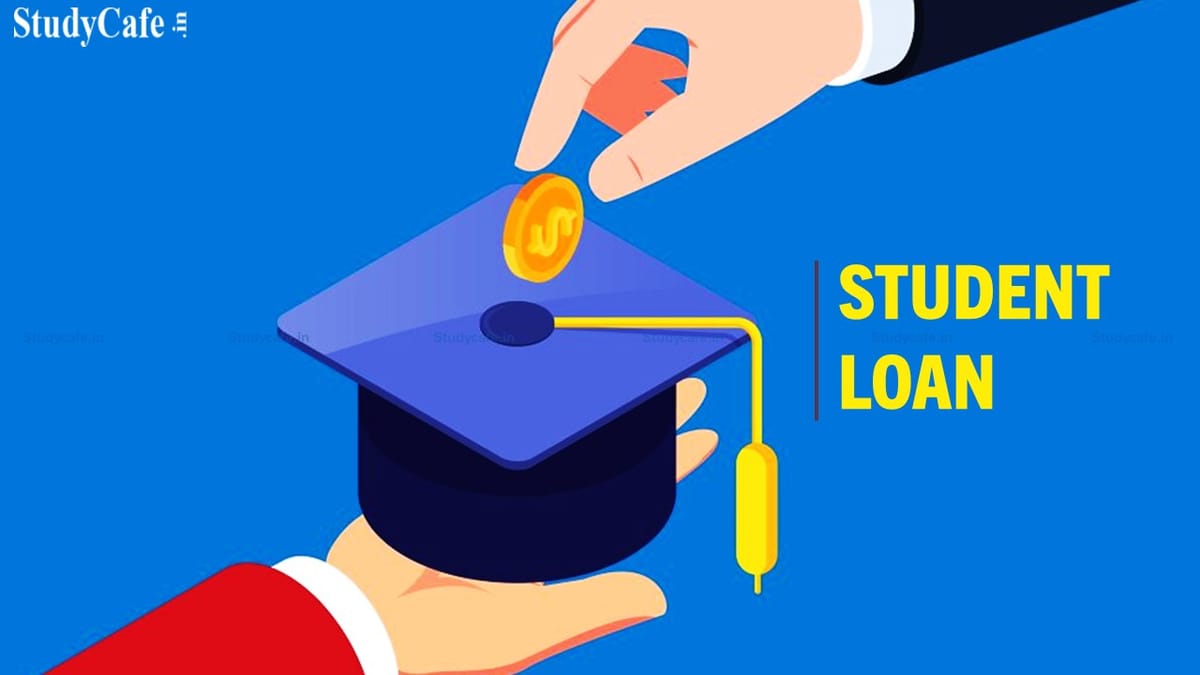

Student Loan: Under what circumstances you can avail Student Loan
When you get an opportunity to pave your path to build a strong future just by taking a small amount of risk, will you miss it?
Well, we all know there are so many types of loan provided by various types of banks around us. But out of all the loans, Student loan or Education loan stands out! And it’s because availing this loan might turn out to be the best liability of your life, in a very propitious way.

Student loan, to put it in an intelligible way, is the money you borrow from government or private lenders in order to afford your college fee and all the costs associated with it. Later, you can start paying back the loan with the accumulated interest on the principal on a monthly basis. Many times student loan is also referred to as ‘Student EMI’. Before the bank agrees to sanction the loan, they will go through your past academic performance (marks and subject credits), your achievements and your extra-curricular talents. But these are not the only requirements that a bank will need to authorize your loan. Also, not only banks lend education loans in India but also Non-Banking Financial Companies (NBFCs) like HDFC Credila and Avanse and Foreign lenders like Leap Finance.
So, what is the eligibility criteria for a bank to provide you with a student loan in India? Different banks might have different eligibility criteria. But there are few common criteria which all banks:
Many of you might be seeing the term ‘Co-Applicant’ for the first time. Co-Applicant is nothing but a person who acts as a guarantor on behalf of you. To put it in simple words, if by any chance you do not repay the loan, your guarantor becomes liable to the bank. A Co- Applicant can be your parent, sibling, spouse, in law-parents or any close relative. Banks will also request you to submit proofs of the Co-Applicant’s financial stability and assets, to carry forward the process sanctioning the loan.
Most of the banks will demand a collateral for a loan amount more than Rs 7.5 lakhs. Collateral is something you pledge as security (assurance) for the repayment of loan. Collateral for student loan can be in the form of Fixed Deposits (FD), life insurance or an immovable asset. In case of non-repayment of the loan, the bank has all the rights to take over the pledged asset. Although many banks ask for a collateral, there are some banks that don’t and those loans will have a higher rate of interest. Also, rate of interest is one of the main factors that affect your decision of considering a loan. Rate of interest in India usually ranges between 6% and 15% and most of the banks also charge a processing fee up to 1% of the principal lent.
If you are a person with huge amount of savings, then student loan is not for you because it will only make you spend more in the terms of interest. But, if you are a person who cannot afford the entire tuition fee, then considering a student loan is the best option for you. Also, many banks not only lend the amount of tuition fee, but also considers other expenses like travel, accommodation, cost of study materials, equipment, library, laptops and more. So, you need not plan for all the other expenses separately but can get it all in one package!
If you’re considering to borrow a student loan, then you will definitely be pondering about how to pay it back. Well that is made simple too! Repayment of any student loan doesn’t start before 6-12 months after completing your course. This means, you needn’t pay a single penny as soon as completing your course. This time period is known as the ‘Moratorium Period’. Moratorium period gives you the time to find a job after completing your course so that you can repay the loan once you start earning a steady income. But this comes with a cost, moratorium period is almost never interest free i.e., interest for this time period will get accumulated and you’ll have to pay it back along with the principal.
Generally repaying period in India is anywhere between 5 and 7 years, but sometimes it can be as long as 15 years which will give you enough time for you to repay the loan.
Well, many banks and organizations now provide various incentives to attract students because taking a student loan is becoming more and more popular. Applicants can also avail tax benefits under Section 80E of Income Tax on interest towards educational loans. But, like any other loan, even student loan is risky as it is a type of liability. So, you must evaluate all the possible outcomes before applying for the loan. You must analyze the job prospects in the country you’re going to study in or in the job market back home. It is very much suggested to evaluate your repayment ability and have a repayment plan before moratorium period begins.
Summarizing it, student loan gives you an exploratory option into your dream and can also make it come true!
This Article is shared by Kishore Dhana.

In case of any Doubt regarding Membership you can mail us at [email protected]
Join Studycafe's WhatsApp Group or Telegram Channel for Latest Updates on Government Job, Sarkari Naukri, Private Jobs, Income Tax, GST, Companies Act, Judgements and CA, CS, ICWA, and MUCH MORE!"