Tribunal follows jurisdictional High Court rulings and family members’ cases; holds transactions genuine, exempts capital gains under Section 10(38)
Meetu Kumari | Oct 2, 2025 |
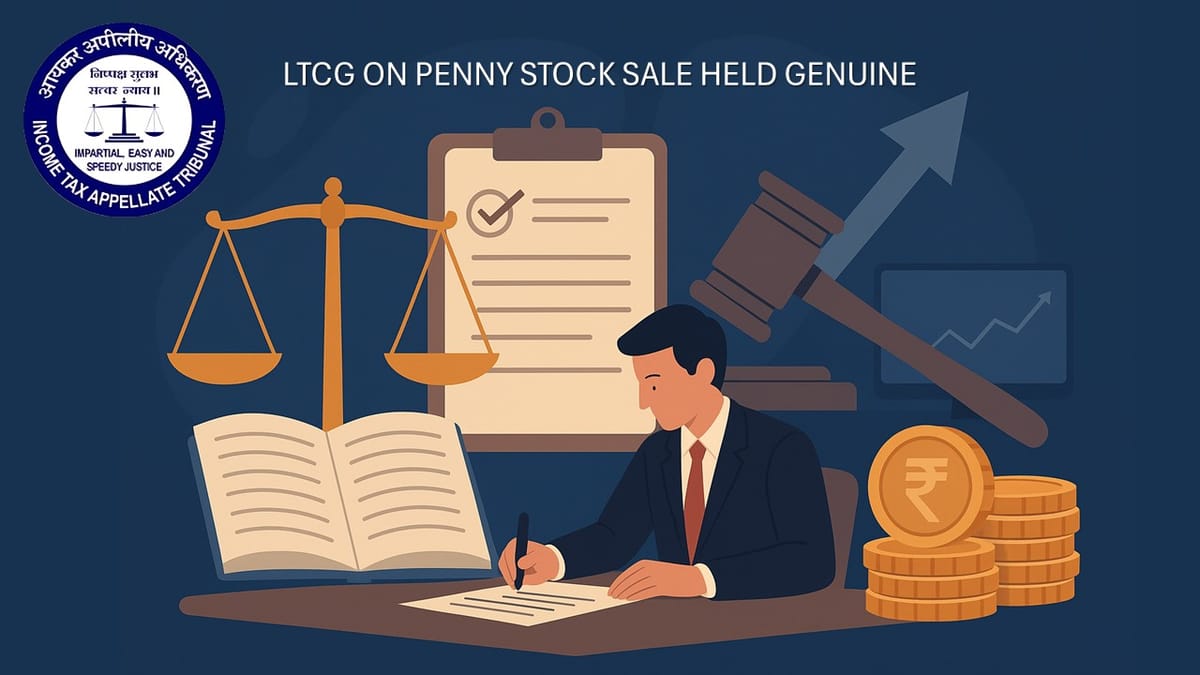

ITAT Mumbai: Assessee Gets Relief; Bogus LTCG Addition on Penny Stock Deleted
The assessee purchased 4.85 lakh shares of Shreenath Commercial and Finance Ltd. (SCFL) in March 2011 through a registered broker on the stock exchange for Rs. 99.95 lakh. Thereafter, SCFL issued bonus shares in the ratio of 1:1, increasing its holding to 9.7 lakh shares. These were sold in January-February 2013 for Rs. 6.81 crore, resulting in a long-term capital gain of Rs. 5.81 crore claimed exempt under Section 10(38).
The return was reopened based on information from the Investigation Wing, Kolkata, alleging that SCFL was a penny stock used for providing bogus LTCG entries. The AO rejected the assessee’s claim, treating the sale proceeds of Rs. 6.82 crore as unexplained income under Section 68 and further added 5% (Rs. 34.11 lakh) as commission under Section 69C. The CIT(A) deleted the commission addition but confirmed the addition of the sale proceeds as bogus LTCG.

Main Issue: Whether the assessee’s long-term capital gain on sale of shares of SCFL was genuine and eligible for exemption under Section 10(38), or merely an accommodation entry liable to be taxed under Section 68.
Tribunal’s Ruling: The Tribunal noted that the assessee’s transactions were carried out through the stock exchange, using a SEBI-registered broker, and were duly supported by contract notes, demat statements, bank records, and ledger accounts. No adverse material linked the assessee with the promoters of SCFL or alleged operators.
It further observed that on identical facts, the Tribunal had already deleted similar additions in the cases of the assessee’s relatives (Mrs Pallavi Pandey, Shri Rajendra Chaturvedi, and Miss Veena Chaturvedi). The Tribunal also relied on Bombay High Court rulings in PCIT v. Ziauddin Siddique and PCIT v. Indravadan Jain HUF, which upheld the exemption where transactions were through the exchange and banking channels. Following these precedents, the ITAT held that the assessee had discharged his onus under Section 68, and since nothing adverse was established against him, the additions were unsustainable. Thus, the appeal was allowed in full.

To Read Full Judgment, Download PDF Given Below

In case of any Doubt regarding Membership you can mail us at [email protected]
Join Studycafe's WhatsApp Group or Telegram Channel for Latest Updates on Government Job, Sarkari Naukri, Private Jobs, Income Tax, GST, Companies Act, Judgements and CA, CS, ICWA, and MUCH MORE!"