A complete overhaul of India’s labour system, the new Labour Codes unify existing 29 laws and bring minimum wages, social security, safer workplaces, and clearer rights for all workers.
Saloni Kumari | Nov 25, 2025 |
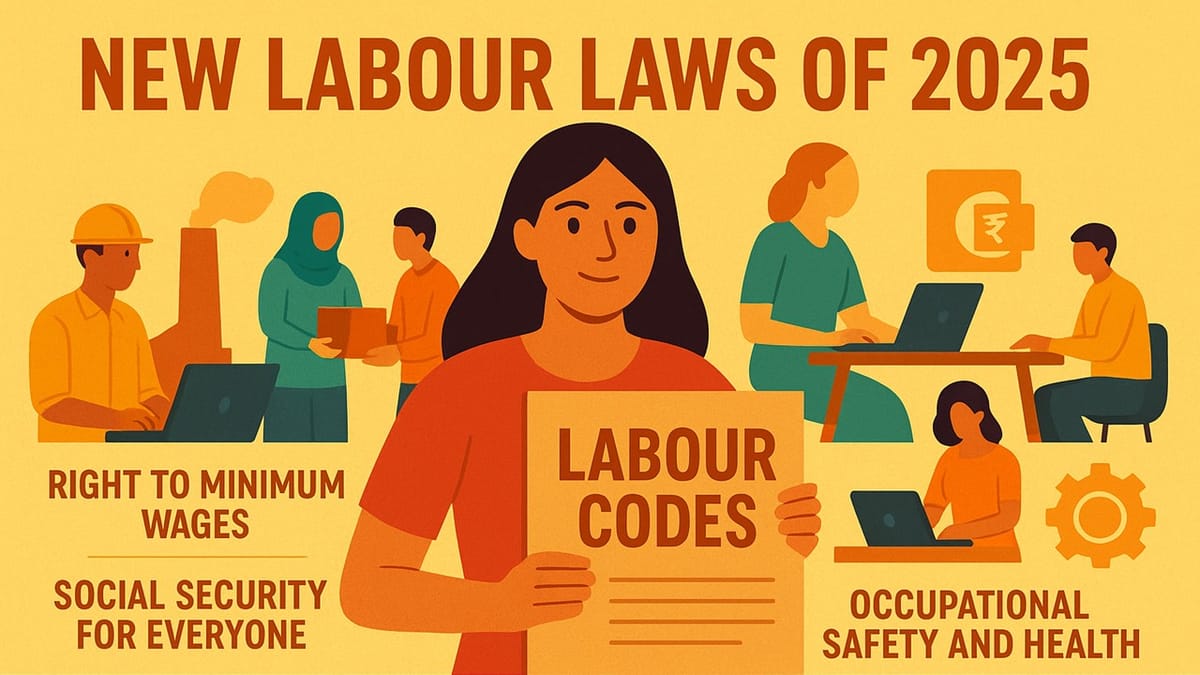

India Implements New Labour Codes 2025: A Historic Overhaul of Workers’ Rights Effective from Nov 21
The Government of India has successfully made effective the most-awaited new labour codes of 2025, effective from November 21. It is a major transformation in India’s labour framework. The existing 29 labour laws have been combined into four simplified labour codes: the Wages Code 2019, the Industrial Relations Code 2020, the Occupational Safety, Health and Working Conditions (OSH) Code 2020, and the Social Security Code 2020.
The government has made minimum wages compulsory for employees belonging to both organised and unorganised sectors. Through these new labour codes, the government has tried to provide social security for gig workers, reduce the gratuity eligibility period to one year, and recognise work from home, among other measures.

These new labour laws are aimed towards facilitating compliance, ensuring fair working conditions and making sure that the working rights of employees in all the sectors are protected. The new labour law changes will directly affect wages, social security benefits, working hours, job stability, and overall workplace experience. Here we have explained the new labour rules for 2025 in detail:
1. Right to Minimum Wages for Everyone:

The government of india, for the first time in indian history, has tried to provide every worker (around 50 crore workers in the organised and unorganised sectors) the right to minimum wages. A total of Four Labour Laws have been merged into the Minimum Wages Code. Because of this reason, this is the first time workers have been given the Right to Minimum Wages. This is the first time around 40 crore workers from the unorganised sector of the country are getting this right. The minimum wage will be reviewed every five years.
2. Social Security for Everyone
The central government has merged a total of nine labour laws to form one Social Security Code to ensure security for all workers. This framework extends EPF, EPS, and ESIC benefits to organised, unorganised, and self-employed workers. This benefit is available for workers from all sectors, even the unorganised sector. The government is planning to expand this ESIC network from 566 districts to all 740 districts of the country.
3. Right of security to workers in all situations
The government has amalgamated 13 existing Labour Laws into the Occupational Safety, Health and Working Conditions Code, 2020. The aim behind forming this code is to provide an enhanced and safe working environment, along with occupational health and safety, to workers at the workplace. This code has been developed mainly keeping in mind the security of workers engaged in factories, mines, plantations, the motor transport sector, bidi and cigar workers, and contract and migrant workers. The OSH code will enhance the lives of the Inter-State Migrant Workers.
4. Timely and Digital Wage Payments
The new labour codes of 2025 have ensured compulsory and timely payment of wages to workers belonging to all categories. The Payment of Wages Act amendments have allowed payment of wages via bank transfers or cheques, encouraging transparency. This will reduce unfair and arbitrary delays and will ensure financial stability for workers.
5. Gratuity Eligibility Expanded for Fixed-Term Employees
Fixed-term employees, workers hired on time-bound contracts commonly seen in IT, manufacturing, media, logistics and services, etc., were earlier required to complete five years of service in order to be qualified. Now, the good news is that this period has been reduced from five to just one year.
6. Occupational Safety and Health for All Sectors
The existing system of “Inspector Raj” has been removed with digital processes, web-based inspections, reduced committees, and tech-driven transparency. This change has reduced the cost of compliance and, meanwhile, ensured faster resolution of disputes and more accountability.
7. Compulsory Free Annual Health Check-ups
According to the new labour laws of 2025, the advantage of free treatment has been made available to workers through a small contribution to hospitals and dispensaries of ESIC. This benefit is especially for those workers who are above 40 years and those working in hazardous occupations.
8. Appointment Letters Now Mandatory
The government has not made it mandatory to give an appointment letter on the appointment of any employee, spelling out wages, duties, working hours, and entitlements. Employers are compelled to give appointment letters to every employee, including workers from unorganised sectors, gig roles, and short-term jobs.
9. Women’s Empowerment and Working Security
Under the New Labour Law, women can now work in any workplace, even during night shifts, if they agree to it and the employer ensures their safety. Employers must provide safe transport, clean facilities, and a proper system to handle complaints. Paying women less than men for the same work is strictly prohibited. Through this change, the government has tried to completely remove gender discrimination at work locations.
10. Easier Qualifications for Paid Leaves
Now, as per the new labour laws, employees should work for at least 180 days in a year to be said to qualify for annual paid leave. Earlier, this limit was 240 days in a year. This shorter requirement helps individuals who work in seasonal jobs or jobs with changing shifts, because previously they could not qualify due to the longer time needed.
11. Working Hours
Government has now capped working hours to 48 hours. The new labour code has clearer overtime and leave provisions for benefit of employees.

In case of any Doubt regarding Membership you can mail us at [email protected]
Join Studycafe's WhatsApp Group or Telegram Channel for Latest Updates on Government Job, Sarkari Naukri, Private Jobs, Income Tax, GST, Companies Act, Judgements and CA, CS, ICWA, and MUCH MORE!"