Saloni Kumari | Dec 1, 2025 |

Barter Trade Between J&K and PoK Treated as Intra-State Supply under GST, Rules High Court
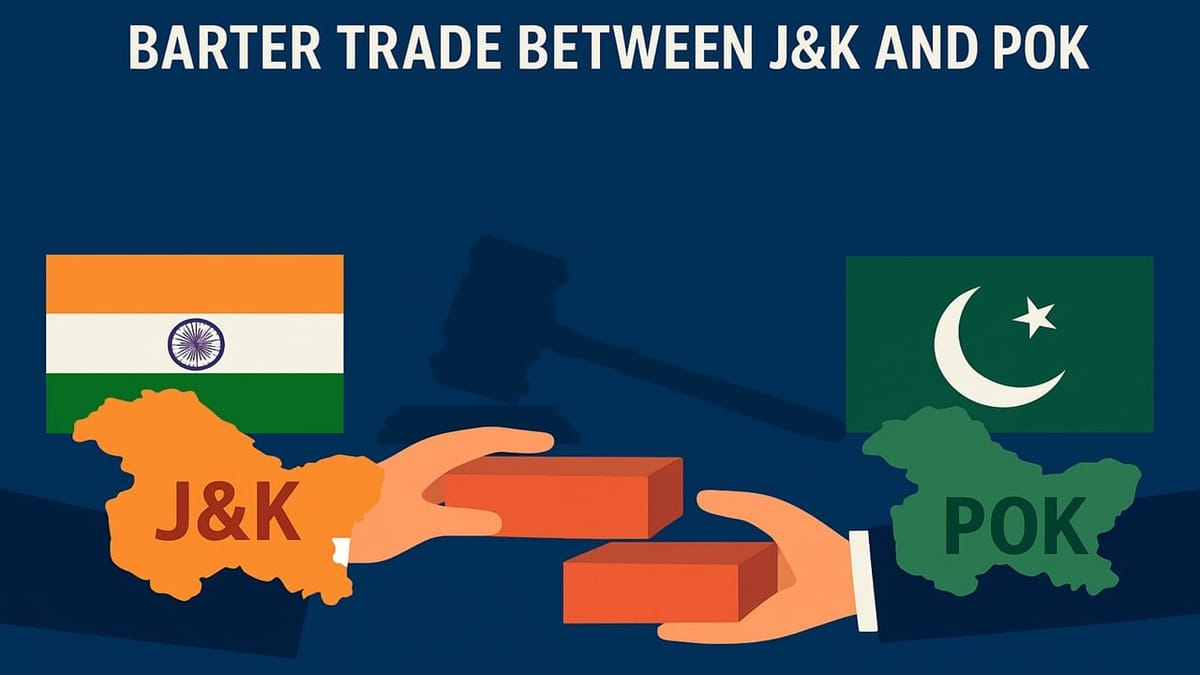
The Jammu & Kashmir and Ladakh High Court, in a key judgement, has qualified the trade conducted between Jammu and Kashmir and Pakistan-occupied Kashmir (PoK) as an intrastate trade. According to the ruling of the high court, Pok is considered a part of Jammu and Kashmir (J&K), and the said trade falls under the purview of the GST Act. The benches announcing the final decision on the case comprised Honourable Justice Sanjeev Kumar and Justice Sanjay Parihar.
The Jammu and Kashmir and Ladakh High Court has finally ruled on a common question revolving around the tax (GST) treatment of cross-Line of Control (LOC) barter transactions carried out during 2017-2018 and 2018-2019.

The division bench, while hearing 35 writ petitions simultaneously, noted that the goods exchange that took place across the Line of Control (LOC) was under barter trade (where goods are exchanged for goods, with no use of money/currency). This cross-LOC trade was between the people living across the LOC, i.e., trade between two parts of the state of Jammu and Kashmir: J&K on the Indian side and PoK on the other side. Then, it should be treated as intra-state trade under the GST Act.
In the present case, the taxpayer had challenged a show cause notice (SCN) passed by the tax authorities under Section 74(1) of the CGST Act, where the government alleged the taxpayer was fraudulently claiming exemptions. In conclusion, the tax department raised GST demand against all the traders who were involved in this barter trade.

The court ruled that, as per the law, if the supplier and the place where goods are delivered are in the same State or Union Territory, then the transaction is treated as an intrastate supply under GST.
Even though part of Jammu & Kashmir is currently under Pakistan’s control (PoK), it is still legally considered part of J&K. Thus, trade between J&K (Jammu and Kashmir) and PoK (Pakistan-Occupied Kashmir) is within the same state, meaning it is intra-state trade.
The court noted that the traders did not report these barter transactions under GST. There was no official exemption that allowed them to skip reporting. The Bench said even though people can file writ petitions, the court may choose not to interfere if other legal remedies exist. Show-cause notices must be decided by the proper GST authority. If someone has received a final tax demand, they must file an appeal under Section 107 of the GST Act.
The court noted, “we are of the considered opinion that in respect of impugned show cause notices, the petitioners have a remedy to file their reply, submit requisite material and contest these on merits, and, if, after considering the representation/reply to the show cause notice tendered by the petitioners, the proper officer passes an order confirming the demand in terms of sub-section (9) of Section 74 of CGST Act of 2017, the petitioners shall have a remedy of appeal before the Appellate Authority under Section 107 of the CGST Act of 2017.”
In the final ruling, the court dismissed most of the petitions because they were either filed too early or because the law already provided another remedy. The court made it official and binding that cross-loc trade is intra-state trade for GST purposes.

In case of any Doubt regarding Membership you can mail us at [email protected]
Join Studycafe's WhatsApp Group or Telegram Channel for Latest Updates on Government Job, Sarkari Naukri, Private Jobs, Income Tax, GST, Companies Act, Judgements and CA, CS, ICWA, and MUCH MORE!"