Tribunal holds that misquoting the penalty provision was a clear, rectifiable mistake, rejects assessee’s claim that AO changed his “satisfaction” or exceeded jurisdiction.
Meetu Kumari | Dec 11, 2025 |
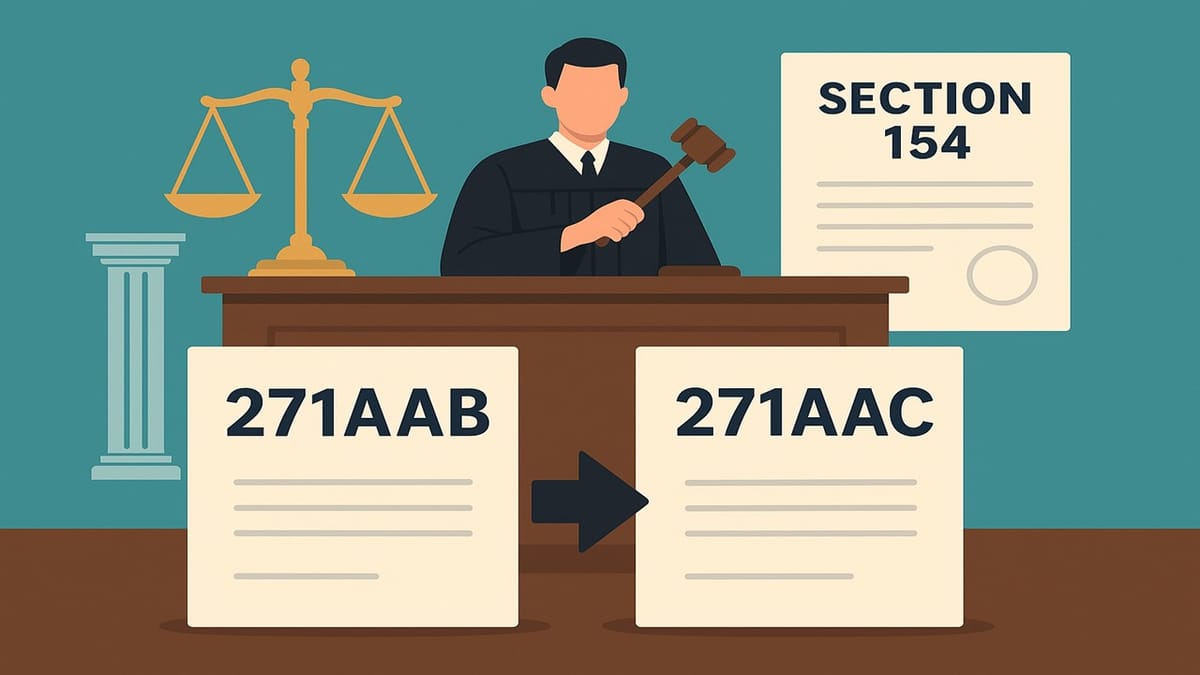

ITAT Upholds Penalty Rectification: AO Can Correct Wrong Section from 271AAB to 271AAC Using Section 154
Piyush Garg, an individual taxpayer subjected to requisition proceedings under Section 132A, filed his return for AY 2022-23 declaring income of Rs. 77.80 lakh, including Rs. 62 lakh offered under the special rate of Section 115BBE on cash seized during the action conducted on 27.07.2021. The assessment was completed under Section 143(3), where the Assessing Officer initiated penalty proceedings under Section 271AAB on the seized cash. Later, on realising that Section 271AAB did not apply and that the correct provision was Section 271AAC(1), the AO passed a rectification order under Section 154 to substitute the penalty section.
The assessee challenged the rectification before the CIT(A). The CIT(A) rejected, holding that the error was only clerical and that rectification was justified. Aggrieved, the assessee appealed to the ITAT.

Main Issue: Whether the AO’s substitution of the penalty provision, from Section 271AAB to Section 271AAC, was a mere rectifiable mistake apparent from the record under Section 154, or an impermissible alteration of the AO’s satisfaction requiring fresh jurisdiction.
ITAT Ruled: The Tribunal held that this was not a case of changing the AO’s “satisfaction” or reviewing a debatable issue, but simply correcting the penalty provision that had been wrongly mentioned in the assessment order. Referring to the principle that mistakes apparent from the record may be rectified under Section 154, the Bench observed that the applicability of Section 271AAC in the assessee’s facts was not in doubt and the AO’s initial reference to Section 271AAB was plainly incorrect. Therefore, the error was clerical and squarely fell within the scope of Section 154 rectification.
The ITAT rejected the assessee’s contention that the AO had exceeded jurisdiction or revived a “dead penalty.” It held that once the mistake was noticed, the AO was duty-bound to correct it, and the timing of rectification did not invalidate the action. Therefore, the Tribunal upheld the CIT(A)’s order and dismissed the appeal.

To Read Full Judgment, Download PDF Given Below

In case of any Doubt regarding Membership you can mail us at [email protected]
Join Studycafe's WhatsApp Group or Telegram Channel for Latest Updates on Government Job, Sarkari Naukri, Private Jobs, Income Tax, GST, Companies Act, Judgements and CA, CS, ICWA, and MUCH MORE!"