Advance Tax Payment: Pay 2nd Installment of Advance Tax by 15th September to avoid Penalties:
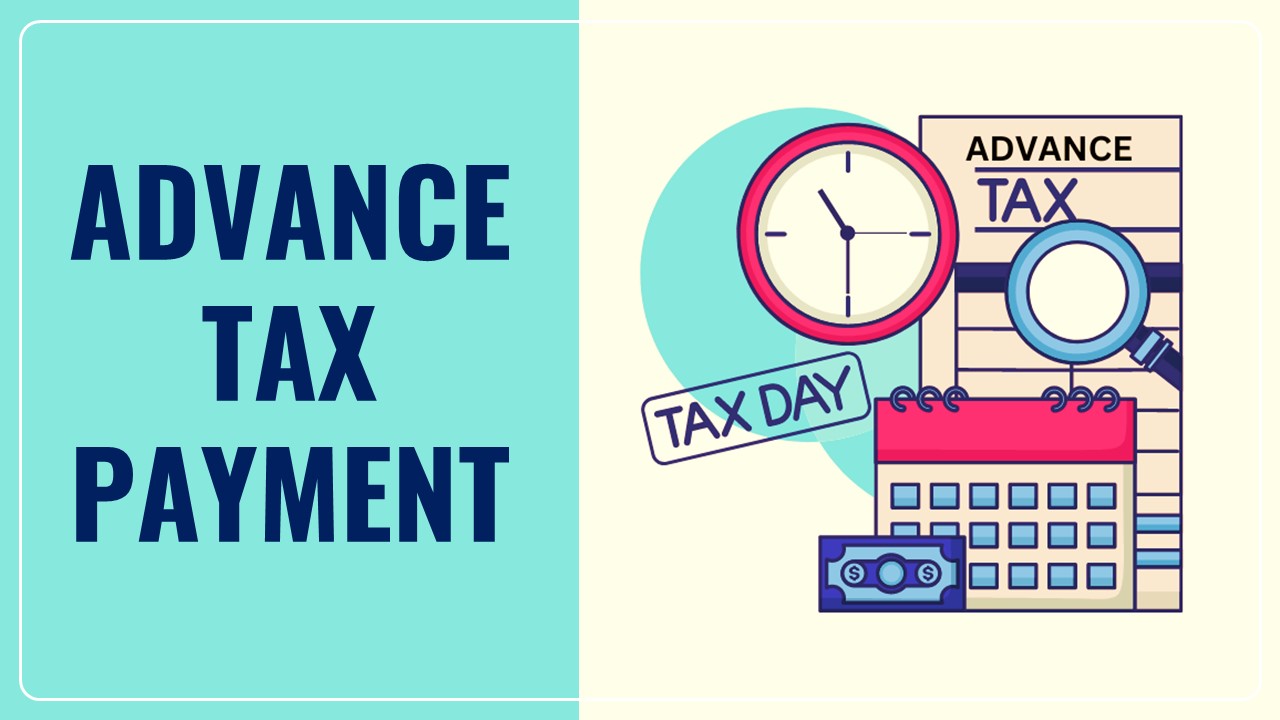
If you fail to pay advance tax by the due date, you may face severe consequences for your mistaken perception.
Pay 2nd Installment of Advance Tax to avoid Penalties
 Reetu
Reetu Sep 14, 2024
Table of Contents

Advance Tax Payment: Pay 2nd Installment of Advance Tax by 15th September to avoid Penalties
Several individual taxpayers believe that advance tax payments are solely applicable to businesspersons, companies and corporations.
If you fail to pay advance tax by the due date, you may face severe consequences for your mistaken perception. The second installment for the financial year 2024-25 is due on September 15.
According to Section 208 of the Income Tax Act, 1961, any individual, including salaried taxpayers, whose estimated tax liability is likely to exceed Rs.10,000 [after considering tax deducted and collected at source (TDS and TCS)] in a financial year is required to pay advance tax that year.
This does not apply to senior citizens who do not earn money from a business or profession.
Details of Advance Tax Payment
In simple terms, it is the tax that you must pay before the end of the financial year on the income earned during that year. Income Tax Rules require you to make the payment in four payments - June 15, September 15, December 15, and March 15 - rather than all at once at the conclusion of the financial year. Salaried persons' employers deduct tax before depositing their salaries at the end of the month. Employers, on the other hand, do not consider other sources of income, such as interest on deposits, capital gains on the sale of stocks and mutual fund units, and so on. When estimating your advance tax liability, you must also consider these incomes.| Installments for the financial year | Due date | Advance tax payable |
| First installment | 15th June | 15% of the total tax liability |
| Second installment | 15th September | 45% of the tax liability as reduced by the amount, if any, paid in the earlier installment |
| Third installment | 15th December | 75% of the tax liability as reduced by the amount, if any, paid in the earlier installment |
| Fourth installment | 15th March | 100% of the tax liability as reduced by the amount, if any, paid in the earlier installment |
Advance Tax Payment in 4 Installments
This is how taxpayers are expected to meet their advance tax payment demands: 15% of the estimated advance tax amount is due on June 15. By September 15, you should have paid 45% of the total amount owed, 75% by December 15, and 100% by March 15. However, if you are a self-employed businessperson or professional who has chosen the presumptive taxation plan, the regulations vary slightly. Even though they must pay advance tax, companies are allowed to pay it all at once -- in the final quarter of the financial year, by March 15. This leeway is granted since small businesses may struggle to predict their advance tax liability at the start of the financial year.How to Pay Advance Tax?
- Log into the official website of Income Tax to pay your taxes. If you have not already done so, you must first register yourself by entering your PAN.
- Next, select 'e-pay tax' from the 'Quick Links' menu on the left side of the website.
- Follow the steps to validate your PAN, input the OTP, and then pick the appropriate assessment year (2025-26 if you are paying advance tax for the financial year 2024-25) and 'Advance Tax (100)' as the 'kind of payment'.
- To finish the procedure, click 'Continue', enter your information, and pay.
Consequences of not paying Advance Tax
Paying the advance tax is not optional. If you fail to follow the regulations, you will have to pay penalties. You will be obliged to pay simple interest at the rate of 1% per month on the amount of less-than-necessary payment/non-payment of advance tax by the due date for the period until the payment is received. The penal interest on the deficit amount is only applicable if the total advance tax paid is less than 12% and 36% of the advance tax due on June 15 and September 15, respectively. Similarly, a penalty will apply if the advance tax you have paid is less than 75% and 100% of the due amount by December 15 and March 15, respectively. If you miss the March 15 deadline, you can still pay advance tax until March 31, but you will be charged one month's interest under Section 234C of the Income Tax Act. However, if you wait until July 31 (the deadline for filing ITRs for the preceding financial year) to complete this duty, the IT department will consider it a default in advance tax payment. In such circumstances, you must pay an additional four months of penal interest (1% per month) under Section 234B. To prevent paying significant penalties later, keep track of due dates and advance tax projections, and pay your bills on time.About Author


Reetu
Content Manager
Reetu is a Content Writer with 4+ years of experience in GST, Income Tax, Finance, Company Law, Education and Career Related Content. She is a B.COM (Honrs.) Graduate.
Reetu is a Content Writer with 4+ years of experience in GST, Income Tax, Finance, Company Law, Education and Career Related Content. She is a B.COM (Honrs.) Graduate.
 Studycafe
 Delhi, Delhi, India
 8071
8071My Recent Articles
- Income Tax Guide for Indian Defence Personnel for Tax Filing, Taxable Allowances and Other Benefits
- Income Tax Return Breaking: ITR Forms released for AY 25-26
- Ex-DRT Officials Sentenced to 5 Years Rigorous Imprisonment by Madras High Court along with Rs.27 Lakh Fine
- GSTN issued Advisory on Case Sensitivity in IRN Generation
- RBI to issue Notes of Rs.10 and Rs.500 bearing Signature of Guv Malhotra
Up Next
Loading suggestions…


Recent Posts


All Posts

Tags
No tags yet.
Recent Posts
All Posts
Tags
No tags yet.