Tax Authorities Plan Electronic Recording of Retail Invoices under Pilot Project; Effective April 01, 2027:
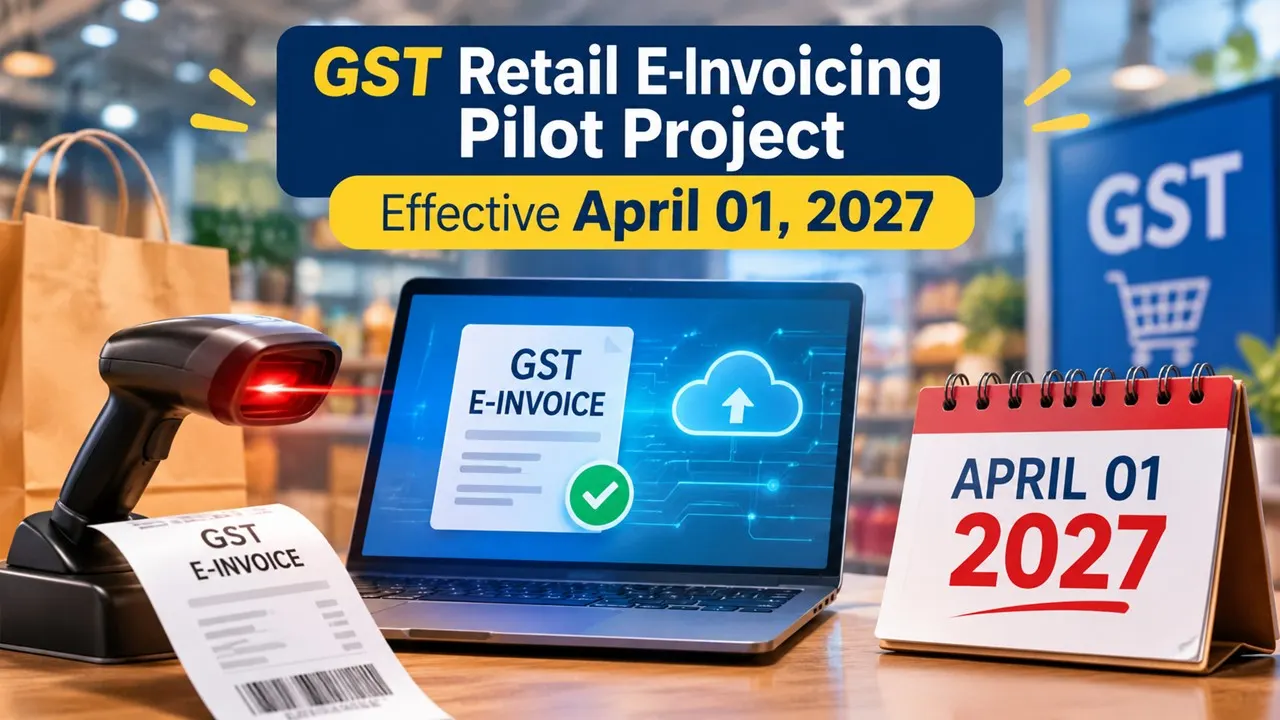
The GST authorities are planning to introduce a retail e-invoicing pilot from April 1, 2027, covering selected sectors to electronically track consumer invoices, improve tax compliance and curb GST evasion.
GST Department Plans Retail E-Invoicing Pilot
 Saloni Kumari
 Nov 2, 2026

In order to improve compliance among taxpayers, effective from April 01, 2027, the Goods and Services Tax (GST) authorities may introduce a project called 'Pilot', under which invoices issued by shops and businesses to retail consumers will be recorded electronically. As per the sources, the project will merely cover some selected sectors.
Upon the project implementation, the GST department will be able to access the large volume of retail transactions in sectors vulnerable to tax evasion and to keep a check on whether companies are properly reporting their sales and paying their GST dues promptly.

Presently, there is a designated platform for companies with annual sales exceeding 5 crore to electronically report invoices issued to other businesses, subject to certain exemptions. This process of reporting invoices has been made simpler with the new concept called 'E-Invoicing'.
Under the proposed system, retail invoices will also be electronically recorded, allowing tax officials to compare actual consumer transactions with the sales figures reported in GST returns. This will help identify differences in reported sales and detect possible tax evasion.

During its 54th meeting held in September 2024, the GST Council had recommended a voluntary trial of electronic recording of consumer invoices in selected sectors and states. The proposal was to introduce the system voluntarily at first and later make it mandatory in sectors where tax evasion is more common. Restaurants were among the sectors identified for possible implementation.
The Council had also highlighted several benefits of retail e-invoicing, including improved tax compliance, reduced paper consumption and lower invoice-related costs. Under the proposed arrangement, consumers would receive electronic invoices directly on their mobile phones.
Meanwhile, the government is also considering extending e-invoicing requirements to business-to-business transactions involving banks, insurance companies and non-banking financial companies (NBFCs), which are currently exempt from the requirement. However, this proposal is separate from the retail e-invoicing pilot.
According to officials, the implementation of retail e-invoicing was delayed earlier because of the difficulty of storing and processing a huge volume of small-value transactions generated every day. The existing technology infrastructure was not capable of handling such large amounts of data. The government is now looking to move forward with the pilot as technological capabilities improve.
About Author


Saloni Kumari
Content Writer
 StudyCafe
 Delhi, Delhi, India
 3090
My Recent Articles
- Husband Not Liable for Wife’s SBI Credit Card Spending on Her Garment Business, ITAT Deletes Rs 15.67 Lakh Addition
- ITAT Deletes Rs 30.48 Lakh Addition, Holds Sales Already Recorded in Books Cannot Be Added Again as Income from Other Sources
- Credit Card Fraud Without OTP or PIN: Six Essential Precautions to Protect Yourself
- Bengaluru Software Engineer Loses Rs 5.46 Lakh in Credit Card Fraud Despite Not Sharing OTP or PIN
- GST Department Adds Metro Rail as New Mode of Transportation in E-Way Bill System, Effective November 1
Loading suggestions…

Recent Posts
All Posts
Recent Posts
All Posts