Can You Skip Filing ITR If Your Earnings Are Under Rs. 12 Lakh?:

Budget 2025 raised the limit of income with zero tax income liability (after rebate) from Rs. 7 lakh to Rs. 12 lakh under the new tax regime
ITR Filing Below Rs. 12 Lakh?
 Shivani Verma
 Feb 20, 2025
Table of Contents

Can You Skip Filing ITR If Your Earnings Are Under Rs. 12 Lakh?
Budget 2025 raised the limit of income with zero tax income liability (after rebate) from Rs. 7 lakh to Rs. 12 lakh under the new tax regime, as long as there are no special rate incomes. From the next financial year (April 1, 2025), individuals earning up to Rs. 12 lakh annually will get a full tax rebate under Section 87A and pay zero tax.
Finance Minister Nirmala Sitharaman increased the basic income exemption standard under the new tax regime from Rs. 3 lakh to Rs. 4 lakh, which gives more relief to taxpayers. From the next financial year, individuals who earn up to Rs. 4 lakh annually do not have to pay any income tax or file an ITR.
Do you need to file an ITR to claim a rebate under Section 87A?
Currently, for income earned in the 2024-25 financial year, individuals must file their Income Tax Return (ITR) to claim a rebate under Section 87A. In the new tax regime, this applies to those who earn between Rs. 3 lakh and Rs. 7 lakh, while in the old tax regime, it is applicable to those who earn between Rs. 2.5 lakh and Rs. 5 lakh.
Finance Minister has increased the rebate amount under the new proposed tax regime from Rs. 25,000 to Rs. 60,000, in Budget 2025. However, the Rs. 60,000 rebate under the new tax regime will only be applicable to those taxpayers whose yearly income does not include special rate income like long-term capital gain (LTCG) or short-term capital gains.
[caption id="attachment_366990" align="alignnone" width="1280"]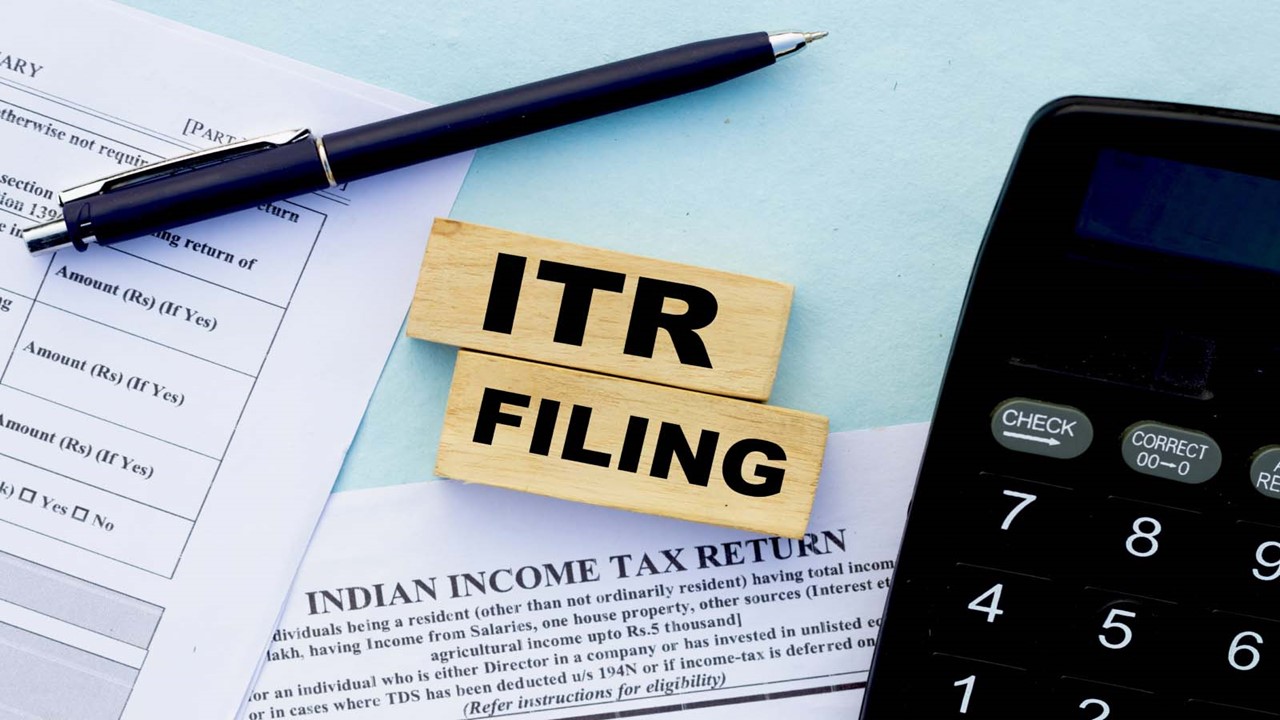 Income Tax Return[/caption]
Income Tax Return[/caption]
Do you need to file an ITR if your income is below the exemption limit?
If an individual is filing an ITR and his income in a year is less than Rs. 3 lakh in the new tax slab and less than Rs. 2.5 lakh in the old tax slab, and Rs. 4 lakh in the subsequent tax slab, from the subsequent financial year. You may still need to file an Income Tax Return (ITR) under Section 139 of the Income Tax Act. This applies if:- You own or have a financial interest in foreign assets.
- You have deposited more than Rs. 1 crore in your current account in one financial year.
- You have deposited Rs. 50 Lakh or more in your savings account in one financial year.
- You have spent over Rs. 2 lakh on foreign travel in a year.
- Your electricity bill exceeds Rs. 1 lakh in a year.
- Your business has annual sales of more than Rs. 60 lakh.
- Your professional income (not from a business) is over Rs. 10 lakh in a year.
- Your TDS/TCS deduction is over Rs. 25,000 or Rs. 50,000 for senior citizens.
What are the advantages of filing an ITR?
People who earn less than the basic income exemption limit are not required to file an Income Tax Return (ITR). However, it can still be beneficial to file a nil ITR, even if there is no taxable income. A nil ITR is simply a return filed when a person's income is below the taxable limit.What is the punishment for not filing an ITR?
From the next financial year onwards, if an individual who falls between Rs. 4 lakh and Rs. 12 lakh salary brackets fails to submit their ITR on time, they can receive a notice from the Income Tax Department regarding not paying the tax.About Author


Shivani Verma
Digital Marketing executive
 StudyCafe
 Delhi, Delhi, India
 142
142My Recent Articles
- ROC imposes Penalty of more than Rs. 10 Lakh for Late filing of BEN 4 and BEN 1
- Correct Errors in Your AY 2023-24 Tax Return, Income Tax Portal Now Accepting Requests
- Secure Your Shares and Mutual Fund Documents in DigiLocker: A Step-by-Step Guide
- 3 Equity Mutual Funds Delivered Positive Returns in 6 Months
- Income Tax Changes from April 1: What You Need to Know
Up Next
Loading suggestions…


Recent Posts


All Posts


Tags
No tags yet.
Recent Posts
All Posts
Tags
No tags yet.