Cash Deposit During Demonitization: ITAT Deletes Penalty on Savings of Women Who Worked in Unorganized Sector:
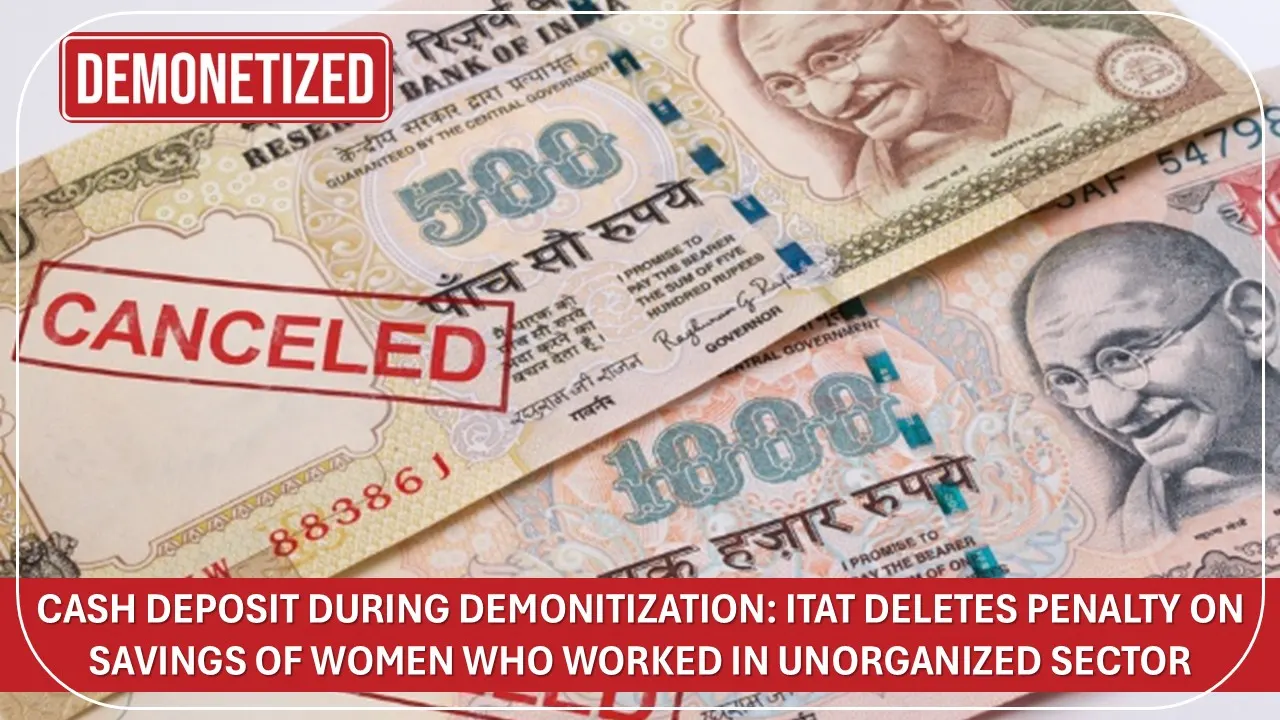
The ITAT ruled in favor of Ms. Lena Purshottam Patel, deleting the penalty on her cash deposits made during demonetization.
ITAT Cancels Penalty on Cash Deposits During Demonetization
 CA Pratibha Goyal
 Apr 12, 2025
Cash Deposit During Demonitization: ITAT Deletes Penalty on Savings of Women Who Worked in Unorganized Sector
The assessee, Ms. Lena Purshottam Patel, filed her income tax return for AY 2017–18 on 29.03.2018, declaring an income of ₹2,40,380 after a deduction of ₹10,000 under Chapter VIA.
The return was processed under Section 143(1) and subsequently selected for limited scrutiny under CASS to verify cash deposits during the demonetization period.
It was found that the assessee deposited a total of ₹10,63,000 in three bank accounts:
- ₹3,80,000 in Bank of India
- ₹3,33,000 in Bassein Catholic Co-op Bank
- ₹3,50,000 in HDFC Bank
About Author


CA Pratibha Goyal
Co Founder
CA Pratibha Goyal is Chartered Accountant qualified in 2016, is a Member of The Institute of Chartered Accountants of India having wide experience in the field of Auditing, Taxation, ROC, GST and Secretarial matters etc.
She has written over a thousand articles & has made several videos on topics related to Auditing & Taxation. As a Speaker she has delivered various sessions on various branches of NIRC of ICAI.
CA Pratibha Goyal is Chartered Accountant qualified in 2016, is a Member of The Institute of Chartered Accountants of India having wide experience in the field of Auditing, Taxation, ROC, GST and Secretarial matters etc.
She has written over a thousand articles & has made several videos on topics related to Auditing & Taxation. As a Speaker she has delivered various sessions on various branches of NIRC of ICAI.
 Studycafe
 New Delhi, Delhi, India
 1486
1486My Recent Articles
- Biggest Labour Reform in Indian History: 4 Labour Codes Effective from today
- Tax Audit and ITR Due date not extended in this case: Know More
- Government notifies Agreement and Protocol between India and Qatar [Read Notification]
- CA Breaking: Results of ICAI Examination to be announced soon, Know probable Date
- Breaking: GSTR-3B Due Date for September 2025 extended by CBIC amid Diwali Festivities
Up Next
Loading suggestions…


Recent Posts

All Posts



Tags
No tags yet.
Recent Posts
All Posts
Tags
No tags yet.