Cash Transaction Limits You Must Know to Avoid Income Tax Trouble:
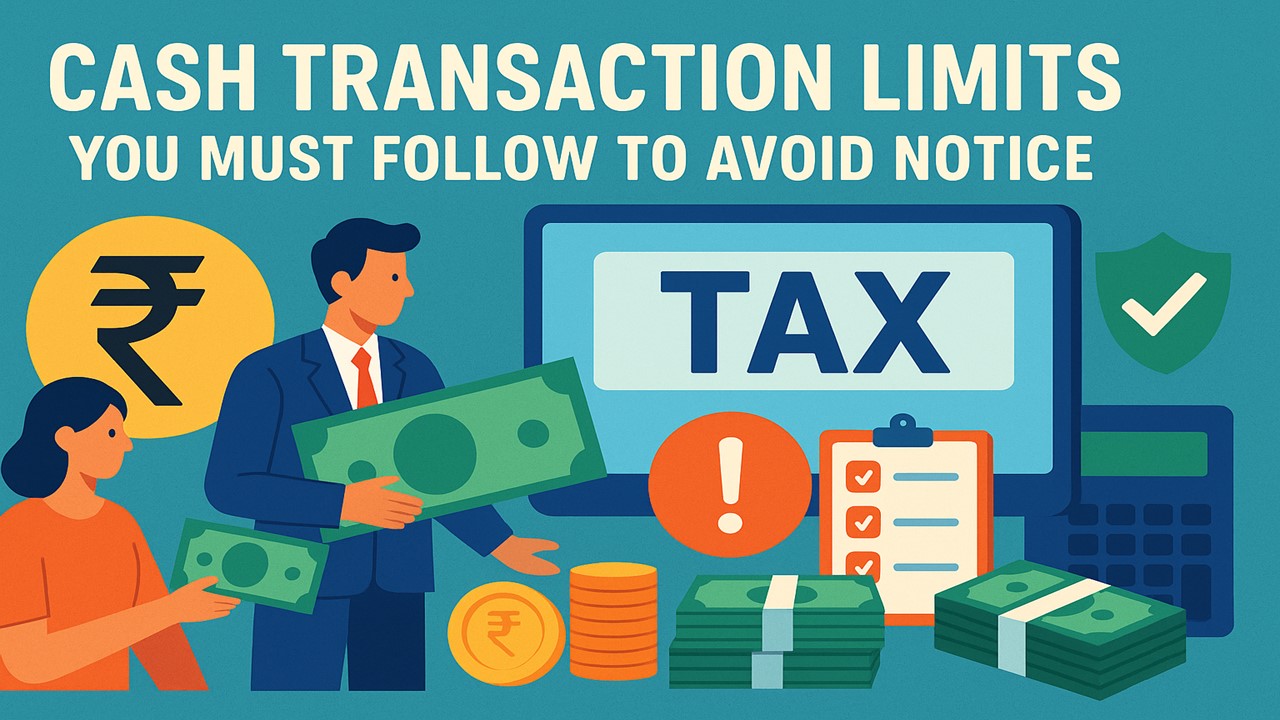
Everything you need to know about legal cash limits, fines, and using digital payments to stay safe from income tax issues.
Cash Rules You Must Follow To Avoid Notice
 Vanshika verma
 Oct 23, 2025
Table of Contents

Cash Transaction Limits You Must Know to Avoid Income Tax Trouble
These days, as digital payments become more popular, the government and the Income Tax Department are keeping a close watch on cash transactions. The main aim is to promote transparency in the financial system and prevent the flow of black money or cases of tax evasion.
It’s important to know the cash transaction limits in detail to avoid penalties or serious consequences in the future because sometimes people unknowingly transfer huge amounts of cash, which can violate income tax rules.
Cash Payments Limited to Only Rs. 2 lakh in a Single Day
You can use cash for transactions up to Rs. 2 lakh in a day. If you receive more than Rs. 2 lakh in cash from one person on the same day, it goes against the rules. This limit is applicable to all kinds of cash dealings, such as gifts, loans, business payments, or any other type of cash you receive, as per section 269ST of the Income Tax Act. Example: If you give or take Rs. 3 lakh in cash from someone, the Income Tax Department can take that money away. After that, you might get a notice from them asking you to explain where the money came from and why it was in cash.Transactions That Income Tax Department Examine
The income tax department monitors multiple types of cash transactions, such as:- Gifts: Received a gift in cash of more than Rs. 50,000.
- Bank Deposit: If you deposited more than Rs. 10 lakh in cash in a year.
- Property Deal: Bought or sold property worth Rs. 30 lakh or more.
- Credit Card Bill Payment: Paid a credit card bill with more than Rs. 1 lakh in cash.
- Business Payment: Received more than Rs. 2 lakh in cash from a client.
What is the Importance of Digital Payments?
The government is consistently moving towards a Digital India and promoting a cashless economy. This helps reduce tax evasion and makes it easier to track the flow of money. When most transactions happen online or through banks, it becomes simple to monitor black money and maintain transparency. Digital payments also make it easier for people and businesses to keep records and file their income tax returns smoothly in the future.Know How to Avoid an Income Tax Notice?
To avoid getting an income tax notice, it’s important to follow some simple rules:- Always make big payments online or through your bank instead of using cash.
- Keep proper records of all your payments, such as bills and receipts.
- If cash must be given, then try to stay within the allowed limit to stay safe from any trouble.
- If you are giving or receiving a gift or loan, make sure the details are written down.

Rules for Businesses and Banks
Businesses also need to be careful while managing their accounts. If a shopkeeper or trader accepts more than Rs. 2 lakh in cash from a customer, it breaks the income tax rules. Similarly, banks and NBFCs are required to report any large cash transactions to the authorities.About Author


Vanshika verma
Content Writer
Vanshika Verma is a Content Writer with 1+ year of experience at Studycafe.in. A B.Com graduate from Delhi University, She writes articles on Finance, Tax, ICAI, GST, and the latest financial news, with a focus on making complex topics easy for readers and professionals.
Vanshika Verma is a Content Writer with 1+ year of experience at Studycafe.in. A B.Com graduate from Delhi University, She writes articles on Finance, Tax, ICAI, GST, and the latest financial news, with a focus on making complex topics easy for readers and professionals.
 Studycafe
 Delhi, Delhi, India
 2039
2039My Recent Articles
- Tax Evasion Turn Deadly Risk In Greater Noida as Sleeper Buses Carry Commercial Goods Alongside Passengers
- TVS Srichakra Hit With Rs 10.71 Lakh Penalty by Uttarakhand GST Department Over Goods Transport Without Valid E-Way Bill
- Tenneco Clean Air India Receives Rs 56.70 Crore GST Show Cause Notice Over Alleged Excess Input Tax Credit Claim
- CBI Registers Major Corruption Case in Punjab Over Alleged Manipulation of Officer Transfers, Government Decisions and Administrative Matters
- ITAT Restores 80G Approval Application to CIT(E) for Fresh Adjudication After Section 12AB Registration Rejection Was Set Aside
Up Next
Loading suggestions…


Recent Posts
All Posts
Tags
Recent Posts
All Posts