RBI’s New Savings Account Rules: What Customers Need to Know:
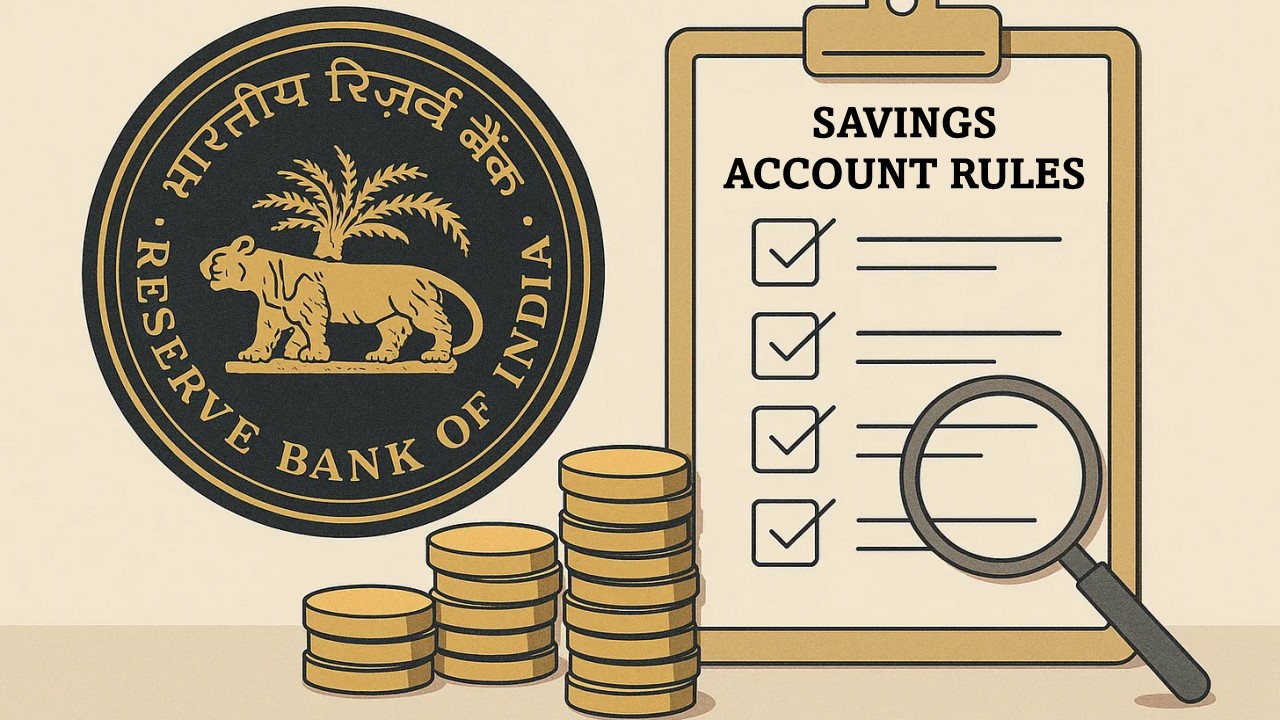
RBI’s new savings account rules from 21st October aim to make banking clearer, fairer, and easier for customers by updating balance requirements, ATM charges, and service fees.
New RBI Savings Account Rules
 Vanshika verma
 Oct 22, 2025
Table of Contents

RBI’s New Savings Account Rules: What Customers Need to Know
The Reserve Bank of India (RBI) has introduced new rules for savings accounts which will come into effect from October 21, 2025. These updated rules were introduced to make banking simpler and fair for customers. The new rules involves updates on things such as the minimum balance you need to keep, charges for using ATMs, and other bank service fees.
Minimum Balance Requirement
Banks can change the minimum balance requirement in savings accounts, as per the new RBI rules. Previously, some banks used to charge high fees if customers did not keep this balance. However, banks will now have to clearly explain the minimum balance rules, guidelines and fees charges to their customers. Such changes will help customers to avoid unexpected charges and handle their money better.Changes to ATM Withdrawal Rules
RBI's new rules also apply to ATM use. Customers are allowed a certain number of free ATM withdrawals each month, depending on their type of savings accounts. However, in case a customer withdraws more than this limit, banks can charge a small fee for the extra transactions. RBI's main objective was to promote digital payments and to make sure that people know about ATM rules.Clear Information on Bank Charges
Banks are now mandatorily required to give clear information to their customers about all charges and rules related to savings accounts. This includes fees for things such as cheque books, online fund transfers, and other services. RBI's main goal is to reduce hidden charges and create loyalty between banks and their customers.Effect on Account Holders/Bank Customers
Such new rules give account holders more clarity and control over their money. Customers can manage their banking better by knowing the minimum balance limits and ATM charges. Customers who use ATMs a lot or keep low balances might need to change how they use their accounts to avoid paying extra fees.About Author


Vanshika verma
Content Writer
Vanshika Verma is a Content Writer with 1+ year of experience at Studycafe.in. A B.Com graduate from Delhi University, She writes articles on Finance, Tax, ICAI, GST, and the latest financial news, with a focus on making complex topics easy for readers and professionals.
Vanshika Verma is a Content Writer with 1+ year of experience at Studycafe.in. A B.Com graduate from Delhi University, She writes articles on Finance, Tax, ICAI, GST, and the latest financial news, with a focus on making complex topics easy for readers and professionals.
 Studycafe
 Delhi, Delhi, India
 2096
2096My Recent Articles
- Pinarayi Vijayan Moves Supreme Court Challenging Kerala High Court Order to Register FIR in CMRL Alleged Bribery Case
- CBI Lays Trap in Srinagar, Arrests SMC Ward Officer Red-Handed While Allegedly Accepting Rs 10,000 Bribe
- NIIT Limited Discloses Income Tax Department’s Appeal Before Delhi ITAT, Says No Adverse Financial Impact Expected
- Fake WhatsApp Boss Dupes Company Accountant of Rs 40 Lakh; Surat Police Arrest Haryana Man in Cyber Fraud Case
- Uttarakhand Tax Department Detects Rs 2.5 Crore Tax Evasion at Ramnagar Resort
Up Next
Loading suggestions…


Recent Posts
All Posts


Recent Posts
All Posts