CBIC issued Clarification on Electro-Chemiluminescence Immunoassay kits
CBIC issued Clarification on Electro-Chemiluminescence Immunoassay kits The Central Board of Indirect Taxes & Customs (CBIC) has issued Clarifica…
 Reetu
Reetu Jul 27, 2022
Table of Contents

CBIC issued Clarification on Electro-Chemiluminescence Immunoassay kits
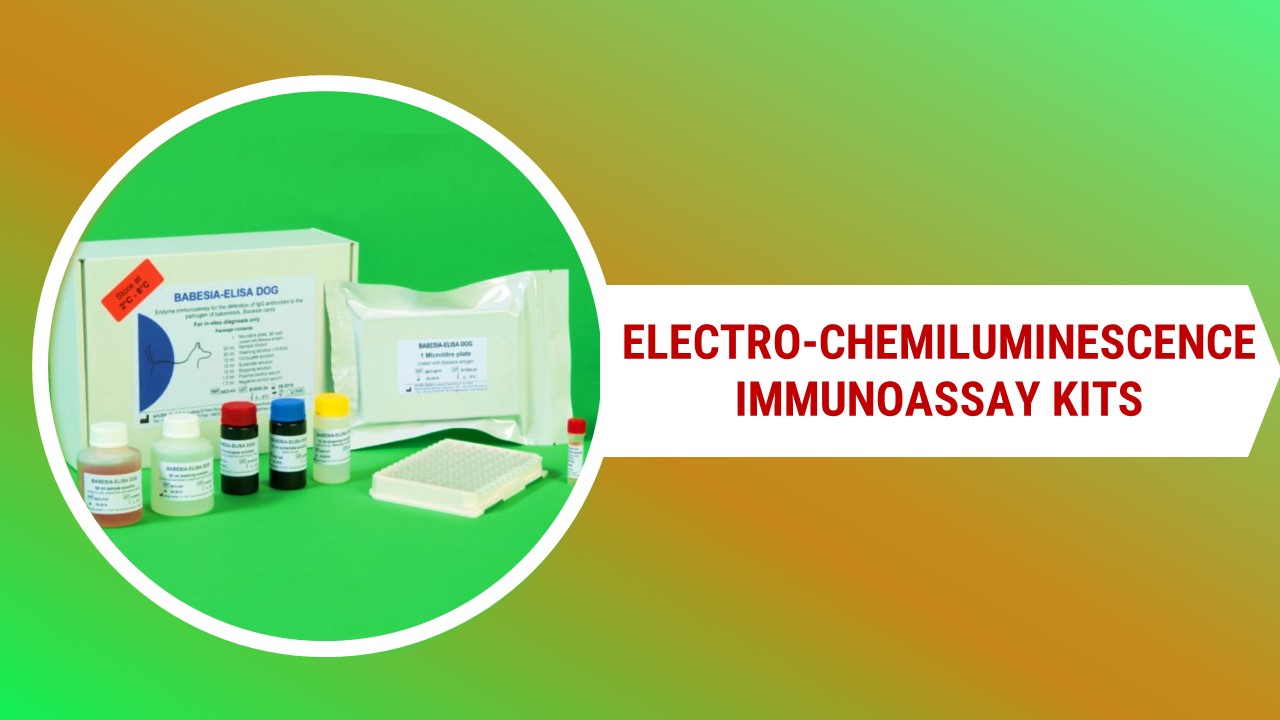
The Central Board of Indirect Taxes & Customs(CBIC) has issued Clarification on Electro-Chemiluminescence Immunoassay kits by releasing Circular.
In relation to the benefit of exemption of duties accorded to Chemiluminescence Immuno Assay (CLIA) kits, the Board is in receipt of representations seeking a clarification on whether Electro chemiluminescence Immuno Assay (ECLIA) kits are covered under the ambit of CLIA diagnostic kits.
 3. CLIA and ECLIA (Electrochemiluminescence immunoassay) both, are advanced methods of Immuno diagnostics based on the concept of antibody- antigen binding. CLIA uses a chemical reaction to generate chemiluminescence following antibody-antigen binding while ECLIA uses an electrochemical reaction to generate chemiluminescence signals in the immunoassay technique. Both techniques are rapid, specific and similar in following points;-
Clarification Given By CBIC:
1. Chemiluminescence immunoassay (CLIA) is la widely used detection method which combines the highly-sensitive chemiluminescence assay with highly-specific Immune response and affinity of antibodies. In CLIA diagnostic kits, chemiluminescence technique is combined with immunochemical reactions. CLIA Kits are designed to detect the chemiluminescence reactions. In CLIA the label, i.e. the true "indicator" of the analytic reaction, is a luminescent molecule. 2. CLIA have different label systems according to the difference of physical chemistry mechanism of the light emission which are mention below :-i. Label Chemical Directly Involved in the Light Emission Reaction
i. Enzyme Catalyzed Light Emission Reaction
iii. Redox Reaction Mediated Light Emission Reaction (ECLIA).
- Both use the concept of chemiluminescence for detection.
- Both techniques rely on the concept of antigen-antibody binding.
- Both are mainly used for disease diagnostics based on analyte detection.
About Author


Reetu
Content Manager
Reetu is a Content Writer with 4+ years of experience in GST, Income Tax, Finance, Company Law, Education and Career Related Content. She is a B.COM (Honrs.) Graduate.
Reetu is a Content Writer with 4+ years of experience in GST, Income Tax, Finance, Company Law, Education and Career Related Content. She is a B.COM (Honrs.) Graduate.
 Studycafe
 Delhi, Delhi, India
 8071
8071My Recent Articles
- Income Tax Guide for Indian Defence Personnel for Tax Filing, Taxable Allowances and Other Benefits
- Income Tax Return Breaking: ITR Forms released for AY 25-26
- Ex-DRT Officials Sentenced to 5 Years Rigorous Imprisonment by Madras High Court along with Rs.27 Lakh Fine
- GSTN issued Advisory on Case Sensitivity in IRN Generation
- RBI to issue Notes of Rs.10 and Rs.500 bearing Signature of Guv Malhotra
Up Next
Loading suggestions…


Recent Posts



All Posts



Recent Posts
All Posts