Cheating Case Not Quashed; Factual Disputes Must Be Tried: HC:
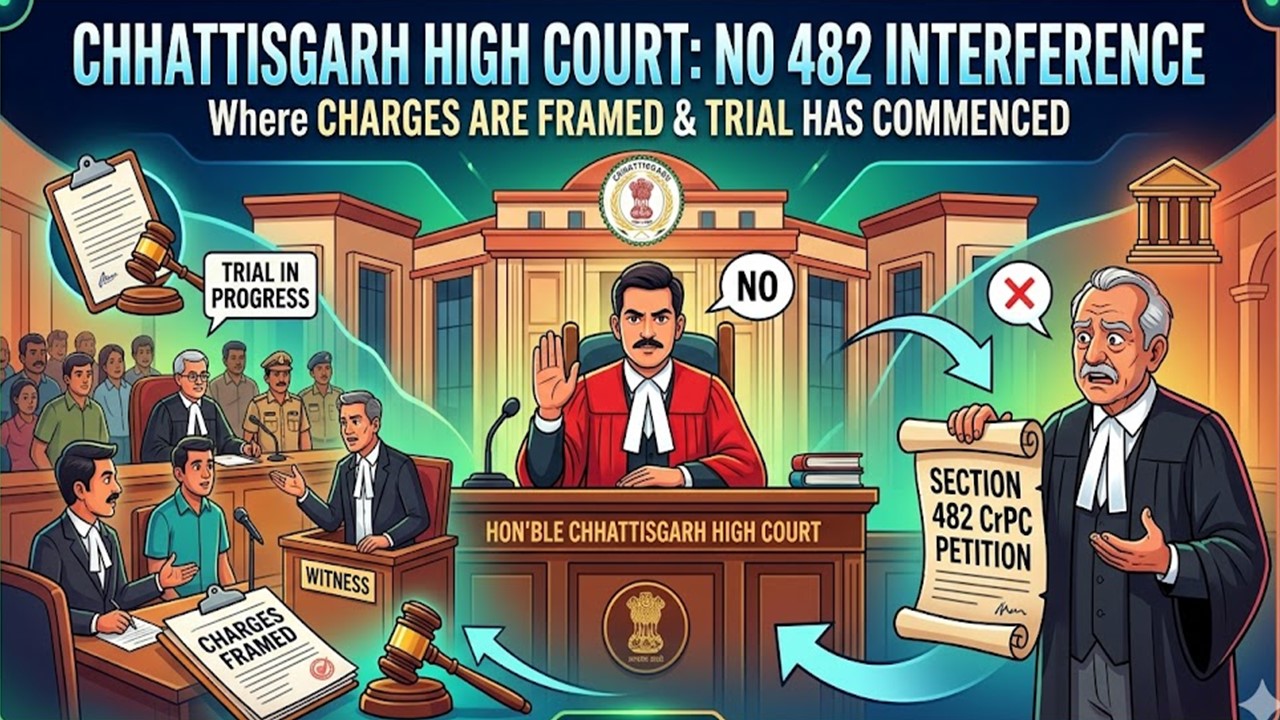
HC holds that once charges are framed and trial begins, disputed facts in cheating cases must be decided by trial court.
Court Declines Interference Under Section 482 CrPC Where Charges Are Framed and Trial Has Commenced
 Meetu Kumari
 Apr 24, 2026
Cheating Case Not Quashed; Factual Disputes Must Be Tried: HC
This case from the Chhattisgarh High Court is a classic example of the often-blurry line between a "bad business deal" and an "intentional crime". At the centre of the dispute is Suraj Upadhyay, a contractor running "Suryoday Construction". He found himself facing serious criminal charges, specifically Section 420 of the IPC (Cheating), following a financial fallout with Jayant Sharaf that led to an FIR in 2023. Upadhyay’s move to the High Court was a high-stakes attempt to "quash" the entire case before it could go further. Upadhyay argues that this is a purely civil dispute. He claims Sharaf was a site supervisor, and the money transfers were just working capital for the business.
He pointed out that every rupee moved through official bank channels and was recorded under GST, hardly the behaviour of someone trying to pull a "disappearing act" with funds. He also hinted that the whole arrangement might have been a messy attempt to secure contracts through backroom deals, which would make the contract void anyway. For Upadhyay, the goal was to prove that his actions lacked that "criminal mind" (mens rea), but the State's position is that such a determination now belongs to the judge hearing the actual evidence.
Main Issue: Whether criminal proceedings for cheating under Section 420 IPC can be quashed under Section 482 CrPC when the dispute involves contested facts and the trial has already commenced.
HC Decided: The High Court’s refusal to shut down this case highlights a fundamental rule in Indian law: once a criminal trial is actually moving, the High Court almost never steps in to stop it. The decision essentially tells the petitioner that they are "too far down the track" for a quick exit. Because charges had already been framed and the trial had officially begun, the Court ruled that its power to intervene under Section 482 of the CrPC had narrowed significantly. At this stage, the High Court isn't looking to see if you are innocent; it is only looking to see if the case is a total legal impossibility.
To Read Full Judgment, Download PDF Given Below
About Author


Meetu Kumari
Content Manager
Meetu Kumari is an Experienced Advocate and Content Writer with 4+ years of demonstrated history of working in the law practice industry. Skilled in Developing Content, Researching, and Drafting. Strong professional with a Bachelor of Science (B.Sc.) focused on Law from Gujarat National Law University.
Meetu Kumari is an Experienced Advocate and Content Writer with 4+ years of demonstrated history of working in the law practice industry. Skilled in Developing Content, Researching, and Drafting. Strong professional with a Bachelor of Science (B.Sc.) focused on Law from Gujarat National Law University.
 Studycafe
 Jodhpur, Rajasthan, India
 2264
2264My Recent Articles
- ITAT Condones 302-Day Delay, Restores Salary Assessment for Fresh VerificationPremium
- ITAT Condones Delay After Tax Consultant's Death, Restores Appeals for Fresh HearingPremium
- ITAT Remands Salary Addition, Says Taxability Depends on Salary Becoming Due, Not Mere ReceiptPremium
- ITAT Deletes TP Royalty Adjustment, Orders Fresh Review of Commission BenchmarkingPremium
- ITAT Quashes Reassessment Over Unsigned Section 148 Notice Issued to AssesseePremium
Up Next
Loading suggestions…


Recent Posts



All Posts



Recent Posts
All Posts