Distribution of ITC through ISD is not mandatory before April 2025 Amendment:
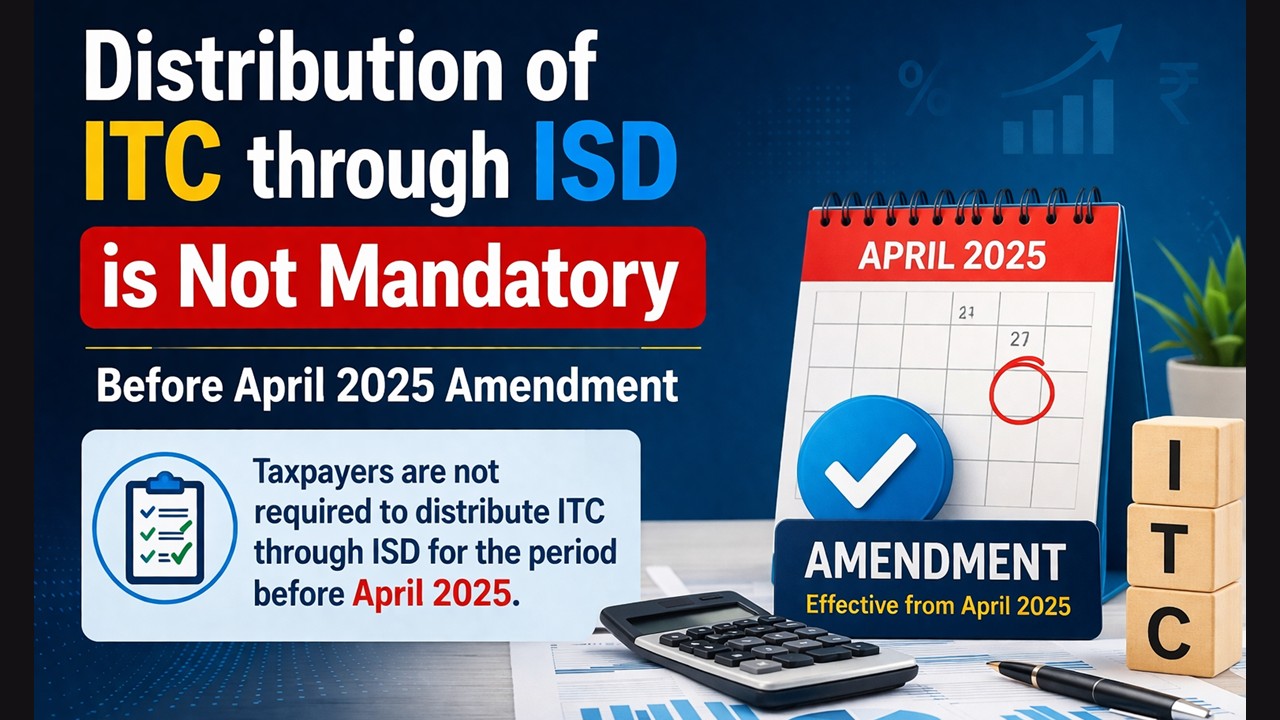
High Court examines legality of distributing ITC through cross-charging instead of ISD mechanism
GST demand challenged over method of ITC allocation across units
 Meetu Kumari
 Apr 13, 2026
HC Held: The Karnataka High Court allowed the writ petition and quashed the impugned order, holding that the distribution of ITC through cross-charging was valid and permissible. The Court observed that prior to the amendment effective from 01.04.2025, the definition of ISD did not cover services liable under the Reverse Charge Mechanism, thereby creating a practical limitation for taxpayers. Relying on CBIC Circular dated 17.07.2023, the Court held that distribution of ITC through ISD was not mandatory and taxpayers had the option to distribute credit by issuing tax invoices under Section 31.
The authorities failed to consider this binding clarification and proceeded on an incorrect assumption that ISD was the only permissible method. The Court further noted that the petitioner had availed only eligible ITC and that the distribution of such credit to branch offices was in accordance with law. Since the impugned order disregarded the statutory framework and binding circular, it was held to be arbitrary and without jurisdiction. Accordingly, the demand of tax, interest, and penalties was set aside.

About Author


Meetu Kumari
Content Manager
 Studycafe
 Jodhpur, Rajasthan, India
 2264
2264My Recent Articles
- ITAT Condones 302-Day Delay, Restores Salary Assessment for Fresh VerificationPremium
- ITAT Condones Delay After Tax Consultant's Death, Restores Appeals for Fresh HearingPremium
- ITAT Remands Salary Addition, Says Taxability Depends on Salary Becoming Due, Not Mere ReceiptPremium
- ITAT Deletes TP Royalty Adjustment, Orders Fresh Review of Commission BenchmarkingPremium
- ITAT Quashes Reassessment Over Unsigned Section 148 Notice Issued to AssesseePremium
Loading suggestions…


Recent Posts



All Posts



Recent Posts
All Posts