No Income Tax Cash disallowance on Payment made to Farmers: ITAT:
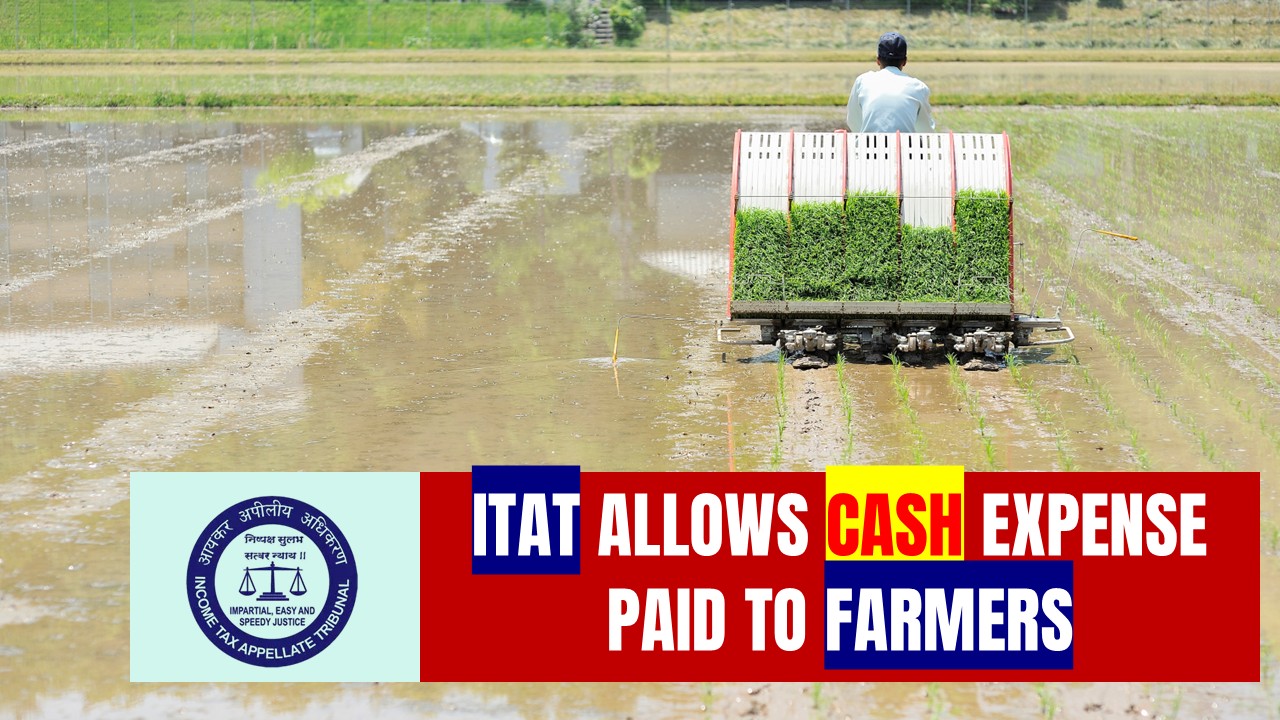
The Tribunal held that cash payments for paddy made through agents are exempt from Section 40A(3) under Rule 6DD(e) and (k), as they constitute payments for agricultural produce. Consequently, it quashed the Section 263 revision, ruling that the Assessing Officer's original order was neither beneficial to the Revenue since a proper enquiry had already been conducted.
Validity of Revision under Section 263 of Income Tax Act
 Khushi Jain
 May 7, 2026
No Income Tax Cash disallowance on Payment made to Farmers: ITAT
The Income Tax Appellate Tribunal Kolkata recently looked into a case about whether a rice mill could make large cash payments to buy paddy.
The business Sree Bishnu Rice Mill bought paddy from farmers through agents. Because these farmers were in rural areas, they were paid in cash. These payments added up to Rs. 14.08 crore.
The Assessing Officer originally blocked these expenses.
He argued that under Section 40A(3) any payment over a certain limit should be made by cheque or bank transfer, not cash. Later a senior tax official tried to reopen the case using Section 263 claiming the first officer did not investigate enough.
The main question was whether these cash payments were allowed under special tax rules. Specifically Rule 6DD(e) and Rule 6DD(k) allow cash payments if they are for agricultural products or if they are made through agents who must pay the producers in cash.
The Tribunal decided in favour of the rice mill. They found that the Assessing Officer had already looked at the facts and made a valid decision.
The Tribunal explained that since the money was used to buy paddy, which is agricultural produce, the cash payments were legal under the exceptions.
They ruled that the senior official could not cancel the original order just because they had a different opinion. Because the rules were followed, the tax deduction was allowed and the rice mill did not have to pay the extra tax.
About Author


Khushi Jain
Legal Content Writer
 StudyCafe
 Delhi, Delhi, India
 80
80My Recent Articles
- ROC Chennai Orders Penalty for delay in filing MGT-17: Short Staff no Excuse
- Penalty Order Passed by ROC Chennai for Non-Disclosure in Form PAS-3
- ROC Imposes Penalty For Non-Compliance In Securities Allotment Filing
- GST: Bombay High Court Upholds Validity of Manual Appeal
- From Rs. 275 Crore to Zero: United Breweries Gets Relief in Sales Tax Dispute
Up Next
Loading suggestions…


Recent Posts


All Posts


Tags
Recent Posts
All Posts