Do You Need Your Landlord's PAN to Claim HRA in Latest ITR Filing?:
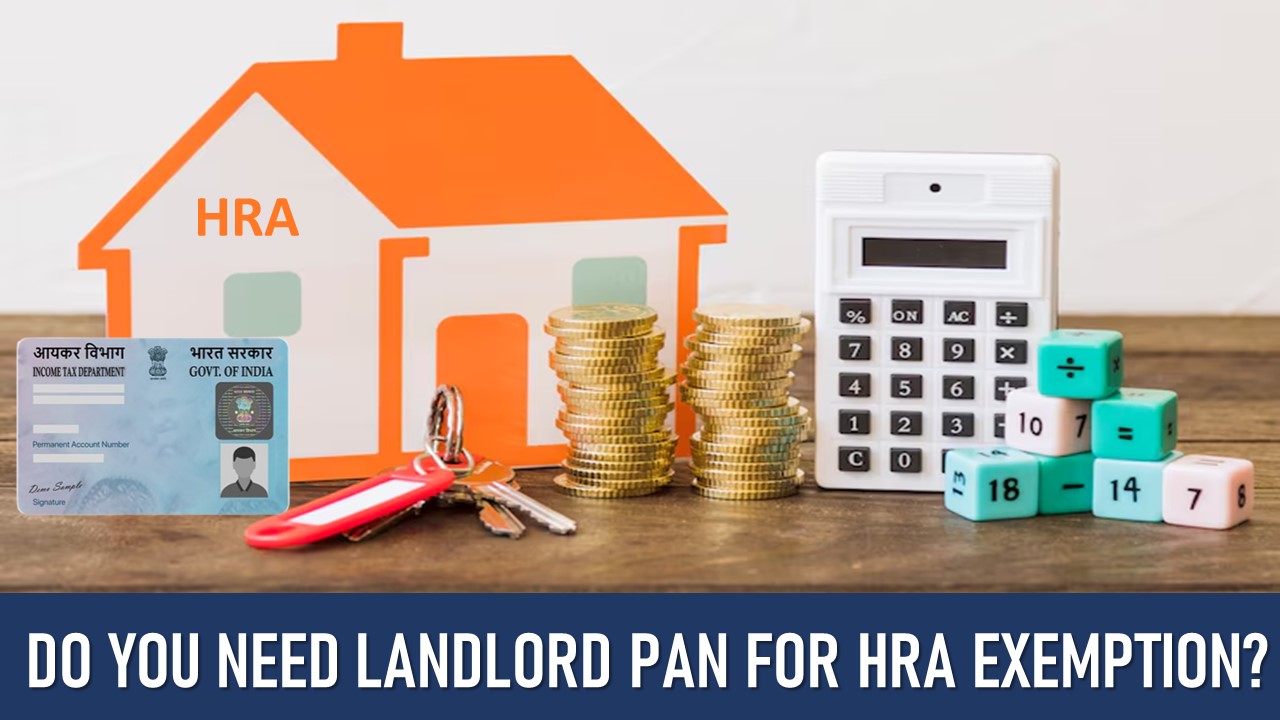
If your annual rent is more than Rs 1 lakh, you must submit your landlord's PAN to your employer.
Do I Need Landlord PAN For HRA Tax Exemption?
 Nidhi
Nidhi Jun 16, 2025
Table of Contents

Do You Need Your Landlord's PAN to Claim HRA in Latest ITR Filing?
Salaried individuals who receive House Rent Allowance (HRA) along with the salary to cover the cost of living in rented housing. HRA is subject to taxation; however, a portion of HRA is excluded from taxation under Section 10 (13A) of the Income Tax Act of 1961. Salaried individuals can claim exemption on HRA. To claim the exemption, employees must submit their landlord's PAN number if the annual rent exceeds Rs 1 lakh. If you do not submit the same, you will not get any tax exemption on HRA.
Earlier, the online ITR form or its utility did not have a field to enter HRA details. However, now when filing your ITR, you must provide more details for claiming HRA. Giving a false PAN to your employer or trying to claim Fake HRA can lead to a tax notice and losing your HRA benefit.
When Do You Need Your Landlord's PAN to Claim HRA Tax Exemption?
You might need your landlord's PAN number for claiming rent HRA tax exemption in the following possible situations:- If your rent is Rs. 8,333 or below per month (Rs 1 lakh per year), there's no need to submit the landlord's PAN.
- If your rent is more than Rs 8,333 per month or to Rs 50,000 per month, then the landlord's PAN is required.
- If rent is more than Rs. 50,000 per month, then your landlord's PAN is required, and you must deduct TDS on the rent.
- If you are opting for the new tax regime, you will not get HRA tax exemption, so PAN is not needed.
Updates in HRA Reporting in ITR 2025
The new ITR Excel utility now requires more details to claim HRA. If you miss any required info, you will not get a tax benefit. Here are some new details which you must report in the new ITR Excel utility:- Place of work
- Actual HRA received
- Actual rent paid
- Salary details under Section 17(1)
- Basic salary

How to Calculate HRA Tax Exemption?
An employee can claim HRA exemption based on the lowest of the following three amounts:- Total amount of HRA received by an employee from the employer,
- 50% of salary if living in metro cities or 40% of salary if living in non-metro cities,
- Actual rent paid minus 10% of salary.
Who is Eligible to Claim HRA Exemption?
Under Section 10(13A), the following persons can claim HRA tax exemption:- You are a salaried individual and not a self-employed individual. If you are self-employed, then you should opt for another option to claim the exemption, like Section 80GG, where you can get an exemption if you are paying rent and meet other required conditions specified under the provision of Section 80GG.
- You Receive HRA as part of your salary or CTC.
- You actually live in rented accommodation and not in your own house. There is no exemption allowed if you live in your own house.
About Author


Nidhi
Content Writer
Nidhi is a skilled content writer specializing in personal finance. She creates clear, engaging articles on mutual funds, investments, insurance, and wealth-building strategies. With a passion for simplifying complex financial topics, Nidhi helps readers make informed money decisions with confidence. She can be reached at [email protected]
Nidhi is a skilled content writer specializing in personal finance. She creates clear, engaging articles on mutual funds, investments, insurance, and wealth-building strategies. With a passion for simplifying complex financial topics, Nidhi helps readers make informed money decisions with confidence. She can be reached at [email protected]
 Studycafe
 New Delhi, Delhi, India
 1832
1832My Recent Articles
- Karnataka High Court Gives Another Chance in GST Matter Due to Lack of Hearing
- Delay Should Be Condoned if Explanation is Unrefuted: ITAT
- Non-Service of Income Tax Notice, Ill health of taxpayer, ITAT condones Appeal filing delay
- Books of Accounts Cannot be Rejected Without Any Specific Defect: ITAT Kolkata
- Karnataka High Court Sends ITC Matter Back to GST Authorities for Reconsideration
Up Next
Loading suggestions…


Recent Posts


All Posts



Tags
Recent Posts
All Posts