Does Tax Liability End After Death? Know the Rules for Legal Heirs:
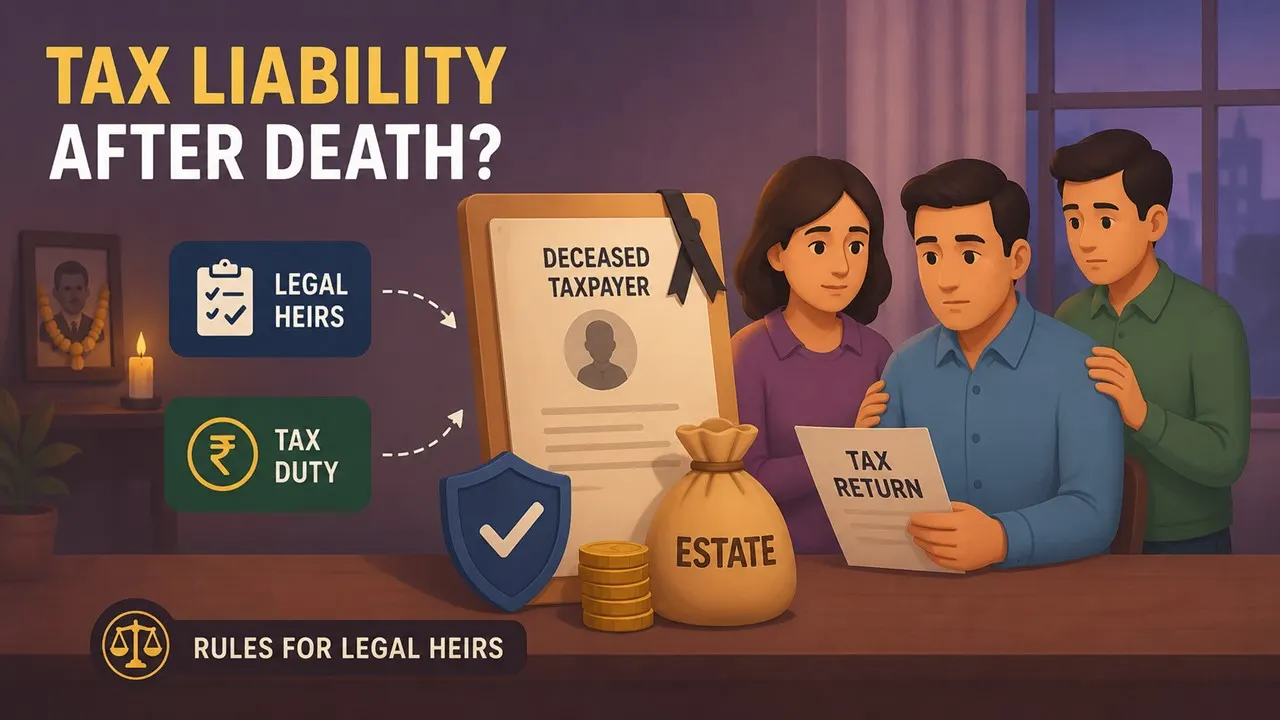
Tax liability does not end with death. Legal heirs must handle pending tax filings and dues from the deceased's estate under Section 302 of the Income Tax Act, 2025.
Does Tax Liability End After Death?
 Jasmine
 Jun 9, 2026
Does Tax Liability End After Death? Know the Rules for Legal Heirs
What happens when a taxpayer dies? Does the tax liability end? After someone dies their tax obligations do not disappear after their death. Any income they earned up to that point is still considered taxable.
If the taxpayer dies, the legal heir or legal representative files the income tax return and pays any dues on his/her behalf.
What is the meaning of Section 302 of Income Tax Act, 2025?
Section 302 of Income Tax Act, 2025 provides that the legal representative of the deceased person shall be liable to pay the tax obligations which the deceased person would have been required to pay if he or she was alive. This includes filing returns, responding to tax proceedings and paying taxes from the deceased’s estate.
It is clearly said in the law that “Where a person dies, his legal representative shall be liable to pay any sum which the deceased would have been liable to pay if he had not died, in the like manner and to the same extent as the deceased. The legal representative of the deceased shall be deemed to be an assessee for the purposes of this Act.”
As per the law, “The liability of a legal representative shall be limited to the extent to which the estate of the deceased is capable of meeting the liability.”
This ensures that the tax dues are recovered from the estate of the deceased person and not from the personal income or assets of the legal heir.
When can a legal heir be personally liable?
A legal representative can become personally liable if they transfer or distribute the assets of the deceased before clearing the outstanding tax liabilities.
In such cases, the legal heir can be held responsible for the unpaid taxes, but only to the extent of the value of the assets that were transferred, disposed of or distributed.
For instance, if the deceased taxpayer had a tax liability of Rs 2 lakh, but the legal heir inherited assets worth Rs 1.5 lakh from the estate. Then the liability of the legal heir will generally be capped at Rs 1.5 lakh which is the value of the assets inherited.
According to the tax expert, the obligation to file the Income Tax Return (ITR) and pay any pending taxes continues even after the death of a taxpayer. The legal heir like a spouse, son, daughter or any other legal representative has to complete these tax compliances on behalf of the deceased.
Before filing the return, the legal heir has to register as a legal heir on the Income Tax e-filing portal. To do this, you will have to provide documents such as death certificate, PAN of deceased, PAN of legal heir, proof of legal heirship etc.
Once the registration is granted, the legal heir can file the ITR of the deceased person, reply to tax notices, claim refunds and undertake other tax compliances on their behalf.
The death of a taxpayer does not relieve them of their tax liabilities. Any pending tax liabilities and return-filing obligations are taken care of by the legal heir or representative of the estate of the deceased person.
The law also provides that the tax due is paid from the assets left by the deceased person. The liability of the legal heir is usually restricted to the value of the inherited estate, to ensure that family members do not end up out of pocket because of the estate they have inherited.
About Author


Jasmine
Digital Marketing Excutive
 Studycafe
 dwarka, Delhi, India
 108
108My Recent Articles
- ITAT Rules BSNL VRS Compensation Exempt from Tax Under Section 10(10B), Grants Leave Encashment ReliefPremium
- Kerala Headload Workers Welfare Board Granted Income Tax Exemption for Three Tax YearsPremium
- ITR Filing: Why You Shouldn't Rely on a July 31 Deadline Extension
- Meerut Accountant Accused in Rs 65.5 Crore Income Tax Refund Scam
- Professional’s Viral Post on Rs 1 Crore Tax Sparks Debate on India’s Social Security
Up Next
Loading suggestions…


Recent Posts

All Posts

Tags
Recent Posts
All Posts