GST 2.0: Compensation Cess Removed on Most Goods, Sin Goods Still Under High Tax Net:
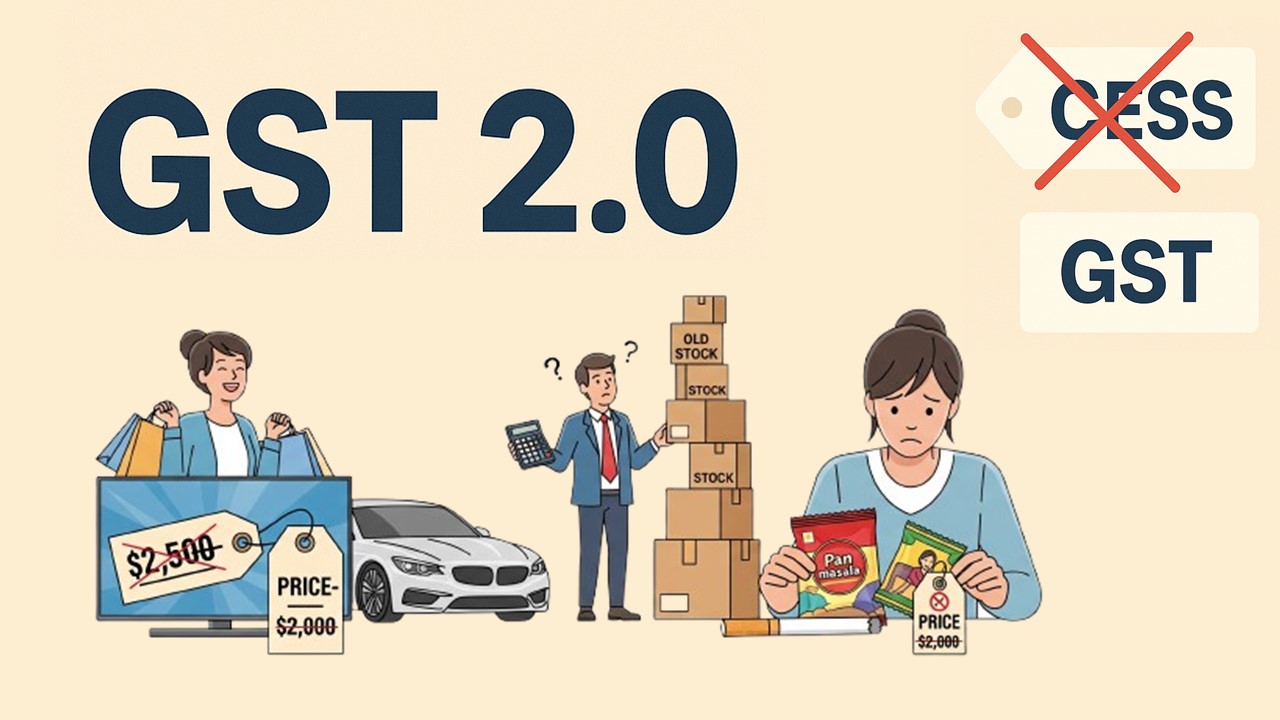
The removal of GST compensation cess lowers prices for consumers but leaves businesses grappling with unused credits, old stock, and compliance costs.
Businesses Face Heavy Losses from Old Stock and Unutilized Credits
 Saloni Kumari
 Sep 12, 2025
GST 2.0: Compensation Cess Removed on Most Goods, Sin Goods Still Under High Tax Net
When GST first came into effect in 2017, states were concerned about the revenue loss. Hence, to decrease their tension, the Central Government launched a special type of tax called compensation cess on certain goods, mostly on luxury and sin products.
The GST Compensation Cess is an additional tax imposed on certain goods and services in India under the Goods and Services Tax (Compensation to States) Act 2017. The primary purpose of this tax is to compensate states for any revenue loss they might experience due to the implementation of the Goods and Services Tax (GST). This cess is levied on specific "demerit" or "sin goods," like tobacco and pan masala, and some luxury items, such as certain motor vehicles and aerated drinks, in addition to the standard GST rates.
Under the GST 2.0 reforms, the government is planning to remove compensation cess on most goods, effective from September 22, 2025. However, compensation cess has been removed on only selective goods; sin goods like tobacco and tobacco-related products (cigarettes, pan masala, gutkha, chewing tobacco, and bidi) will continue to attract the same amount of cess as before until the government releases further orders regarding this and outstanding GST compensation loans and interest are completely repaid.
As the government has removed GST and compensation cess on most of the items, they will become cheaper to afford. For businesses, this creates problems like leftover tax credits they cannot use and how to handle old stock.
Below are some items on which compensation cess has been removed:
- Consumer electronics and appliances
- Automobiles and vehicles (moved under new GST slabs)
- Coal and other raw materials where cess was earlier applied.
- Cigarettes
- Pan masala
- Gutkha
- Chewing tobacco (like zarda)
- Unmanufactured tobacco and bidi

About Author


Saloni Kumari
Content Writer
Saloni is a Content Writer with 2+ years of experience at studycafe.in. She writes legal, taxation, and finance related content including GST, Income Tax etc. Skilled in translating complex judicial pronouncements and regulatory developments into clear, and reader-friendly articles. Experienced in covering judgements of ITAT, High Court, GSTAT, and news related to Income Tax, GST, and corporate law. She can be reached at [email protected].
Saloni is a Content Writer with 2+ years of experience at studycafe.in. She writes legal, taxation, and finance related content including GST, Income Tax etc. Skilled in translating complex judicial pronouncements and regulatory developments into clear, and reader-friendly articles. Experienced in covering judgements of ITAT, High Court, GSTAT, and news related to Income Tax, GST, and corporate law. She can be reached at [email protected].
 StudyCafe
 Delhi, Delhi, India
 2924
2924My Recent Articles
- Major Relief in Arbitration Case: MCIA Denies Rs 908 Crore Statement Claim Made by Allied Silica Against Tata Chemicals
- MCA and ICSI to Hold User Awareness Session on Form AOC-4 Filing Amid Glitches on MCA-21 Version-3 Portal
- GSTN Introduces New E-Invoicing Facility for Self-Invoices Under Reverse Charge Mechanism
- Flexi Cap vs Multi Cap Funds: What's the Real Difference?
- IBA Recommends Public Sector Banks to Reduce Ambit of Physical Branch Audits to 50% of Total Business
Up Next
Loading suggestions…


Recent Posts

All Posts


Tags
Recent Posts
All Posts