GST Council May Scrap Arrest Powers of Officers, Raise Prosecution Threshold to Rs 5 Crore:
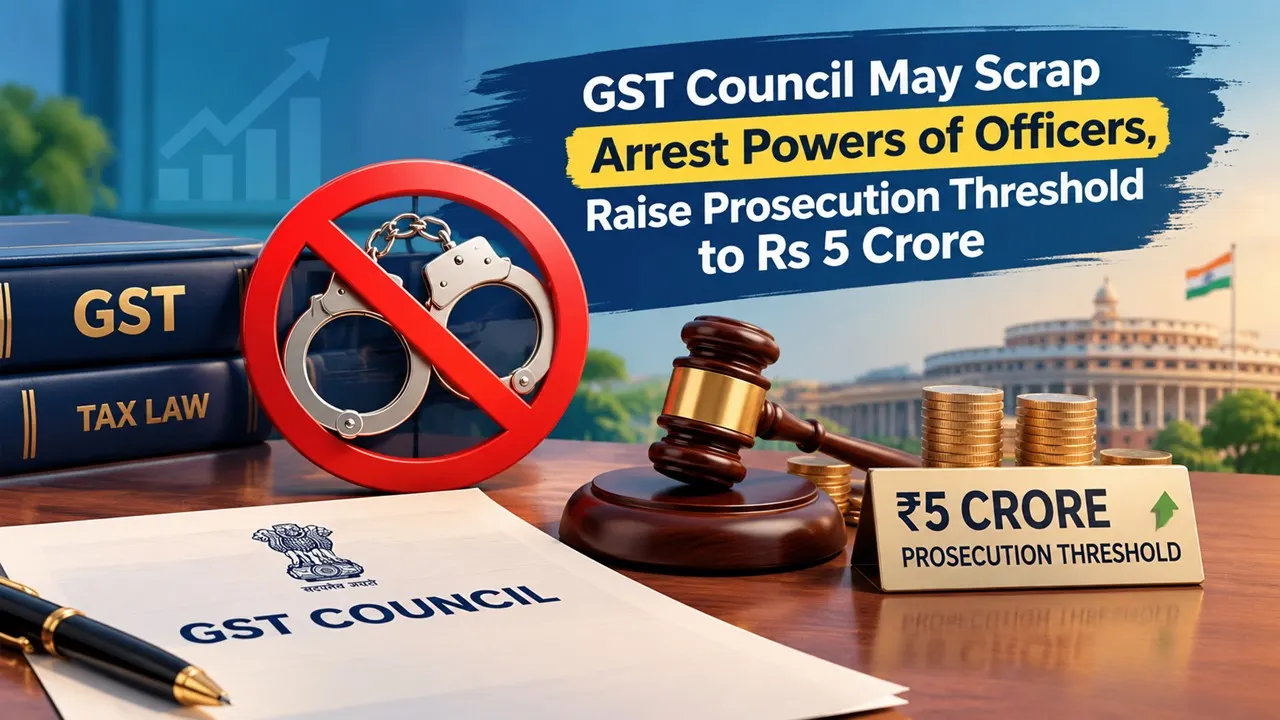
The GST Council may propose major enforcement reforms, including court approval for arrests, a Rs 5 crore prosecution threshold and decriminalisation of certain offences.
GST Council May Reduce Offences Under Proposed Enforcement Reforms
 Saloni Kumari
 Oct 5, 2026
The Goods and Services Tax (GST) Council is likely to consider major changes to GST enforcement at its October 7 meeting. The proposals may remove the power of GST officers to arrest taxpayers and require a court order before any arrest. The move is part of the government’s wider Next-Generation GST reforms.
Under the proposed changes, Section 69 of the Central GST Act, which currently allows the Commissioner to authorise an officer to arrest a person in specified cases, may be amended. Arrest would require judicial approval instead of being carried out solely on the authority of GST officials.

The Council may also consider raising the threshold for criminal prosecution from Rs 1 crore to Rs 5 crore. This would ensure that criminal action is mainly used for serious cases involving large-scale tax evasion or fraud. Disputes relating to GST classification, valuation and input tax credit (ITC) may be kept outside the criminal process.
The proposals may also reduce the number of GST offences. Out of the existing 24 offences, nine could be removed, while 11 may remain unchanged. The minimum sentence provision may also be removed, giving courts greater flexibility, including the option of imposing only a fine. The maximum sentence under the middle category could be reduced from three years to two years.

However, taxpayers would still face tax recovery, interest and penalties for short payment of tax or wrongful ITC claims. The proposed framework aims to focus more on financial recovery and data-based fraud detection rather than arrest.
The changes come as GSTN’s technology has improved, allowing authorities to use invoice-level data to identify suspicious transactions and fraudulent ITC claims. The wider reform package may also cover easier GST registration, faster refunds, simpler ITC procedures, changes to notices and penalties, and late-fee relief for small taxpayers.
About Author


Saloni Kumari
Content Writer
 StudyCafe
 Delhi, Delhi, India
 2961
2961My Recent Articles
- GSTAT Sets Aside Ex Parte GST Appeal Order After First Appellate Authority Ignores Taxpayer’s Arguments
- GSTAT Sets Aside Non-Speaking GST Appellate Order, Remands Case Over Failure to Meet 80% Registered Procurement Requirement
- Sakshi Chandak Secures AIR 1 in CA Intermediate September 2026 Exam with 83.67% After Studying Up to 16 Hours a Day
- MCA Releases List of Companies Struck Off Under Section 248(2) for September 2026 at mca.gov.in
- ITAT Deletes Section 43 Penalty for Non-Disclosure of Foreign Assets in Schedule FA
Loading suggestions…


Recent Posts


All Posts


Recent Posts
All Posts