GST: High Court Allows Transitional Credit Through Manually Revised TRAN-1:
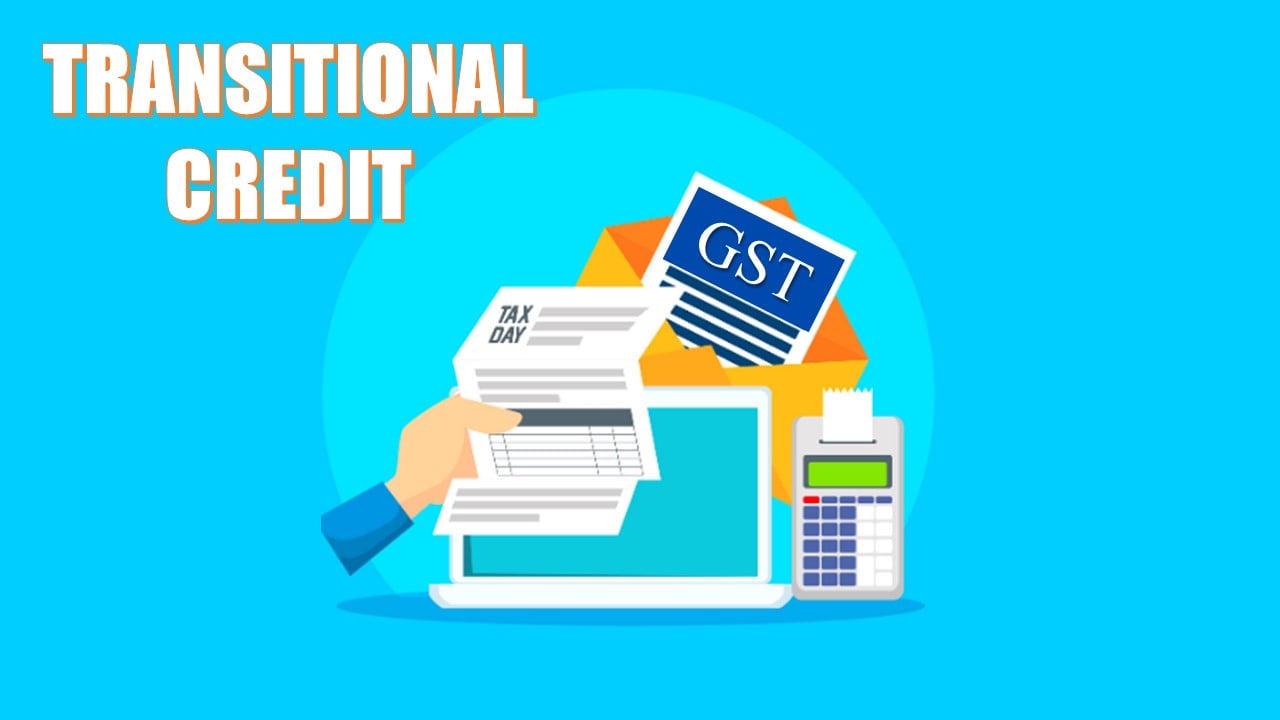
HC allows Johnson Matthey to claim Rs. 1.16 crore GST transitional credit through manually revised TRAN-1, citing procedural lapses shouldn't deny rightful tax benefits.
HC Upholds Manual Revision of TRAN-1 for Missed GST Credit
 Saloni Kumari
 Jul 16, 2025
GST: High Court Allows Transitional Credit Through Manually Revised TRAN-1
The current writ petition (WP. No. 15536 of 2023) is being filed by a company named Johnson Matthey Chemicals India Private Limited, which manufactures and sells industrial catalysts, in the Bombay High Court. The reason behind filing this petition is that the GST department rejected the company's revised credit claim of Rs. 1.16 crore. The company wanted to carry forward this tax credit from the old tax system to the new GST system.
Petitioner's Background
- When GST was made effective on July 01, 2017, businesses were required to file a form known as TRAN-1 to transfer unutilised tax credit from the old tax regime to the new tax regime. On August 26, 2017, Johnson Matthey filed its initial TRAN-1 form, claiming credit of around Rs. 4.31 crore.
- Later on, the company realised that it had missed claiming additional credit of Rs. 1.16 crore related to 3 Bills of Entry. These were valid import tax credits from May and June 2017, just before GST started. Hence, it wrote a letter dated February 16, 2018, to the tax department informing them about the mistake and requesting them to revise the TRAN-1 to claim the missed amount.
- However, during that time, no option was left to revise TRAN-1 on the GST portal. Additionally, the old portal was shut down due to the GST rollout. Hence, the company could not revise their old ER-1 (excise return) electronically either.
- In 2022, the Supreme Court took a major decision in the Filco Trade Centre Pvt. Ltd. case. It ordered the authority to reopen the GST portal from September 1, 2022, to November 30, 2022. This awarded the company a final chance to revise TRAN-1 and TRAN-2 forms.
- Utilising this opportunity, Johnson Matthey manually revised its old ER-1 return on November 23, 2022 (since the electronic method didn’t exist anymore),
- And also filed the updated TRAN-1 to claim the missed Rs. 1.16 crore before the deadline, i.e., November 30.
- Even though the petitioner followed the orders passed by the Supreme Court, the tax officer (Respondent No. 3) rejected the updated TRAN-1 claim on February 27, 2023, saying the revised ER-1 was not filed electronically and was not in compliance with the old rules; it should have been done online.
- Further argued that the missed credit was filed after one year and is not permitted according to Rule 4 of the Cenvat Credit Rules, 2004.
- The high court analysed the arguments of both parties and supported the company's reasons and disagreed with the tax officer's reasoning.
- After July 01, 2017, the excise portal was no longer working, so it was not possible for anyone to revise old returns via electronic means. Therefore, filing the revised return manually was acceptable.
- The company informed the department in February 2018, which is within one year of the initial return, that they had missed the credit.
- The department did not refuse the eligibility of the credit; they only objected to the procedure of filing.
- The court said that substantive tax rights should not be denied due to technical or procedural lapses, especially when there is no loss to the revenue.
- Jekson Vision Private Limited Vs. Union of India case of the Gujarat High Court, where manual return was allowed because of technical issues.
- Aberdare Technologies Pvt. Ltd. Vs. Central Board of Indirect Taxes & Customs case, where the Supreme Court confirmed that credit cannot be denied if there is no revenue loss and the taxpayer is eligible.

- The order dated February 27, 2023, regarding rejection of the credit was quashed by the high court.
- The department must accept the manually filed revised ER-1 and approve the Rs. 1.16 crore transitional credit.
- The GST system should give the full benefit of this credit to the company.
- This entire process must be completed within 8 weeks from the date of the court order, i.e., July 08, 2025.
About Author


Saloni Kumari
Content Writer
Saloni is a Content Writer with 2+ years of experience at studycafe.in. She writes legal, taxation, and finance related content including GST, Income Tax etc. Skilled in translating complex judicial pronouncements and regulatory developments into clear, and reader-friendly articles. Experienced in covering judgements of ITAT, High Court, GSTAT, and news related to Income Tax, GST, and corporate law. She can be reached at [email protected].
Saloni is a Content Writer with 2+ years of experience at studycafe.in. She writes legal, taxation, and finance related content including GST, Income Tax etc. Skilled in translating complex judicial pronouncements and regulatory developments into clear, and reader-friendly articles. Experienced in covering judgements of ITAT, High Court, GSTAT, and news related to Income Tax, GST, and corporate law. She can be reached at [email protected].
 StudyCafe
 Delhi, Delhi, India
 2924
2924My Recent Articles
- Major Relief in Arbitration Case: MCIA Denies Rs 908 Crore Statement Claim Made by Allied Silica Against Tata Chemicals
- MCA and ICSI to Hold User Awareness Session on Form AOC-4 Filing Amid Glitches on MCA-21 Version-3 Portal
- GSTN Introduces New E-Invoicing Facility for Self-Invoices Under Reverse Charge Mechanism
- Flexi Cap vs Multi Cap Funds: What's the Real Difference?
- IBA Recommends Public Sector Banks to Reduce Ambit of Physical Branch Audits to 50% of Total Business
Up Next
Loading suggestions…


Recent Posts

All Posts


Recent Posts
All Posts