GST Increase on Sale of all Old and Used Vehicles: 18% GST need to pay on 'loss margin' of EV resale?:
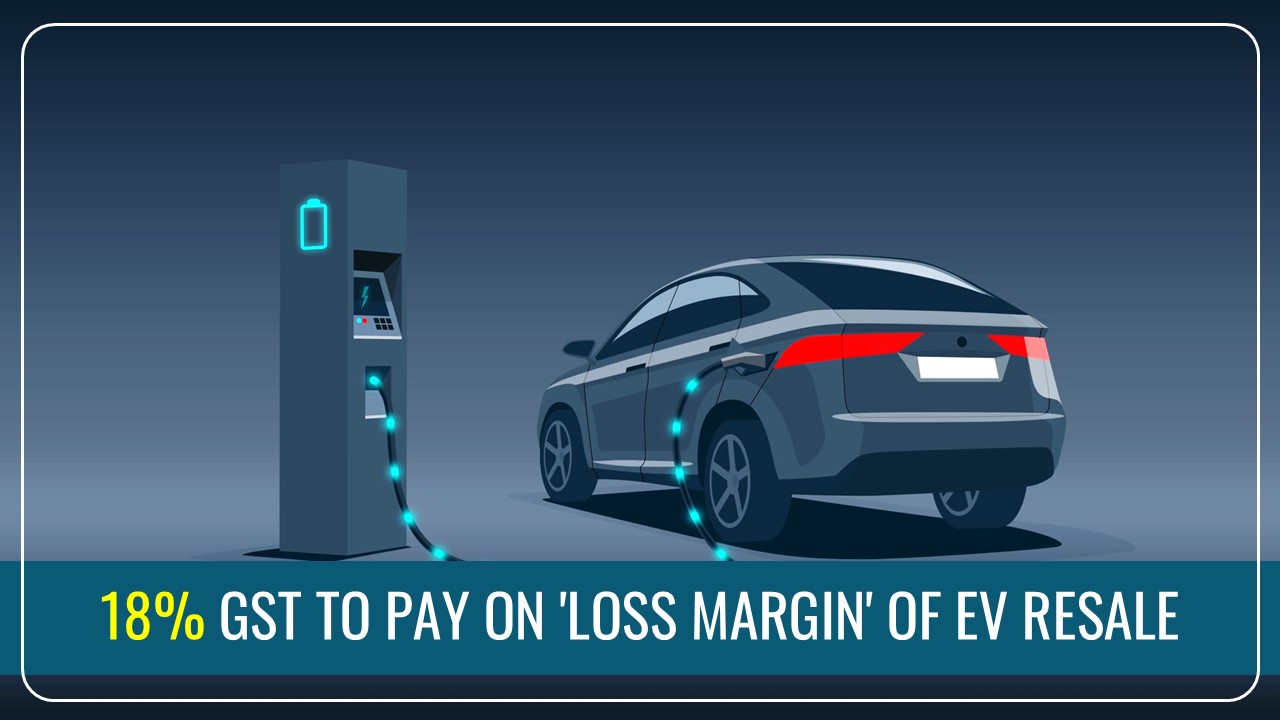
The GST Council's recent decision to impose an 18% tax on the resale of secondhand electric vehicles (EVs) has caused major misunderstanding.
18% GST to pay on 'loss margin' of EV resale
 Reetu
Reetu Dec 24, 2024
Table of Contents

GST Increase on Sale of all Old and Used Vehicles: 18% GST need to pay on 'loss margin' of EV resale?
The GST Council's recent decision to impose an 18% tax on the resale of secondhand electric vehicles (EVs) has caused major misunderstanding. Finance Minister Nirmala Sitharaman's explanation, which included a tax on the "margin value" of resales, incorrectly implied that individuals selling their old vehicles would be subject to the tax.
However, the tax will only apply to businesses that resell used vehicles, not to private sellers.
Here is an outline of the GST Council's recommendation and the tax businesses must pay when selling old or used cars.
Misunderstanding over increase in GST
The 55th GST Council meeting press conference on Saturday approved an 18% GST on used EVs sold by businesses, replacing the previous rate of 12%. Sitharaman clarified that the tax would not be levied on the total resale amount but just on the margin value, saying, "When the discussions happened, it was on that margin value... the margin value between purchased product price and resale price, on the margin only this 18% is put." Using an example, she stated that if a car was purchased for Rs.12 lakh and resold as a used car for Rs.9 lakh, the difference in price would be taxed. This caused confusion because it appeared that consumers would be taxed for reselling a vehicle even if the sale resulted in a loss.GST on used EVs Simplified
The Council agreed to raise the GST rate on used electric vehicles sold by businesses to 18%. However, this tax is only relevant to the margin value. For example, if a used car dealer buys an EV for Rs.9 lakh and sells it for Rs.10 lakh, the tax will be levied solely on the Rs.1 lakh profit margin. Direct transactions between individuals remain exempt. This brings the tax system for used EVs in line with that of petrol and diesel vehicles with bigger engine capacities, which are currently subject to an 18% tax. In conclusion, this means no GST for individuals; it is GST for businesses. For example, if you buy a car for Rs.12 lakh and sell it to another person for Rs.9 lakh, no GST is levied. In case, if a dealer buys a car for Rs.9 lakh and sells it for Rs.10 lakh, the 18% GST is only applied to the Rs.1 lakh margin. This clarification accompanied the Council's official statement, which stated that the decision was intended to standardise tax treatment for all vehicles, including used petrol, diesel, and electric vehicles.Tax Implications on used EVs
The decision has raised concerns in the market of second-hand EV, which may become less appealing to customers as bigger dealer profits are taxed. While new EVs continue to receive a 5% GST rate to encourage adoption, the change in taxation for resold EVs could cause more challenges in promoting EV usage.Exemptions of GST
The council also determined that aviation turbine fuel (ATF) will continue to be taxed under the existing system, rather than under the "one-nation-one-tax" regime. The Council also proposed exempting GST from contributions made by general insurance companies to the Motor Vehicle Accident Fund. This fund, established under the Motor Vehicles Act of 1988, provides compensation and cashless treatment to victims of traffic accidents, including hit-and-run incidents.About Author


Reetu
Content Manager
Reetu is a Content Writer with 4+ years of experience in GST, Income Tax, Finance, Company Law, Education and Career Related Content. She is a B.COM (Honrs.) Graduate.
Reetu is a Content Writer with 4+ years of experience in GST, Income Tax, Finance, Company Law, Education and Career Related Content. She is a B.COM (Honrs.) Graduate.
 Studycafe
 Delhi, Delhi, India
 8071
8071My Recent Articles
- Income Tax Guide for Indian Defence Personnel for Tax Filing, Taxable Allowances and Other Benefits
- Income Tax Return Breaking: ITR Forms released for AY 25-26
- Ex-DRT Officials Sentenced to 5 Years Rigorous Imprisonment by Madras High Court along with Rs.27 Lakh Fine
- GSTN issued Advisory on Case Sensitivity in IRN Generation
- RBI to issue Notes of Rs.10 and Rs.500 bearing Signature of Guv Malhotra
Up Next
Loading suggestions…


Recent Posts


All Posts

Tags
No tags yet.
Recent Posts
All Posts
Tags
No tags yet.