Gujarat High Court Refuses to Condone Delay Beyond Statutory Limit in GST Appeal:
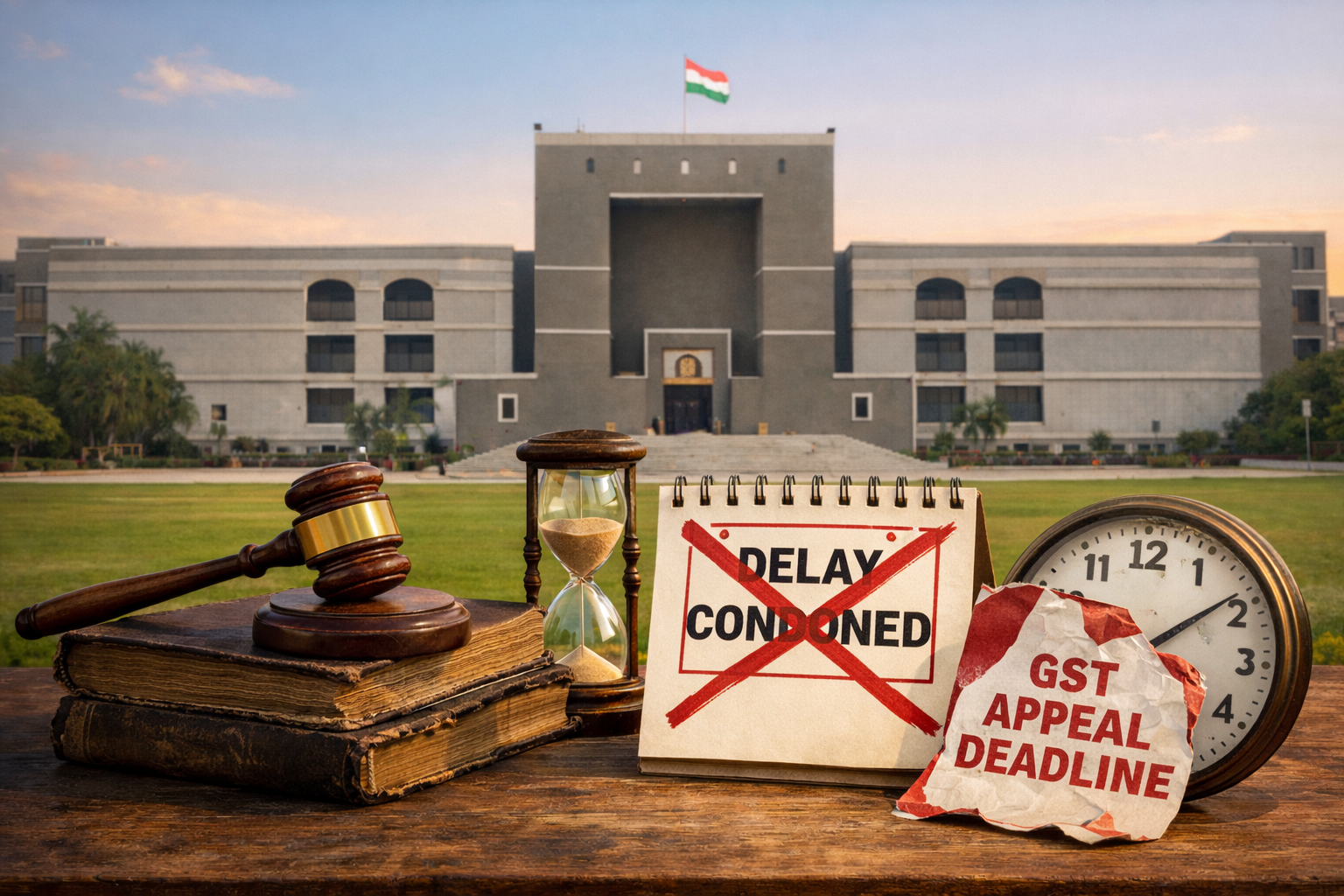
GST Appeal Filed Beyond 120 Days Cannot Be Revived: Gujarat HC
GST Appeal Filed Beyond 120 Days Cannot Be Revived: Gujarat HC
 Meetu Kumari
 Feb 10, 2026
Gujarat High Court Refuses to Condone Delay Beyond Statutory Limit in GST Appeal
The petitioner, a small partnership firm registered under GST, was issued a demand order dated 21.03.2024 under Section 74(5) of the CGST/SGST Act, raising a total demand of Rs. 5,03,768/-. The petitioner claimed that it became aware of the demand order only on 30.03.2025 and thereafter approached the department, which advised filing an appeal along with an application for condonation of delay.
An appeal under Section 107 of the Act was filed before the appellate authority after a delay of 284 days. The appellate authority rejected the appeal solely on the ground that it lacked statutory power to condone delay beyond the prescribed period. Aggrieved by this rejection, the petitioner approached the High Court under Article 226 seeking quashing of the appellate order and condonation of delay.
Issue Raised: Whether the High Court, in exercise of its writ jurisdiction under Article 226 of the Constitution, can condone delay in filing a GST appeal beyond the maximum period of 120 days prescribed under Section 107 of the CGST Act.
HC's Decision: The High Court dismissed the writ petition, holding that neither the appellate authority nor the High Court has the power to condone delay beyond the statutory outer limit of 120 days prescribed under Section 107 of the CGST Act.
Relying extensively on the Supreme Court’s decision in Assistant Commissioner (CT) LTU, Kakinada v. Glaxo Smith Kline Consumer Health Care Ltd., the Court held that even the wide powers under Article 226 cannot be exercised in a manner that defeats the legislative intent embedded in a special statute prescribing strict limitation periods.
The Court held that once the statutory period, including the condonable period, stands exhausted, the writ court cannot re-examine “sufficient cause” or dilute the limitation. Therefore, the rejection of the appeal on the ground of delay was upheld, and the writ petition was dismissed.
To Read Full Judgment, Download PDF Given Below
About Author


Meetu Kumari
Content Manager
Meetu Kumari is an Experienced Advocate and Content Writer with 4+ years of demonstrated history of working in the law practice industry. Skilled in Developing Content, Researching, and Drafting. Strong professional with a Bachelor of Science (B.Sc.) focused on Law from Gujarat National Law University.
Meetu Kumari is an Experienced Advocate and Content Writer with 4+ years of demonstrated history of working in the law practice industry. Skilled in Developing Content, Researching, and Drafting. Strong professional with a Bachelor of Science (B.Sc.) focused on Law from Gujarat National Law University.
 Studycafe
 Jodhpur, Rajasthan, India
 2264
2264My Recent Articles
- ITAT Condones 302-Day Delay, Restores Salary Assessment for Fresh VerificationPremium
- ITAT Condones Delay After Tax Consultant's Death, Restores Appeals for Fresh HearingPremium
- ITAT Remands Salary Addition, Says Taxability Depends on Salary Becoming Due, Not Mere ReceiptPremium
- ITAT Deletes TP Royalty Adjustment, Orders Fresh Review of Commission BenchmarkingPremium
- ITAT Quashes Reassessment Over Unsigned Section 148 Notice Issued to AssesseePremium
Up Next
Loading suggestions…


Recent Posts

All Posts


Recent Posts
All Posts