HC Grants Anticipatory Bail in Rs. 31 Crore GST Fake Invoicing Case; Reaffirms ‘Bail, Not Jail’:
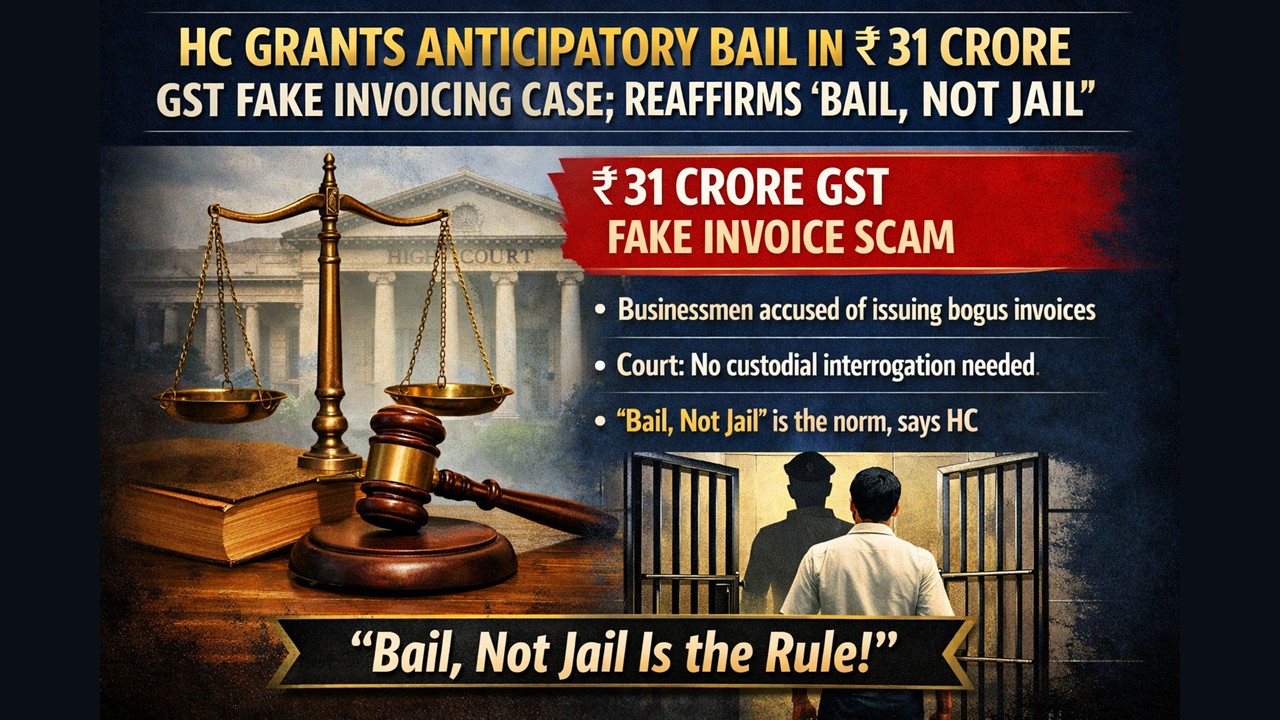
Even in serious GST fraud allegations, custody is not automatic when the maximum punishment under the CGST Act is only five years, rules HC
Karnataka HC Allows Anticipatory Bail in Rs. 31 Cr GST Fake ITC Case
 Meetu Kumari
 Jan 12, 2026
HC Grants Anticipatory Bail in Rs. 31 Crore GST Fake Invoicing Case; Reaffirms ‘Bail, Not Jail’
The petitioner, Sri Akram Pasha, proprietor of M/s. A.R. Steel, was accused by the Directorate General of Goods and Services Tax Intelligence (DGGI) of being part of a syndicate allegedly created to fraudulently avail Input Tax Credit (ITC) through bogus entities. The department accused that fake invoices were issued without any actual movement of goods or services and wrongful availment of ITC amounting to Rs. 31.62 crore from 36 non-existent or cancelled suppliers. Searches were conducted at 13 locations, after which the DGGI issued six summons to the petitioner under Section 70 of the CGST Act.
Apprehending arrest under Section 69, and after rejection of his anticipatory bail plea by the Sessions Court, the petitioner approached the High Court.
Issue Before HC: Whether anticipatory bail can be granted in a GST fake invoicing case involving alleged tax evasion exceeding Rs. 500 lakh, punishable under Section 132(1)(b) and (c) of the CGST Act, which classifies the offense as cognizable and non-bailable.
HC's Decision: The Hon'ble High Court granted anticipatory bail to the petitioner. The Court acknowledged that economic offences are serious in nature but emphasised that the maximum punishment prescribed under Section 132 of the CGST Act is five years’ imprisonment. It noted that the offences are compoundable under Section 138 of the Act, which reduces their severity. The Court established that GST law is mainly a fiscal statute made for revenue collection not for incarceration.
Applying the “triple test” and the settled principle of “bail, not jail,” the Court held that custodial interrogation is not a sine qua non when statutory punishment is limited. The petitioner was directed to cooperate with the investigation, comply with summons, and share his Google Map PIN to enable location tracking by the authorities.
To Read Full Judgment, Download PDF Given Below
About Author


Meetu Kumari
Content Manager
Meetu Kumari is an Experienced Advocate and Content Writer with 4+ years of demonstrated history of working in the law practice industry. Skilled in Developing Content, Researching, and Drafting. Strong professional with a Bachelor of Science (B.Sc.) focused on Law from Gujarat National Law University.
Meetu Kumari is an Experienced Advocate and Content Writer with 4+ years of demonstrated history of working in the law practice industry. Skilled in Developing Content, Researching, and Drafting. Strong professional with a Bachelor of Science (B.Sc.) focused on Law from Gujarat National Law University.
 Studycafe
 Jodhpur, Rajasthan, India
 2264
2264My Recent Articles
- ITAT Condones 302-Day Delay, Restores Salary Assessment for Fresh VerificationPremium
- ITAT Condones Delay After Tax Consultant's Death, Restores Appeals for Fresh HearingPremium
- ITAT Remands Salary Addition, Says Taxability Depends on Salary Becoming Due, Not Mere ReceiptPremium
- ITAT Deletes TP Royalty Adjustment, Orders Fresh Review of Commission BenchmarkingPremium
- ITAT Quashes Reassessment Over Unsigned Section 148 Notice Issued to AssesseePremium
Up Next
Loading suggestions…


Recent Posts



All Posts


Recent Posts
All Posts