HC Quashes Penalty u/s 270A where claim was based on binding jurisdictional precedent at time of ITR filing:
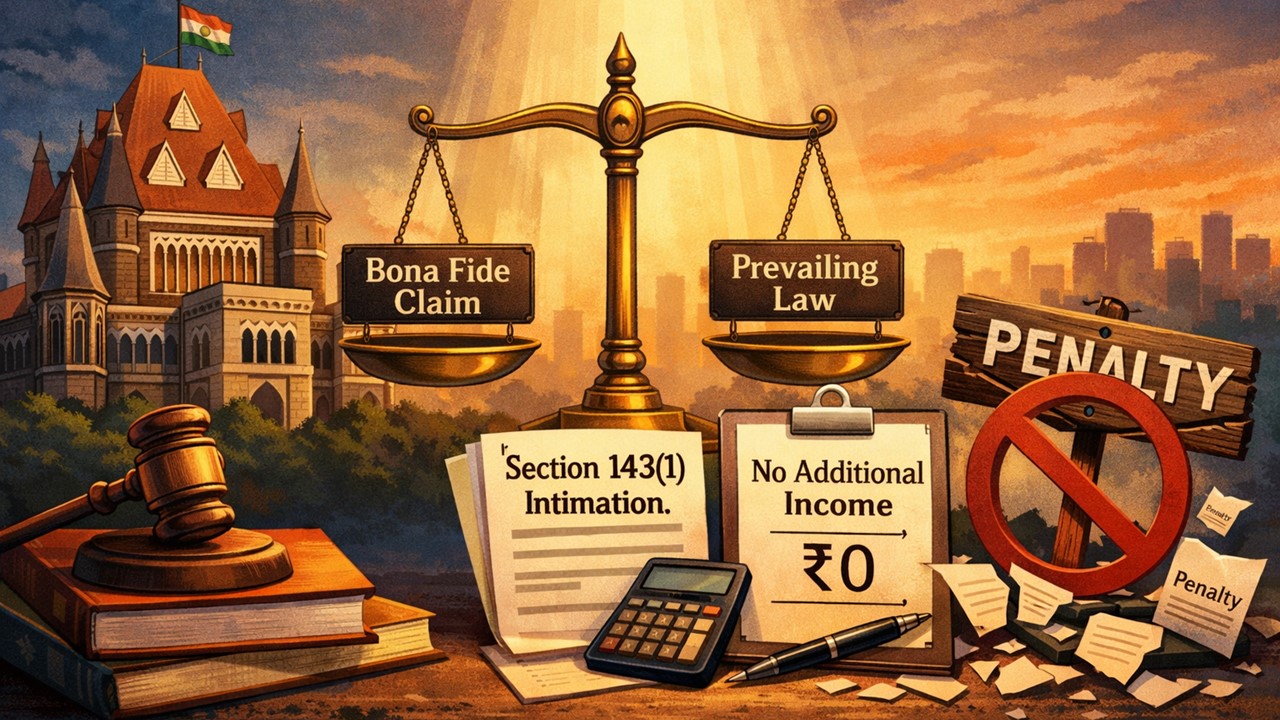
The Bombay High Court rules the penalty unsustainable where the claim was bona fide, based on prevailing law, and no incremental assessed income existed over Section 143(1) intimation.
HC: No Penalty u/s 270A if Addition Already Made in 143(1) & Claim Was Bona Fide
 Meetu Kumari
 Apr 3, 2026
Premium
HC Quashes Penalty u/s 270A where claim was based on binding jurisdictional precedent at time of ITR filing
The Bombay High Court rules the penalty unsustainable where the claim was bona fide, based on prevailing law, and no incremental assessed income existed over Section 143(1) intimation.
Also Read
NIIT Limited Discloses Income Tax Department’s Appeal Before Delhi ITAT, Says No Adverse Financial Impact ExpectedITAT Quashes Reassessment as Section 148 Approval Was Obtained from PCIT Instead of Pr. CCITITAT Directs AO to Reconsider Rs 16.44 Lakh Capital Gains and Rs 25.87 Lakh Stamp Duty Value AdditionITAT Remands Rs 3.33 Crore Demonetisation Cash Deposit Case to AO, Directs Rs 10,000 Relief Fund Payment
About Author


Meetu Kumari
Content Manager
Meetu Kumari is an Experienced Advocate and Content Writer with 4+ years of demonstrated history of working in the law practice industry. Skilled in Developing Content, Researching, and Drafting. Strong professional with a Bachelor of Science (B.Sc.) focused on Law from Gujarat National Law University.
Meetu Kumari is an Experienced Advocate and Content Writer with 4+ years of demonstrated history of working in the law practice industry. Skilled in Developing Content, Researching, and Drafting. Strong professional with a Bachelor of Science (B.Sc.) focused on Law from Gujarat National Law University.
 Studycafe
 Jodhpur, Rajasthan, India
 2264
2264My Recent Articles
- ITAT Condones 302-Day Delay, Restores Salary Assessment for Fresh VerificationPremium
- ITAT Condones Delay After Tax Consultant's Death, Restores Appeals for Fresh HearingPremium
- ITAT Remands Salary Addition, Says Taxability Depends on Salary Becoming Due, Not Mere ReceiptPremium
- ITAT Deletes TP Royalty Adjustment, Orders Fresh Review of Commission BenchmarkingPremium
- ITAT Quashes Reassessment Over Unsigned Section 148 Notice Issued to AssesseePremium
Up Next
Loading suggestions…


Recent Posts



All Posts



Recent Posts
All Posts