IBC Overrides Income Tax Demands: ITAT Rules NCLT-Approved Plan Nullifies Past Dues, Dismisses Appeal:
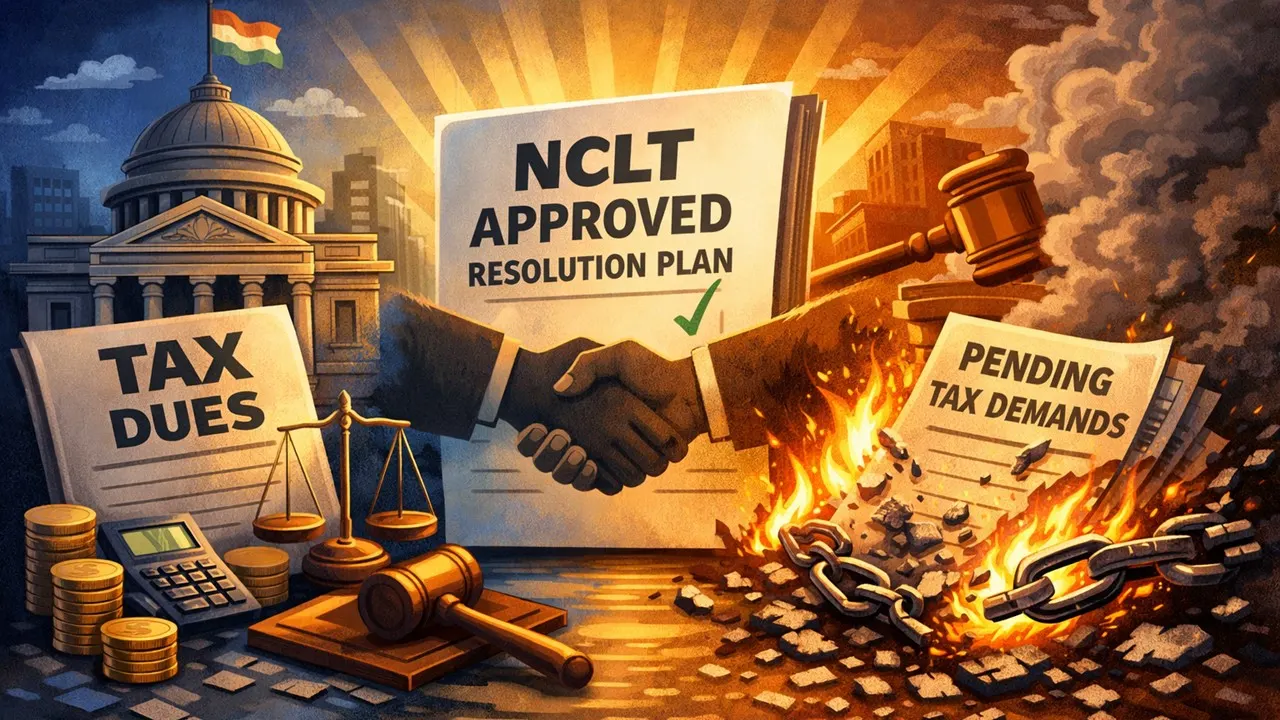
ITAT Bangalore held that once an NCLT-approved resolution plan extinguishes government dues, pending tax demands cannot be enforced, rendering the appeal infructuous.
No Recovery of Past Taxes After NCLT Approval: ITAT
 Saloni Kumari
 Apr 3, 2026
IBC Overrides Income Tax Demands: ITAT Rules NCLT-Approved Plan Nullifies Past Dues, Dismisses Appeal
ITAT held that once an NCLT-approved resolution plan sets government dues to zero, tax authorities cannot recover past demands. Thus, even on merits, the appeal became irrelevant, and the company’s appeal was dismissed as non-impactful.
The ITAT Bangalore bench has passed its judgement on an appeal filed by M/s. Metrik InfraProjects Private Limited against an order dated November 26, 2024, passed by the Commissioner of Income Tax (Appeals) [CIT(A)]. The case concerns the Assessement Year 2017-18.
The company had filed an income tax return (ITR) showing a loss. However, while assessing the ITR, the assessing officer (AO) had disallowed certain expenditure and increased the taxable income. Being aggrieved by the additions, the company filed an appeal before the CIT(A). However, the company did not appear before the CIT(A) during the personal hearing. Hence, the appeal was dismissed by the CIT(A) on the grounds of non-prosecution.
The company underwent an insolvency process under the Insolvency and Bankruptcy Code (IBC). Subsequently, a resolution plan was approved by the National Company Law Tribunal (NCLT) Bengaluru Bench in September 2023. An important point to note is that government departments, including the Income Tax Department, did not make any claims during the insolvency process despite being informed.
Hence, the resolution plan approved by the NCLT provided that all government dues, including taxes, would be zero. This is because, according to the Tribunal, once the resolution plan is approved, no claims can be made. Hence, the Income Tax Department cannot recover the outstanding demand. Therefore, the judgement passed by the Tribunal is relevant. Hence, the Tribunal held that even if it passed judgement on the merits of the case, the tax demand cannot be recovered. Therefore, the appeal filed by the company is not relevant. Hence, the Tribunal dismissed the appeal filed by the company.
About Author


Saloni Kumari
Content Writer
Saloni is a Content Writer with 2+ years of experience at studycafe.in. She writes legal, taxation, and finance related content including GST, Income Tax etc. Skilled in translating complex judicial pronouncements and regulatory developments into clear, and reader-friendly articles. Experienced in covering judgements of ITAT, High Court, GSTAT, and news related to Income Tax, GST, and corporate law. She can be reached at [email protected].
Saloni is a Content Writer with 2+ years of experience at studycafe.in. She writes legal, taxation, and finance related content including GST, Income Tax etc. Skilled in translating complex judicial pronouncements and regulatory developments into clear, and reader-friendly articles. Experienced in covering judgements of ITAT, High Court, GSTAT, and news related to Income Tax, GST, and corporate law. She can be reached at [email protected].
 StudyCafe
 Delhi, Delhi, India
 2931
2931My Recent Articles
- Rs 843.97 Crore Bogus Political Party Donation Racket Unearthed in Gujarat, Income Tax Dept Files Complaint With CID (Crime)
- Retired Central GST Commissioner Kidnapped by Unknown Persons, Assailants Nabbed Within Hours
- Madhya Pradesh HC Quashes Section 74 GST Show Cause Notice Passed Against G R Infraprojects
- GSTAT Introduces SOP for Branch Officer-to-Branch Officer (BO-to-BO) Case Transfer Ensuring Seamless Reassignment of Cases
- GSTAT: E-Way Bills Cannot Be Invalidated Merely Because They Were Not Generated by Original Supplier
Up Next
Loading suggestions…


Recent Posts

All Posts
Tags
Recent Posts
All Posts